

AI Shopping is Getting Smarter. So are Customers.
Retailers are pushing AI deeper into the journey, just as consumers get more skeptical about how much influence they want it to have.


Your daily signal on AI and CX — minus the hype.
📌 DCX Stat of the day: Generative AI reached 53% population adoption within three years, and the estimated value of those tools to U.S. consumers hit $172 billion annually by early 2026. Stanford HAI’s 2026 AI Index
In this issue:
→ Tesco puts AI closer to the loyalty engine
→ Consumers want AI help, not paid influence
→ Banks face a sharper AI fraud threat
→ Scrunch treats AI agents like a new front door
→ Trust is becoming the cost of convenience
🔎 Deep dive
Tesco puts AI where customers will actually feel it
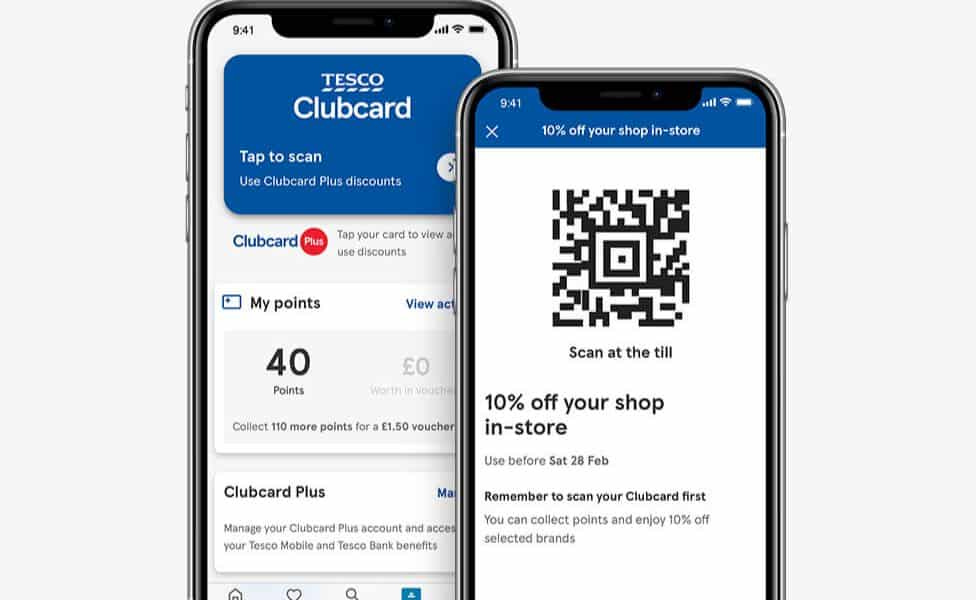
Tesco’s new Adobe partnership matters because this is not some back-office experiment. It puts AI closer to the part of the retail experience that already shapes what customers buy, notice, and ignore. Reuters reports Tesco is tying Adobe’s AI tools more closely to Clubcard, which reaches more than 24 million UK households, as part of a wider digital push across offers, content, delivery, marketplace, and retail media.
That means AI is moving into the wallet. Customers will feel it first in discovery, promotions, and repeat purchase. That can make the experience more relevant. It can also get annoying fast if the recommendations feel pushy, mistimed, or a little too eager to steer the decision.
The executive takeaway is pretty straightforward. When AI starts influencing what customers see first, trust becomes part of the operating model. Relevance helps. Pressure backfires.
📬 Copy-Paste Take: Send this to your COO
AI personalization is moving from marketing helper to decision layer. That raises the upside on relevance, but it also raises the cost of getting trust wrong.
OPERATOR PLAYBOOK
Pressure-test the AI offer layer before it starts wearing people out
If your team is putting AI into promotions, recommendations, or shopping guidance, look at the journey like a customer who is busy, skeptical, and not in the mood.
Audit every loyalty and offer flow for four things:
Can the customer tell why they are seeing this?
Does the recommendation fit the moment?
Can they dismiss it, correct it, or move past it easily?
Would the logic still look fair if somebody outside the company reviewed it?
Then test whether the experience still feels useful when the customer is in a hurry, confused, price-sensitive, or already irritated.
Ask your team: Where are we using AI to help the customer, and where are we using it to push a result?
Signal: The next retail AI problem probably will not come from weak models. It will come from strong models aimed at the wrong incentive.
📈 Market Reality Check
Adoption is flying. Trust is not keeping pace.
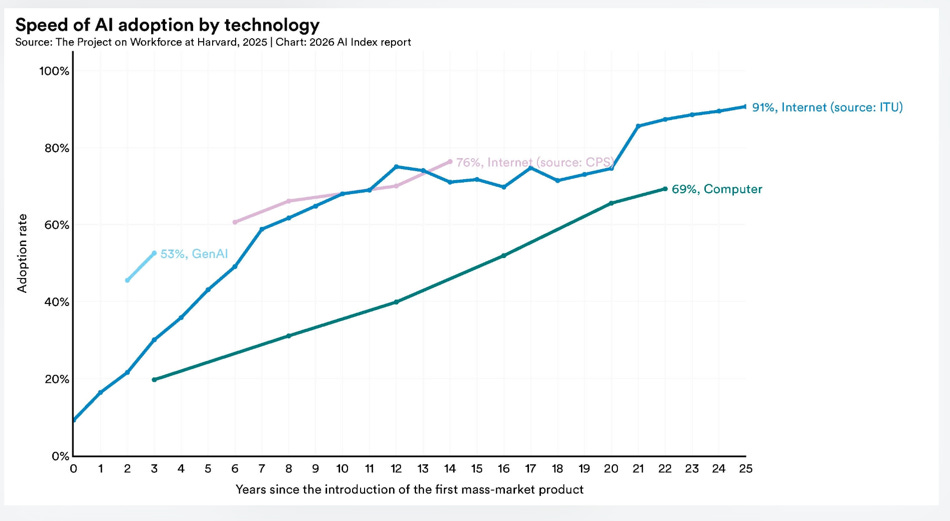
Stanford HAI’s 2026 AI Index says generative AI reached 53% population adoption within three years, faster than the personal computer or the internet. It also estimates annual value to U.S. consumers at $172 billion by early 2026.
That is the growth story. The trust story is messier.
The same Stanford summary says the Foundation Model Transparency Index dropped to 40 from 58 last year. Public sentiment is mixed too. Fifty-nine percent reported optimism about AI’s benefits, while 52% also reported nervousness.
AI is getting folded into daily life fast. Customers are not giving it a blank check.
Fast adoption + lower transparency + mixed trust = a CX problem hiding inside a growth story
🧰 Tool Worth Knowing
Scrunch Agent Experience Platform
What it does: Scrunch builds an AI-ready version of your site for retrieval bots, serving clean, structured content to AI agents without touching the human-facing experience.
CX use case: When customers meet your brand through ChatGPT, Perplexity, or other AI tools first, Scrunch improves what those systems can actually see and return.
Worth watching because: It treats AI agents as a real experience surface, not an afterthought — and that is where discovery is heading.
Bottom line: Smart fit for teams that care about AI-led discovery, accurate citations, and the story customers hear about them before they ever land on the site.
⚡ 90-Second CX Radar
75% of Americans say they would lose trust in AI shopping if results were sponsored
Quad and The Harris Poll found that 74% of Americans are aware of agentic AI shopping, and 51% say they would rather use AI shopping tools to reduce the risk of a bad purchase. Good signal for adoption. The catch is trust. Seventy-five percent say sponsored results would reduce it. Consumers are fine with guidance. They are much less fine with invisible influence.
AI-boosted hacks with Anthropic’s Mythos could have dire consequences for banks
Reuters reports experts see Anthropic’s Mythos as a serious new threat to banks because it can identify vulnerabilities and help exploit them, especially across older and mixed tech environments. For CX leaders in financial services, this lands well beyond security. Fraud spikes, outages, verification friction, and service recovery failures tend to show up together.
Perplexity expands its personal finance tool with Plaid
EMARKETER says Perplexity has expanded its personal finance capabilities through Plaid connections for checking, savings, credit card, and loan accounts. The bigger point is that more financial guidance may happen outside the bank experience. Banks still own the relationship in many cases. They may not own the first moment of analysis for much longer.
🧭 Your Move
Pick one journey where AI is already shaping attention before purchase or before support. Then ask one blunt question: does this feel helpful, or does it feel like the company is trying to get a little too clever?
That is the line. Consumers will use AI when it saves time, lowers effort, or helps them make a better call. They start pushing back when it feels murky, manipulative, or hard to challenge.
The next strong AI experience will feel useful. The weak one will feel like someone quietly tilted the table.
Until tomorrow,

👥 Share This Issue
Think of one person who’s wrestling with AI in CX right now
and forward this to them.
I’m obsessed with Wispr Flow Pro! Get a Free Month on me.

If someone forwarded this to you, they thought you needed to see it before your next AI planning meeting. Get your own copy.