

Customers Are Counting the Hidden Costs
DCX Links July 19, 2026

Welcome to the DCX weekly roundup of customer experience insights!
Customers are still willing to trade. They’ll trade speed for savings. They’ll trade simplicity for a better result. They’ll even work with a new kind of AI partner when the value is clear.
What they’re getting less patient with is the fog around the tradeoff.
Shipping fees that show up late. Returns that feel punitive. Loyalty programs that matter in theory but barely shape behavior. AI tools that promise help but leave people doing the same work with a better interface.
That’s the thread this week: value has to be visible before people feel the cost. Not just the price. The time, effort, uncertainty, and judgment customers and teams have to supply along the way.
Let’s dig in.
This Week’s Must-Read Links
Convenience fees are becoming loyalty tests

In a new ICSC Survey: Consumers Reassess the Cost of Convenience, shoppers are making it clear that delivery fees, return costs, and fulfillment choices now sit inside the loyalty decision.
What’s happening: ICSC surveyed 1,000 U.S. consumers and found that 70% of online shoppers have abandoned a cart because of shipping costs. Sixty-seven percent say return fees make them less likely to buy online, and 65% have stopped or would consider stopping shopping with a retailer because of delivery fees, slow shipping, or inconvenient returns.
Why it matters: This is not a checkout-detail problem. It is a trust and value-design problem. Customers can accept tradeoffs when they understand them early. What damages the relationship is surprise, opacity, or the feeling that the retailer has shifted the cost of convenience onto the customer after commitment.
The bottom line: Physical stores still matter because they solve practical online friction: no shipping fee, no delivery wait, easier returns, and a chance to see the product before buying.
Worth asking this week: Which fees, return rules, or fulfillment tradeoffs do customers learn too late in the journey?
The agentic company needs an operating manual
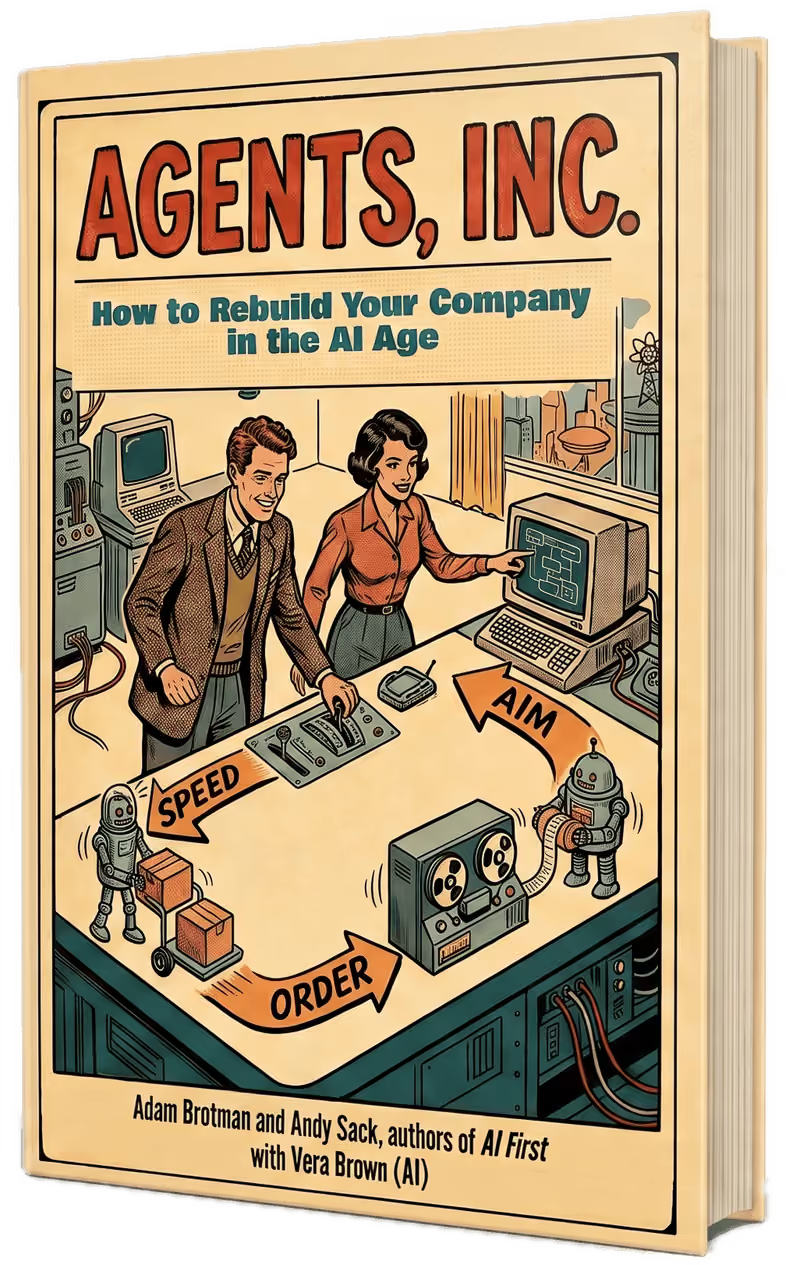
Agents, Inc. is a new book from Adam Brotman, Andy Sack, and Vera Brown (AI), but the more interesting CX signal is how it was made: the authors wrote and published it in 3 months with Vera as their AI agent partner.
What’s happening: Vera was not treated as a search box or a writing shortcut. She was part of the work system: helping shape the book, continue the conversation after publication, and produce personalized mini-books for readers based on their role, company, and current priorities. The experience around the book is itself a working example of agent partnership.
Why it matters: That is the useful leap for CX leaders. Agents are not only tools for deflection or content generation. They can become thinking partners for journey research, service blueprinting, customer-signal synthesis, frontline coaching, proposal generation, recovery design, and internal decision support. The question is not just what the agent can produce. It is what kind of working relationship the team builds with it.
Reality check: A book-writing process is not the same as a customer-facing service operation. But it gives CX teams a concrete model to study: humans setting direction, an agent carrying context, and the output improving because the collaboration is designed, not improvised.
Worth asking this week: Where could an agent become a true working partner in how we understand customers, design experiences, and turn insight into action?
Human judgment needs a design brief

In The Future Worth Building Is Human, Thinking Machines argues that AI work should be built around human creativity, judgment, and agency instead of treating people as awkward parts of the machine.
What’s happening: The piece is not a CX article in the narrow sense. It is a useful correction to automation thinking that quietly assumes the goal is to remove people from the work. For CX leaders, that assumption is dangerous. The most valuable moments in service, research, product, and recovery often depend on interpretation, empathy, taste, and accountability.
Why it matters: If teams design AI only for output, they can miss the human job that makes the experience trustworthy. The better question is which parts of the journey need better tools for human judgment, not just faster automation.
Reality check: Use this as a framing piece, not proof of a deployment. Its value is in the question it forces: where does the customer still need a human standard of care?
Worth asking this week: Where are we using AI to replace judgment when we should be using it to strengthen judgment?
Better design language is not cosmetic
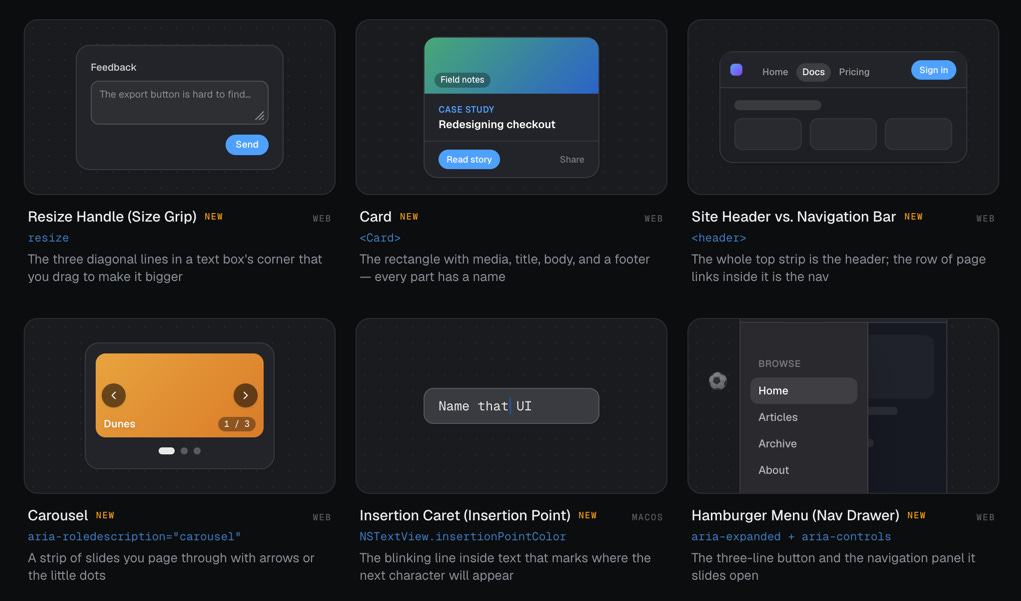
NameThatUI looks small at first: a visual dictionary for interface elements. But the CX lesson is bigger than the tool. A lot of digital experience work slows down because teams cannot name the thing they are trying to fix.
What’s happening: The site gives designers, builders, and AI coding agents shared labels for UI patterns: popovers, scrims, disclosure triangles, progress rings, truncation, drawers, sheets, segmented controls, and the tiny interaction details that often create user confusion.
Why it matters: Vocabulary sounds soft until a project is late because the product manager, designer, engineer, support lead, and AI assistant all mean different things by “the dropdown thing.” Clear naming reduces rework. It also helps teams describe customer friction with enough precision that someone can actually fix it.
The bottom line: Experience quality often depends on unglamorous shared language. If the team cannot name the control, state, or failure mode, the customer problem stays vague.
Worth asking this week: Where are we using fuzzy labels for a digital friction point that needs precise ownership?
DCX Stat of the Week
Loyalty programs matter more than they move behavior
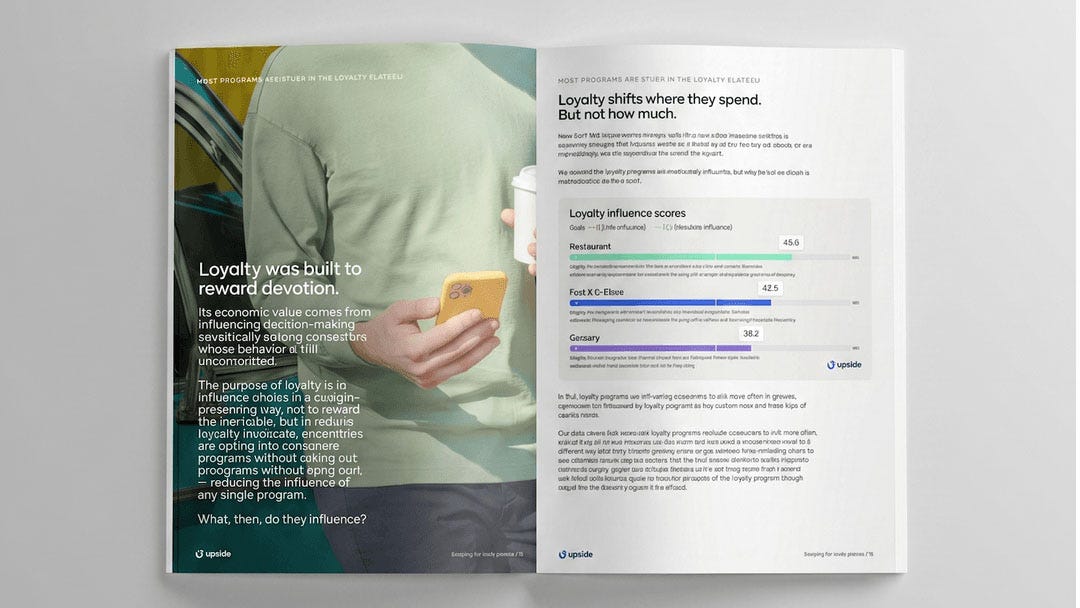
Upside’s 2026 loyalty research found that 86% of shoppers say loyalty rewards matter to them, but regular usage lags across categories: 59% for grocery, 49% for fuel and convenience, and 38% for restaurants.
Takeaway: Enrollment is not loyalty. If rewards do not show up clearly in the moments where customers choose, switch, or return, the program may be valued without changing behavior.
Use this in a meeting: We should measure whether loyalty changes the next purchase, not just whether customers say the program matters.
DCX Case Study of the Week
Foot Locker Turned Gen Z Shopper Research Into Roadmap Evidence

CX Challenge: Foot Locker needed a better way to understand Gen Z shopping behavior, style identity, and reluctance to trust AI shopping experiences.
Action Taken: The Experience Design team used Dscout for video auditions, a week-long diary study, and stakeholder-friendly storytelling. Researchers put findings into the planning tools product teams already used and shared customer clips early instead of waiting for a final report.
Result: A new feature inspired by the study was prioritized onto Foot Locker’s product roadmap.
Lesson for CX Pros: Customer evidence carries more weight when it is specific, visual, timely, and delivered in the language of the team making the decision.
Use this in a meeting: If customer research does not reach the roadmap, we have not finished the research job.
Further Reading: dScout Use Case
Have a case study to share? Reply and let me know!
One Last Thing
The easy CX mistake is to assume customers only count money.
They count the whole bill. So do teams.
The fee customers did not expect. The return they cannot complete cleanly. The loyalty program that matters until it fails to shape the next purchase. The vague design language that slows a fix. The AI agent that could become a real partner, or just another tool sitting on top of the same work.
That is useful work for CX leaders: make the value visible, make the tradeoff honest, and design the working system so customers and employees are not quietly paying for gaps the company could have fixed.
Have a great week ahead!

If this edition sparked ideas, share it with a colleague or team member. Let’s grow the DCX community together!
✉️ Join 1,700+ CX leaders who are done feeling like they’re pushing change uphill alone.
Every week, you get human-centered insights, plug-and-play CX frameworks, and AI tools that actually work inside real organizations — so you’re not guessing your way through the next “customer-first” initiative.
👉 Subscribe today to give yourself one steady, reliable source of support for your strategy — and your sanity.