CX Maturity Is the Conversation Leaders Keep Dodging
Why maturity debates stall when decisions get uncomfortable and what to do about it
Every few months, the same argument resurfaces.
Someone asks whether CX maturity actually matters.
Practitioners defend it.
Executives shrug.
Someone posts a model.
Nothing changes.
I saw it again recently in a Reddit thread that refuses to die. Mild frustration. Some cynicism. A lot of people talking past each other.
What stood out wasn’t the disagreement.
It was what nobody was naming.
CX maturity isn’t a capability debate.
It’s a management conversation leaders are uncomfortable having.
Why executives keep backing away from “maturity”
When CX leaders talk about maturity, they usually mean readiness.
Clear ownership.
Shared metrics.
Joined-up journeys.
Decisions made with customer consequences in mind.
When executives hear “maturity,” they hear something else.
More spend.
More governance.
Another model they’ll get judged against.
So they deflect.
“Does it tie to revenue?”
“Is this really a priority right now?”
“Let’s be practical.”
That pushback isn’t anti-CX. It’s self-protection.
Because maturity conversations surface pressure points most leadership teams would rather leave fuzzy. Who owns the end-to-end experience. Which tradeoffs are intentional. Where churn is being tolerated because fixing it would upset internal power structures.
That’s not theoretical. That’s political.
Here’s what that looks like in real life.
A B2B SaaS company knows onboarding is confusing and customers are bailing in month three. Fixing it means slowing sales and changing product priorities, so it gets “studied” for another quarter.
A telecom sees that long hold times are driving repeat calls and bad CSAT. Solving it would require shifting budget from acquisition to service, so the issue gets reframed as “call driver optimization” instead of a leadership decision about priorities.
Those aren’t capability gaps.
Those are management choices.
Practitioners aren’t wrong. They’re just speaking the wrong language.
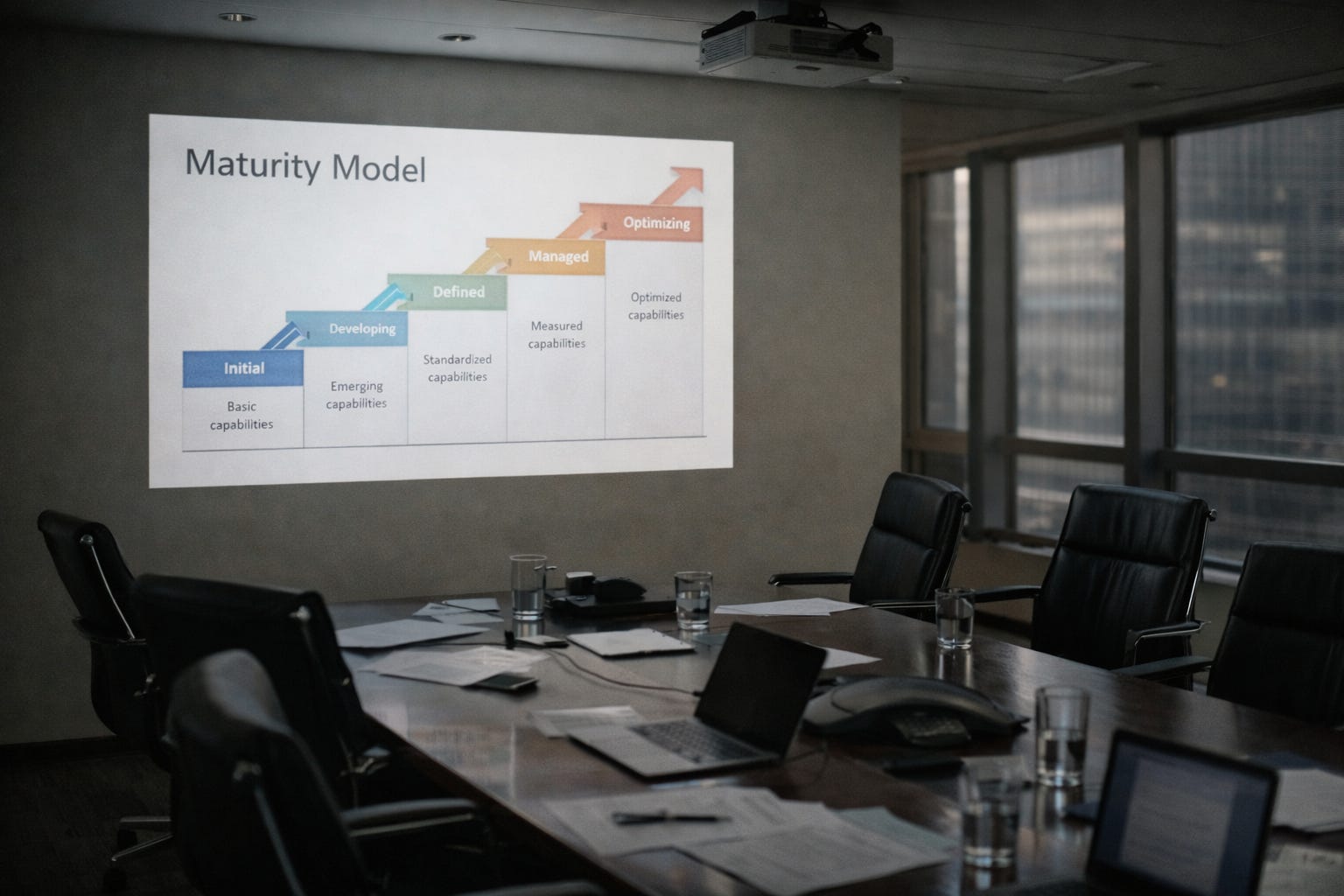
Most CX maturity models aren’t bad. They just land wrong.
They talk about stages.
Executives think in planning cycles.
They talk about capabilities.
Executives think in consequences.
They talk about “advancing maturity.”
Executives want to know what breaks if they don’t.
That gap is why maturity stalls at slideware.
If maturity doesn’t show up in planning conversations, budget decisions, or tradeoff debates, it isn’t real.
It’s a poster.
CX maturity is less about your toolkit and more about your decision hygiene.
What maturity actually looks like inside leadership rooms
Real CX maturity shows up when the pressure is on.
When churn ticks up, does the conversation drift toward promotions and campaigns, or toward the moments customers are actually quitting?
When cost cuts are proposed, does someone name the experience debt being created?
Maturity isn’t how polished your journey maps are.
It’s whether customer consequences get airtime when decisions hurt.
You can usually tell within ten minutes of a budget review or QBR.
Are customers referenced as “volume” or “traffic”?
Or do leaders name specific situations, promises, and pain?
That’s why executives and practitioners keep missing each other. They’re measuring different things.
Practitioners count artifacts. Dashboards. Maps. Programs.
Executives feel exposure. Where the business is over-promising, under-delivering, and quietly losing trust.
A simple executive rubric
If you want to make CX maturity a management tool instead of a debate, bring this into your next planning cycle.
Ask these four questions. Answer them out loud. Put the answers on one slide.
1. When customer pain conflicts with internal efficiency, who usually wins?
If efficiency wins by default, you’re early-stage. No shame. Just clarity.
What to do next: Pick one live decision this quarter where customer pain wins on purpose. Make the choice visible. Tell the story internally.
2. Can leaders name the top three experience decisions driving churn right now?
If churn is “multifactorial,” maturity is low. If leaders can point to specific moments customers walk away, maturity is rising.
What to do next: Run a simple loss review. Talk to a handful of customers who left. Bring three “this is when they quit” stories to the next exec meeting.
3. Are CX tradeoffs discussed before outcomes move, or after?
If CX only shows up in the post-mortem, maturity is reactive. If it shows up upstream, you’re making progress.
What to do next: Add one line to roadmap and budget templates. “Customer consequence: what changes for customers if we do or don’t do this?”
4. Who feels accountable for experience debt?
If nobody owns it, maturity is performative. If leaders feel discomfort carrying it forward, maturity is real.
What to do next: Name an executive owner for experience debt. Track it alongside financial and technical debt. Ask regularly what debt you just created and how long you’re willing to live with it.
You don’t need a score.
You don’t need levels.
You need a signal about how your leadership team thinks when tradeoffs get real.
Why this matters more now
Search interest in “customer experience maturity” spikes when budgets tighten and loyalty softens. That isn’t curiosity. It’s anxiety.
Leaders sense that brand equity is eroding quietly.
That churn isn’t always price-driven.
That customers leave long before surveys catch it.
Inside companies, maturity becomes the word teams reach for when outcomes start slipping and nobody can agree why.
Handled well, it creates alignment around real choices.
Which promises matter most.
Which pain you’re willing to tolerate.
Which shortcuts you’ll pay for later.
Handled poorly, it turns into another abstract fight about frameworks and org charts.
The reframe CX leaders need to make
Stop pitching maturity as progress.
Pitch it as risk.
Risk of invisible churn.
Risk of brand promises weakening without anyone noticing.
Risk of short-term calls hollowing out trust.
Executives live in risk. That’s their native language.
So shift yours.
When you present a maturity gap, frame it as exposure to preventable churn.
When you share VoC or journey work, tie it directly to revenue, regulatory, or strategic risk.
When you argue for CX investment, be explicit about what breaks if you don’t do it.
Your job isn’t to sell a model.
It’s to change the conversation that happens when tradeoffs get real.
CX maturity shows up there.
Or it doesn’t.
If it isn’t changing how leaders argue, decide, and explain outcomes to each other, it’s not maturity.
It’s decoration.
What Successful CX Leaders Do on Sundays
DCX Links: Six must-read picks to fuel your leadership journey delivered every Sunday morning. Dive into the latest edition now!
👋 Please Reach Out
I created this newsletter to help customer-obsessed pros like you deliver exceptional experiences and tackle challenges head-on. But honestly? The best part is connecting with awesome, like-minded people—just like you! 😊
Here’s how you can get involved:
Have feedback? Tell me what’s working, what’s not, or what you’d love to see next.
Stuck on something? Whether it’s a CX challenge, strategy question, or team issue, hit me up—I’m here to help.
Just want to say hi? Seriously, don’t be shy. I’d love to connect, share ideas, or even swap success stories.
Your input keeps this newsletter fresh and valuable. Let’s start a conversation—email me, DM me, or comment anytime. Can’t wait to hear from you!
www.marklevy.co
Follow me on Linkedin
Thanks for being here. I’ll see you next Tuesday at 8:15 am ET.
👉 If you enjoyed this newsletter and value this work, please consider forwarding it to your friends and colleagues or sharing it on social media. New to DCX? Sign Up.
✉️ Join 1,475+ CX leaders who stay ahead of the next customer curve.
Human-centered insights. Plug-and-play frameworks. Smart tools that actually work.
All designed for CX pros who want to build with purpose—and deliver with impact.
👉 Subscribe today and get the tools to elevate your strategy (and your sanity).