

Five CX Metrics That Make Executives Sweat
None of these fit neatly in a KPI box. That’s the point.
Most CX dashboards look impressive and tell you very little.
They’re clean.
They’re familiar.
They’re easy to defend in a steering committee.
And they let real problems hide in plain sight.
NPS. CSAT. Call volumes.
They measure activity. They rarely measure consequence.
If you want CX to matter in 2026, the metrics have to get sharper. A little more uncomfortable. A little harder to explain. A lot harder to ignore.
Here are five measurements I believe CX leaders should be willing to argue for. Even when finance hates them. Even when ops gets defensive. Even when the first reaction is, “That feels unfair.”
Good. It probably is.
1. Customer Effort to Escape (CEE)
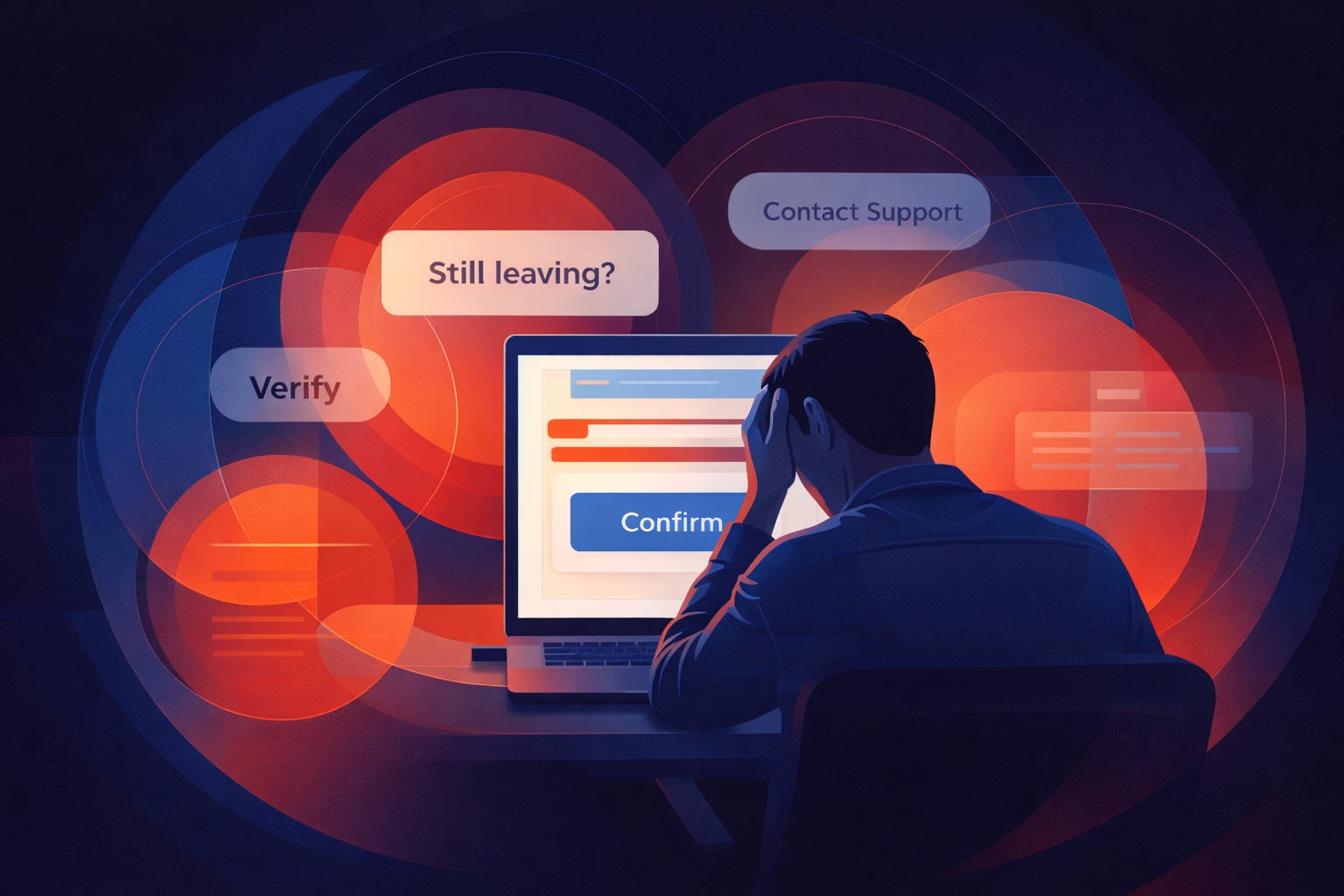
This one makes people squirm.
Customer Effort to Escape measures how hard customers have to work to stop doing business with you.
Canceling. Downgrading. Pausing. Opting out.
Count the steps. Count the redirects. Count the times the system “can’t find your account.” Count how often a human has to intervene to complete a simple exit.
Why this matters
If leaving is harder than staying, your loyalty numbers are lying.
I’ve sat in rooms where leaders bragged about retention while quietly approving dark patterns that trapped customers in subscriptions they didn’t want anymore. That’s not loyalty. That’s friction dressed up as success.
Try this
Have someone outside your team attempt to cancel, downgrade, or pause.
Time it. Screen record it. Watch it together.
If the room goes quiet, you’ve found your metric.
2. Broken Promise Rate (BPR)

Every company makes promises.
Most don’t track how often they break them.
Broken Promise Rate measures the percentage of customer interactions where the outcome didn’t match what the customer was led to expect.
Not what was legally disclosed.
What was implied. Suggested. Hinted at. Sold emotionally.
Install windows missed. Credits promised but never applied. Follow-ups that never happen. “I’ll take care of that for you” moments that quietly die in a ticket queue.
Why this matters
Trust doesn’t erode from big failures. It erodes from small, repeated disappointments.
And CX teams feel this one in their bones. They hear it in the sigh before the customer starts talking.
Try this
Audit a week of interactions and flag every moment where expectation and reality diverged.
Don’t debate intent. Just count the gaps.
That number will tell you more about future churn than any survey ever will.
3. Time to Human Relief (THR)

This is not about speed.
It’s about emotional resolution.
Time to Human Relief measures how long it takes from the moment a customer feels stuck, anxious, or powerless until they feel understood by a capable human.
Not a bot.
Not a script.
Not a polite apology.
A human who can actually help.
Why this matters
Automation works until it doesn’t. And when it fails, it fails emotionally before it fails functionally.
I’ve watched customers go from calm to furious not because the issue was complex, but because no one seemed to be listening.
Try this
Identify the trigger moments where customers escalate emotionally.
Track how long it takes before a human with authority enters the conversation.
If that number keeps creeping up, you’re building frustration debt.
4. Experience Debt Accrual (EDA)
You already track technical debt.
You just pretend experience debt isn’t real.
Experience Debt Accrual measures how often teams knowingly ship friction with the promise of fixing it later. And how long “later” actually takes.
Temporary workarounds. Clunky flows. Manual exceptions. “We’ll clean that up post-launch.”
We all do it.
The problem is we stop counting it.
Why this matters
Unpaid experience debt shows up as agent burnout, repeat contacts, and customers who sound tired before they even explain the issue.
Try this
Add one simple field to your intake or backlog.
“Is this shipping with known customer friction?”
If yes, it accrues debt.
If it stays unresolved past a set window, the interest rate goes up.
Make that visible.
5. Customer Memory Residue (CMR)
This one scares execs. Which is exactly why it matters.
Customer Memory Residue measures what customers remember about you after the interaction is over.
Not immediately.
Not in the glow of resolution.
Days later. Weeks later.
Do they remember feeling helped or handled? Respected or rushed? Trusted or tricked?
Why this matters
Customers don’t carry transcripts. They carry feelings.
And those feelings decide whether they come back, complain publicly, or warn their friends.
Try this
Run delayed follow-ups that ask one open question.
“What stuck with you from that experience?”
Read the answers. Don’t score them yet.
Patterns will emerge fast.
The Point
These metrics are not neat.
They don’t fit cleanly into quarterly decks.
They force uncomfortable conversations.
That’s the job.
If your CX measurement system never makes anyone defensive, it’s probably measuring the wrong things.
The work in 2026 isn’t collecting more data.
It’s choosing what you’re brave enough to look at.
So here’s the challenge.
Pick one of these.
Pilot it for 30 days.
Let it make you a little uneasy.
That discomfort is usually where the truth is hiding.
What Successful CX Leaders Do on Sundays
DCX Links: Six must-read picks to fuel your leadership journey delivered every Sunday morning. Dive into the latest edition now!
👋 Help pick next week’s topic
What should I cover next? Hit reply with a number:
Escalations: how to stop “everything is an escalation” from becoming your team’s personality
Stakeholder requests: translating “quick sync” into an actual decision, or killing it politely
VOC: separating real signal from the feedback that is just one loud person with a keyboard
Support ops: handoffs that don’t turn into customer ping-pong
Your choice: tell me the dumbest “urgent” you’ve been handed lately (2–3 sentences). I might feature it and fix it.
I’ll build next week’s issue around the winner.
www.marklevy.co
Follow me on Linkedin
Thanks for being here. I’ll see you next Tuesday at 8:15 am ET.
👉 If you enjoyed this newsletter and value this work, please consider forwarding it to your friends and colleagues or sharing it on social media. New to DCX? Sign Up.
✉️ Join 1,480+ CX leaders who stay ahead of the next customer curve.
Human-centered insights. Plug-and-play frameworks. Smart tools that actually work.
All designed for CX pros who want to build with purpose—and deliver with impact.
👉 Subscribe today and get the tools to elevate your strategy (and your sanity).


