

Let the Guest Hold the Cart
Plus: Target meets shoppers inside AI assistants, patient records get a chatbot, and Storyline turns financial data into personalized video.


Your daily signal on AI and CX — minus the hype.
DCX Stat of the day: Target says AI-driven traffic to Target.com has grown nearly 2,000% year over year. Target
In this issue:
→ Target meets shoppers inside AI assistants
→ Patient records get an AI front door
→ Agents become workflow capacity
→ Personalized video gets a data layer
→ Brands prepare for agentic customers
🔍 DEEP DIVE
Shopping Starts Before the Store

Target is doing the thing every retailer is going to have to sort out: letting shoppers start inside someone else’s AI assistant without losing the customer.
The company says guests can already use Google AI Mode and Microsoft Copilot to find Target products through natural-language prompts. ChatGPT support is coming soon. A Target app experience is planned for later in 2026. The stated goal is simple enough: let someone ask for “the best back-to-school backpack under $50” or “a birthday gift for a six-year-old who loves dinosaurs” and get useful Target options.
That sounds convenient. It also changes the front door.
Product discovery is no longer only search, filters, merchandising, and onsite recommendations. It is becoming a conversation that may begin in Google, Copilot, ChatGPT, or another assistant before the shopper ever reaches the brand.
That creates a practical CX problem: the assistant needs enough product data, availability, pricing, policies, reviews, and preference context to be helpful. But the shopper still needs control. The cart, substitution, sponsored result, delivery promise, return rule, and final purchase cannot feel like something the machine quietly decided on their behalf.
Bottom Line: Conversational commerce works only if the assistant reduces effort while keeping approval, comparison, and recovery visible to the customer.
📬 Copy-Paste Take
Before we send shoppers into AI-assisted product discovery, we need rules for inventory truth, sponsored results, substitutions, customer approval, and recovery. If the assistant can influence what lands in the cart, the customer needs to know what was recommended, why it appeared, and how to change course.
🧭 OPERATOR PLAYBOOK
Keep the Customer in the Loop
Pick one journey where AI can help a customer choose, compare, configure, renew, book, or buy.
Product search. Gift finding. Travel planning. Appointment scheduling. Plan selection. Account upgrades. Service add-ons. Subscription changes.
Audit every AI-assisted recommendation for four things:
Truth: Is product, price, availability, policy, and eligibility data current?
Preference: What did the assistant infer about the customer’s intent?
Approval: Where does the customer explicitly confirm the next step?
Recovery: How does the customer undo, swap, return, escalate, or ask again?
Then test the messy cases.
Out of stock. Wrong size. Sponsored answer. Bad gift match. Delivery promise changes. Return policy exception. Customer says, “That is not what I asked for.”
Ask your team: Where could AI make the next step feel easier while quietly making the customer feel less in control?
Signal: Conversational commerce is a trust test for recommendation logic, approval design, and service recovery.
📊 MARKET REALITY CHECK
The Work Is Already Getting Longer Legs
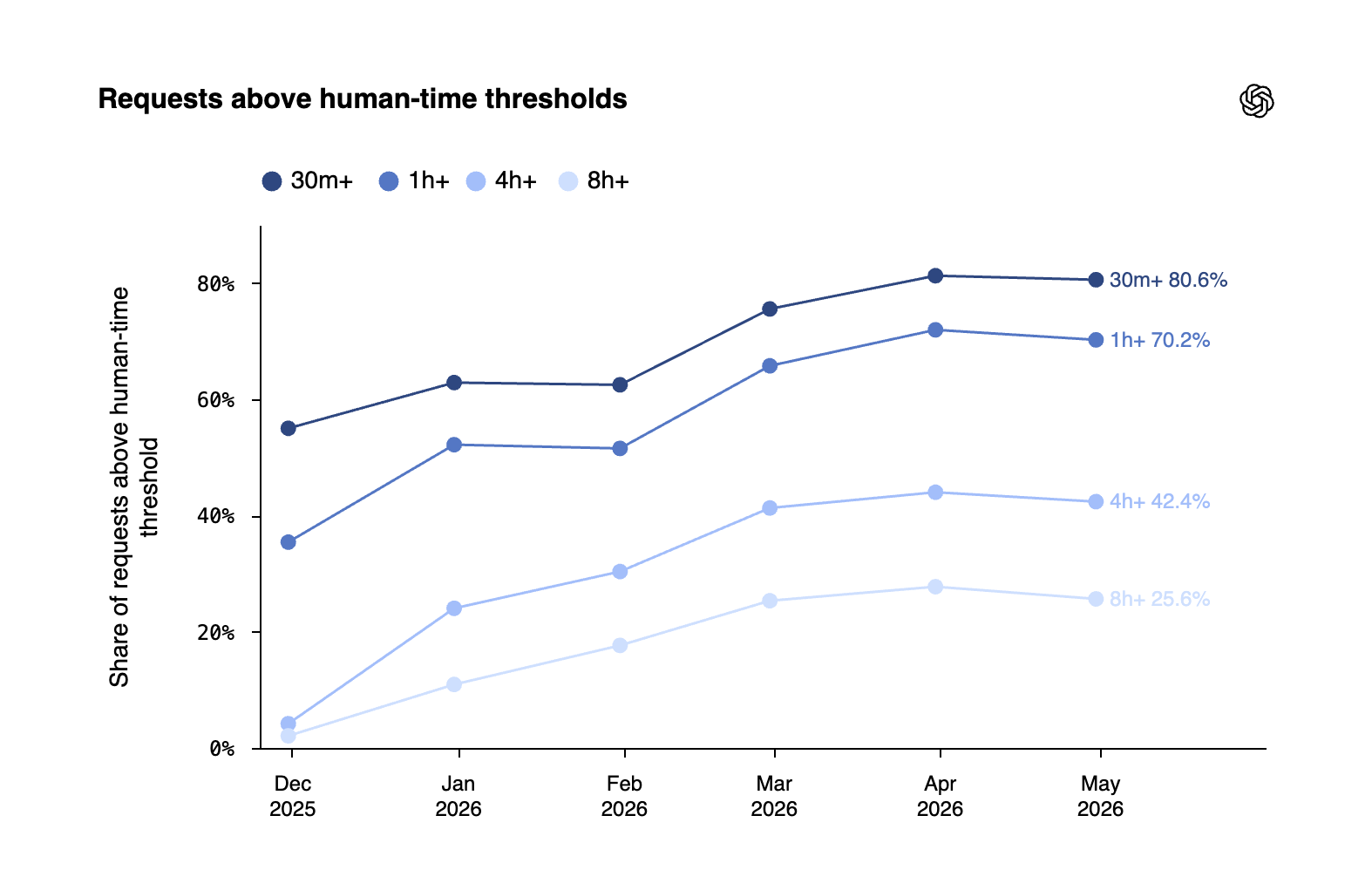
OpenAI’s Economic Research says 80.6% of sampled individual Codex users made at least one request in May 2026 estimated to exceed 30 minutes of human work. Inside OpenAI, customer support usage grew 32x from November 2025 to June 2026.
That does not prove every company is ready for autonomous customer operations. It proves something more practical: people are already asking agents to take on longer, messier work.
Support is where this gets real fast. Longer-running agents gather context, draft replies, inspect tickets, compare histories, suggest next steps, and sometimes nudge the employee toward a decision. Helpful, yes. Also a new accountability trail.
If the agent saves time but no one can tell which step shaped the outcome, the organization did not remove work. It moved the work into investigation, QA, coaching, compliance, and service recovery.
Why it matters: Agentic work will make teams faster only if the workflow also records what happened, who checked it, and how the customer gets a clean answer when the agent is wrong.
Agent capacity without traceability becomes support debt
🧰 TOOL WORTH KNOWING
Storyline
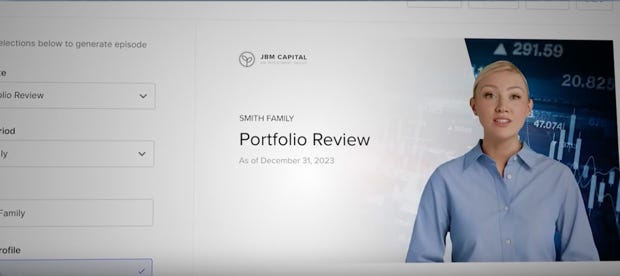
What it does: Storyline turns raw data into personalized, AI-powered videos. Its site is built around financial-services use cases, including financial advisors, broker-dealers, asset managers, retail banking, tax, and technology providers.
CX use case: Replacing generic account updates, portfolio explainers, onboarding messages, product education, and client check-ins with personalized video that reflects the customer’s actual data or relationship context.
Worth watching because: Financial services has a nasty communication problem: customers need clarity, but most data-heavy explanations arrive as statements, dashboards, PDFs, or generic emails. Storyline points to a more human shape for AI personalization: explain the customer’s own situation in a format they might actually watch.
Bottom line: Personalized content becomes more useful when it helps the customer understand a decision, not when it simply proves the company has more data.
📡 90-SECOND CX RADAR
AI Agents Become a New Customer Type
Brands are being pushed to prepare for a world where AI agents read content, compare offers, negotiate access, and route demand before a human ever lands on the site.
The useful customer-experience question is not “how do we rank in AI answers?” It is: what does the agent need to know, what can it do, and where does the real customer regain control?
Why it matters: Agentic commerce will pressure brands to make policies, inventory, terms, loyalty rules, and handoffs legible to machines without making the human experience feel like a side effect.
✅ YOUR MOVE
AI assistants are starting to shape what customers see, compare, and choose before they reach the brand’s owned experience.
That makes recommendation logic, customer approval, and recovery design part of the journey, not cleanup work after launch.
Do this with one product journey.
Pick a common customer prompt your business would love an AI assistant to handle:
“Find me a gift under $50.”
“Compare these two plans.”
“Explain what changed in my account.”
“Tell me what I should buy next.”
Then walk it all the way through.
What product, plan, service, or message should the assistant recommend?
What facts does it need to be right?
Where does the customer see the reason?
Where can they compare, change, reject, or ask for a human?
And what happens when the assistant recommends the wrong thing?
That last question is the one to sit with.
Conversational commerce will not fail because the prompt box is awkward. Customers will learn that part quickly enough.
It will fail when the recommendation feels convenient right up until the customer needs to understand, change, return, dispute, or undo it.
If AI helps choose the next step, the customer needs a clean way to question the next step.
Until tomorrow,

👥 Share This Issue
Think of one person who’s wrestling with AI in CX right now
and forward this to them.
I’m obsessed with Wispr Flow Pro! Get a Free Month on me.

If someone forwarded this to you, they thought you needed to see it before your next AI planning meeting. Get your own copy.