
The Clarity Ladder: The CX Framework That Removes Hesitation
Why hesitation is not a behavior problem. It is the brain hitting the brakes.
Every CX leader knows the moment I am talking about.
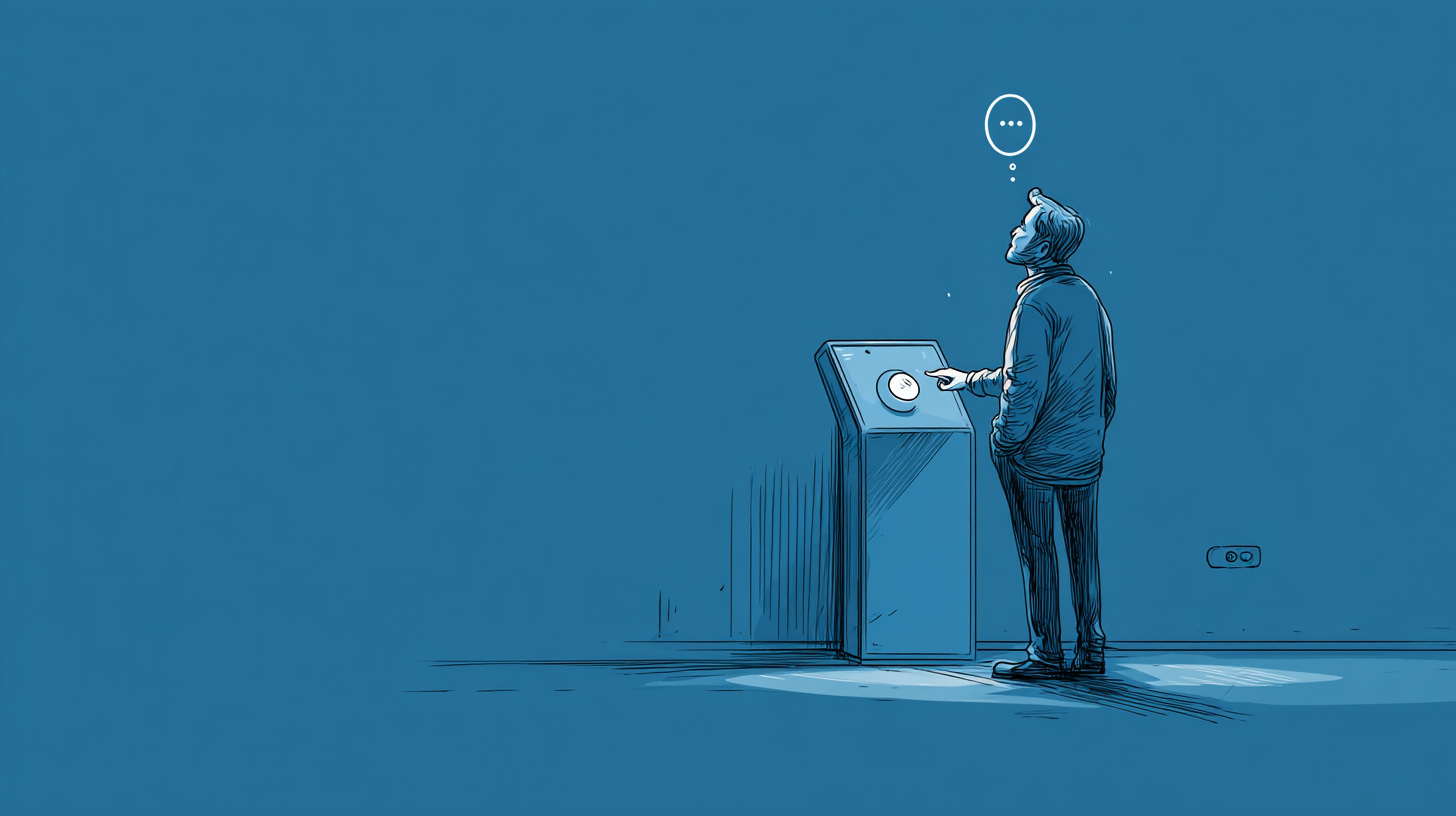
The pause.
The pause.
Not the dramatic kind. The small one.
The customer blinks. Their face shifts. Their hand stops moving.
Something in their brain just yelled stop.
For a long time, I treated that pause like background noise. Something I noticed but never investigated. I would tell myself the customer was distracted, or picky, or overthinking it.
I was wrong.
The pause is the whole signal. It is the brain saying I lost the thread, and now I need to decide if I trust what is happening or if I should protect myself from it.
I learned this through a failure that still irritates me.
A few years ago, I led a redesign we felt confident about. Clean. Predictable. The kind of work you release with a sense of relief. We launched it and congratulated ourselves. Within forty-eight hours, customers were dropping at step two. Not any complicated moment. A tiny one that nobody on the team had flagged.
We went into a room with recordings and watched.
Within minutes, the pattern was obvious.
Customers were not frustrated. They were confused.
Confusion does not shout. It shows up in small physical reactions. A longer stare. A shift in posture. A new tab opening like they need a breather from whatever we just put in front of them.
That moment became the beginning of the Clarity Ladder. It did not start as a framework. It started as questions I saw customers asking with their behavior. When I wrote them down, they lined up across every journey we touched. The full version eventually made its way into The Psychology of CX 101, but the idea was born in that room while we watched hesitation build because of our own assumptions.

The Five Rungs Customers Need to Move With Confidence
Customers ask these five questions internally and fast.
If even one is unclear, everything slows.
What is happening right now?
What changed and was it intentional?
What do I need to do next?
What happens after I do this?
Why should I trust this?
Let us go through them.
Rung 1: What is happening right now?
Customers do not arrive with a clear head. They arrive with whatever noise their day handed them. A half-written message. A child calling from another room. A notification pulled from the corner of their eye. Their attention is split before the page even loads.
If the first screen does not anchor them, hesitation shows up immediately.
One moment made this clear to me.
In a diagnostics flow for support, the first screen said You are good to go.
That was all we gave them.
In session recordings, customers paused.
Some waited for the content to load even though it was already there.
Some clicked the back button because they thought they had missed a step.
Others refreshed the page, looking for whatever we failed to show.
We thought we were being direct. In reality, we gave them no sense of the moment they were in. They could not tell if they were starting, finishing, or avoiding a problem without realizing it.
We changed it to a simple anchor.
Your connection was tested successfully. Here is what we checked.
Once we shipped that version, customers moved right away.
Knowing what moment you are in changes everything.
Rung 2: What changed, and was it intentional?
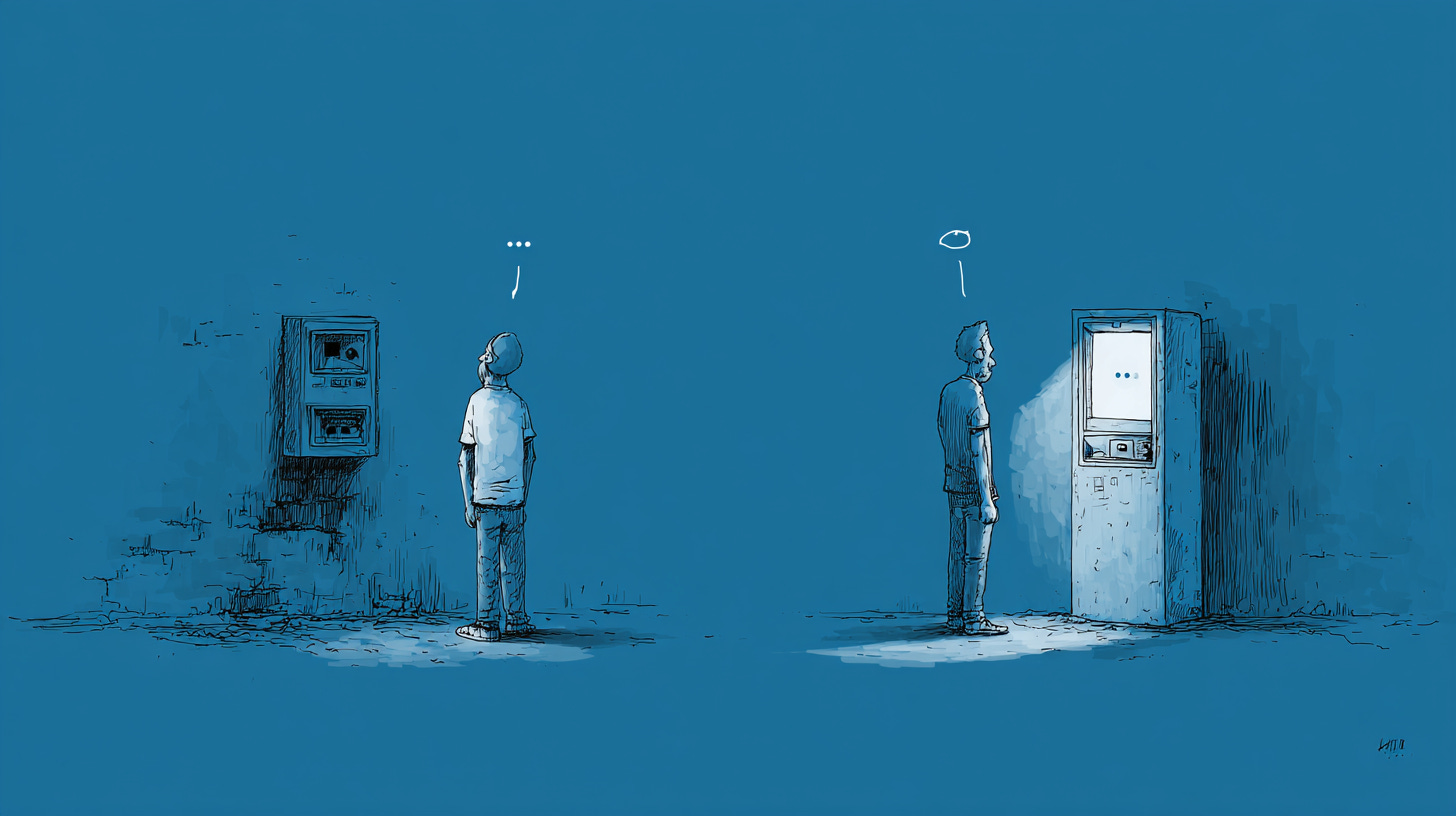
Humans notice differences before meaning. If something looks even slightly off, the mind stops to investigate.
One example still sticks with me. A long time customer logged in and saw their plan price increase by three dollars. A tiny number. We told ourselves it would not matter.
It mattered.
They froze, then checked their email.
Then they opened new tabs like they were searching for evidence.
Eventually, they walked.
At first, I tried to rationalize it. Later, I had to accept the simple truth. The issue was not the amount. The issue was the silence. We made them solve a mystery we created. And when people have to decode your decision, trust drains quickly.
A single sentence would have prevented the spiral.
Your plan reflects the January rate update. Nothing else changed.
People can work with change. Surprises are the problem.
Rung 3: What do I need to do next?
This rung breaks more journeys than teams realize. The customer is willing to move. They simply do not know what action the experience expects.
An in person moment taught me this more clearly than any dashboard.
A customer came in to return a device.
The associate scanned it, typed something, moved the device aside, and said nothing.
The customer stood there, hands folded.
They shifted their weight.
They looked at me, then at the associate, then back at the counter.
You could see the confusion in their posture.
Am I supposed to leave?
Do I sign something?
Is something else coming?
The associate thought the next step was obvious because they had done it hundreds of times. For the customer, nothing about that moment made sense.
We changed the script to something clear and human.
Thank you, Sam. Your return is complete. Is there anything else I can help you with today?
The awkward pause vanished. Once people know whether the next move is theirs or the system’s, they settle.
Rung 4: What happens after I do this?
People want to understand the path ahead. When they cannot, the mind fills the gap with caution.
Request submitted might be the vaguest phrase in CX.
Submitted to whom.
Reviewed when.
Should I wait here.
Should I check email.
Is something supposed to happen now.
In recordings, I watched customers sit on that screen without touching anything. Five seconds. Sometimes more. That is a long time for a moment that should be automatic.
We replaced it with a real timeline.
You will receive a confirmation email within two minutes and a status update within an hour.
Once people knew what to expect, the hesitation dropped immediately.
Rung 5: Why should I trust this?
Trust does not grow from tone or reassurance. It grows when the customer sees nothing hiding under the surface.
In one plan change flow, we surfaced everything that usually lives in fine print.
The new total.
The future total.
The next billing date.
The date the old rate ends.
No extras.
No selling.
Just the information people needed to feel steady.
The shift in behavior was immediate. Not because we earned trust with messaging, but because we removed the moments where something could jump out at them.
The Blind Spots That Sink Teams
The first time one of my cleanest designs failed, I felt embarrassed and irritated at myself. I had confused internal agreement with external clarity. I assumed that because the team understood the flow, the customer would too.
Here are the patterns I still see.
Teams over explain when they are unsure.
More text is usually hiding a shaky decision.
Teams assume customers notice what insiders notice.
If you debated an icon for weeks, you will see it.
Customers will not. They follow habit, not semantics.
Teams try to reassure customers before helping them understand.
You are all set means nothing if the customer does not know what just happened.
These are not failures. They are markers of where clarity broke.
How to Use the Clarity Ladder Today
You do not need a committee or a deck.
You just need ten honest minutes.
Pick one journey.
Choose the one that irritates you the most.
Walk through the five rungs as a human.
Not the expert.
Not the builder.
Sit with it the way a distracted customer would.
Anywhere you hesitate, customers already do.
Fix the first two rungs.
When What is happening and What changed are clear, half the friction disappears.
Reduce the journey to one guaranteed sentence.
If a customer only saw that sentence, would they know what to do.
If not, tighten it.
Test with someone who has no context and stay silent.
The moment you feel the urge to explain anything, mark that location. That is your problem area.
Watch behavior before metrics.
Fewer follow up questions.
Less apologizing from support.
Shorter handle times.
You feel clarity before you measure it.
What the Ladder Cannot Fix and What It Reveals
The Clarity Ladder cannot fix broken systems or outdated policies.
It can show you where customers fall out of the story.
Once you see that, prioritization gets simpler and arguments get shorter.
Inside teams, something shifts.
Conversations tighten.
People stop talking past each other.
The team begins asking the same questions which means they finally share a definition of clarity.
Momentum returns once everyone sees the same thing.
How CX Actually Improves
Not through transformations.
Not through staged roadmaps.
Not through decks heavy enough to keep a door open.
CX changes through small, targeted experiments that alter real behavior.
A single rewritten line can do more for a journey than a full rebuild.
I have seen it happen too many times to pretend otherwise.
The Psychology of CX 101 and the companion workbook exist as documentation for the deeper system, not a sales pitch. They help once you are already experimenting. You do not need them to start.
What You Should Do Today
Pick one journey.
Run it through the five rungs.
Fix the first two.
Ship the change.
Watch what customers do next.
If you want more detail behind each rung, the full version sits inside The Psychology of CX 101.
You do not need anything to begin.
One journey.
One rewrite.
One missing rung replaced.
Customers feel the difference quickly.
Your team will too.
What Successful CX Leaders Do on Sundays
DCX Links: Six must-read picks to fuel your leadership journey delivered every Sunday morning. Dive into the latest edition now!
👋 Please Reach Out
I created this newsletter to help customer-obsessed pros like you deliver exceptional experiences and tackle challenges head-on. But honestly? The best part is connecting with awesome, like-minded people—just like you! 😊
Here’s how you can get involved:
Have feedback? Tell me what’s working, what’s not, or what you’d love to see next.
Stuck on something? Whether it’s a CX challenge, strategy question, or team issue, hit me up—I’m here to help.
Just want to say hi? Seriously, don’t be shy. I’d love to connect, share ideas, or even swap success stories.
Your input keeps this newsletter fresh and valuable. Let’s start a conversation—email me, DM me, or comment anytime. Can’t wait to hear from you!
www.marklevy.co
Follow me on Linkedin
Thanks for being here. I’ll see you next Tuesday at 8:15 am ET.
👉 If you enjoyed this newsletter and value this work, please consider forwarding it to your friends and colleagues or sharing it on social media. New to DCX? Sign Up.
✉️ Join 1,450+ CX leaders who stay ahead of the next customer curve.
Human-centered insights. Plug-and-play frameworks. Smart tools that actually work.
All designed for CX pros who want to build with purpose—and deliver with impact.
👉 Subscribe today and get the tools to elevate your strategy (and your sanity).


