

The Customer Already Told You What Comes Next
DCX Links August 16, 2026

Welcome to the DCX weekly roundup of customer experience insights!
Listening is only useful when someone knows what to do, when to act, and what must stay human.
Picture a customer typing, “If this isn’t fixed by Friday, I’m gone.”
The message gets tagged as negative, added to a dashboard, and counted in the monthly report. By then, Friday has come and gone. The company listened. It just didn’t move.
That little scene sits behind this week’s four stories. Customers tell us when time matters, when value feels thin, when a situation needs human judgment, and when they simply need help using the product in front of them. The hard part is turning that information into a clear next move.
As automation moves closer to the customer, the gap gets harder to ignore. Technology can surface more context and answer more questions. But it can also make a fuzzy operating model move faster without making it more useful.
So here’s the question running through this issue: when the customer tells you what matters, does your system know what happens next?
This Week’s Must-Read Links
Your Customer Signal Has a Clock on It

Same topic, different clocks: Two customer messages land in the same queue. One says an order arrived late. The other says, “If the replacement doesn’t ship today, cancel it.” Both are negative. Only one has a clock attached, yet most listening systems treat them almost identically.
Detection doesn’t create action: HBR’s researchers call this temporal urgency. It shows up in reviews, support conversations, feature requests, and community posts. AI can spot the language at scale. That’s useful. But spotting urgency isn’t the same as doing something about it. Someone still needs permission to move the issue forward.
Month-end is too late: Many VoC programs are built to aggregate. They can show a clean trend line at month-end while missing the customer whose decision window closes this afternoon. Plenty of teams celebrate better listening while the actual response path remains unchanged. That’s listening as documentation.
Give urgency an owner: Add urgency to the signal taxonomy, then connect each urgent category to an owner, response window, and visible action. Otherwise, you’re building a better record of the moments the company missed.
Ask your team: Which customer signal loses value fastest if nobody acts today?
Value Has to Solve a Real Customer Problem

The store is shouting price: Retailers have put value everywhere: shelf tags, loyalty apps, fuel points, private labels, and weekly specials. Yet shoppers are buying fewer items. Unit sales fell roughly 2% year over year across the prior three months, and 80% of consumers said they were trying to spend less.
The basket has a different question: The store is answering pressure with more price messages. The customer is asking a broader question: can I get two dinners, a few lunches, and the basics into this basket without blowing the budget? Those questions are related, but they aren’t the same.
A discount doesn’t finish dinner: A wall of sale tags doesn’t automatically create a believable value proposition. Customers still need help with budgets, time, product choice, and the ordinary work of running a household. Saving fifty cents doesn’t help if the customer leaves without a workable meal.
Design value around the job: Ask what customers are trying to protect under pressure, then organize offers and service around that need. Price matters. Clarity, usefulness, and reliability determine whether the trip feels worth making.
Ask your team: What customer problem does our value message actually help solve?
Protect the Moments That Need Human Judgment

The handoff gives the system away: “Can you explain the situation again?” reveals what an automated journey optimized. The customer did the work. The bot contained the contact. None of that history reached the employee expected to recover the relationship.
Automate the routine, protect the consequential: Routine tasks like password resets, order status, and basic account changes can move into automation without much customer grief. Pricing conversations, renewals, complex implementations, and escalations are different. PwC research cited by Angel Rogers, chief customer officer of Model N in Fast Company, found that 86% of consumers consider human interaction moderately or very important to their brand experience.
Context is part of the service: A blanket automation target can remove the people who carry customer history and know when the standard answer will make things worse. That knowledge may never appear in a data field, but can decide whether a renewal survives or an escalation settles.
A powerless employee is another queue: Human service isn’t automatically better. An employee without context, authority, or time is just a slower handoff. Protecting human moments means deciding where judgment matters, then giving the person enough room to use it.
Ask your team: Which customer moments should never arrive at a person stripped of context?
Ford Put the Owner’s Manual Inside the Customer Journey

The manual arrives at the wrong moment: The owner’s manual is a strange service channel. It may hold every answer, but it’s rarely where the owner needs it: on Friday night while loading a truck or halfway through a road trip with the tire-pressure light on.
The answer knows the vehicle: Ford has started rolling out a vehicle-aware AI assistant inside its Ford and Lincoln mobile apps, with in-vehicle access planned for 2027. It can answer questions using details about the customer’s specific vehicle, including fuel level, tire pressure, towing, cargo capacity, and road-trip needs.
Context raises the stakes: This goes beyond dropping a generic chatbot into an app. The product becomes easier to own when help follows the customer’s actual situation. But the stakes rise too. Advice about towing, maintenance, or vehicle condition can carry physical and financial consequences.
Measure the task, not the novelty: Ford’s rollout is a practical test of contextual service. Measure whether customers complete the task, trust the answer, and know when to call a technician or dealer. The assistant earns its place only if ownership becomes safer and easier.
Ask your team: Where could verified product context remove customer guesswork without hiding risk?
DCX Stat of the Week
The Store Still Gives Customers Something Digital Can’t
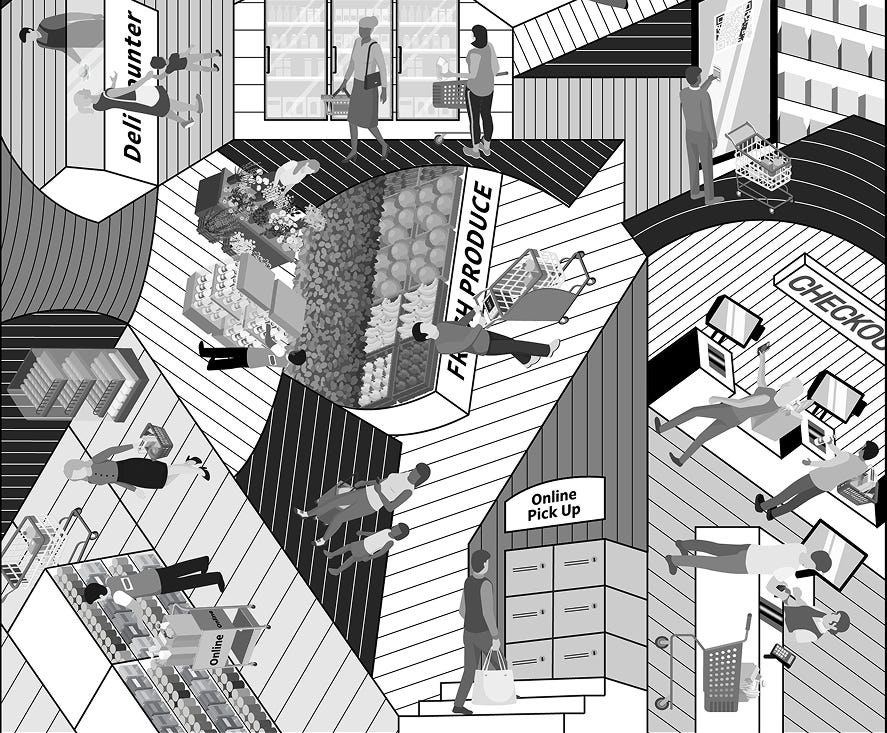
48% of U.S. grocery shoppers said they would miss being able to select products themselves if they could no longer shop in person, the most common response in FMI’s 2026 grocery shopper research.
Takeaway: Think about choosing an avocado, checking the marbling on a steak, or deciding whether the strawberries will last until Tuesday. Physical choice creates control and confidence. A digital journey that removes that reassurance may be faster without feeling easier.
Use this in a meeting: “Before we digitize this step, let’s name what confidence the physical experience gives customers and replace that deliberately.”
Source: FMI, U.S. Grocery Shopper Trends 2026
DCX Case Study of the Week
Samsara Turns Customer Feedback Into Operating Change
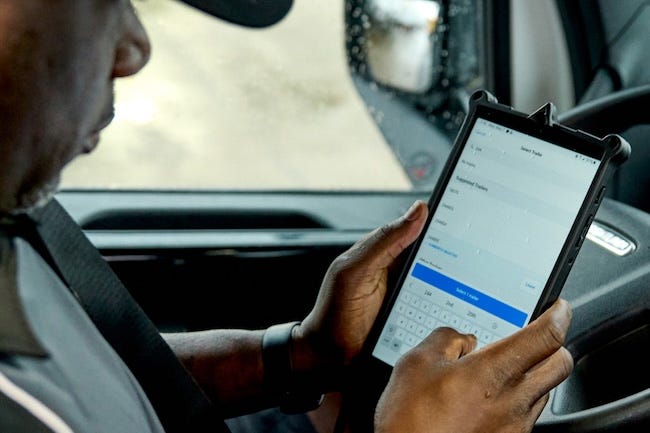
CX Challenge: As Samsara scaled, customers mentioned problems to support, during renewals, and in product interviews. Each team saw its piece. Nobody could easily see the whole journey or decide what should change first.
Action Taken: Samsara brought product, marketing, sales, services, and operations into one VoC program. The CX team combined surveys, interviews, journey maps, and operational metrics, then used action trackers with functional leaders to move identified problems into accountable work.
Result: The first wave produced more than 30 systemic improvements and launched at least 12 initiatives around critical pain points. Qualtrics reports that happier Samsara customers show twice the annual recurring revenue growth and 30% fewer support tickets, generating millions in savings and new revenue each year.
Lesson for CX Pros: Feedback gains influence when it is linked to an operating metric, a named team, and a tracked decision. The dashboard is not the outcome.
Use this in a meeting: “Let’s track the decision and business result created by this insight, not just the volume of feedback.”
Have a case study to share? Reply and let me know!
One Last Thing
Customers don’t speak in neat departmental language. They say, “I need this fixed by Friday.” They stand in an aisle trying to make dinner work. They reach a person and hope they won’t have to start over. They ask a product a practical question in the middle of using it.
Those moments don’t need another dashboard. They need a clear next move and someone who owns it.
Have a great week ahead!

If this edition sparked ideas, share it with a colleague or team member. Let’s grow the DCX community together!
✉️ Join 1,700+ CX leaders who are done feeling like they’re pushing change uphill alone.
Every week, you get human-centered insights, plug-and-play CX frameworks, and AI tools that actually work inside real organizations — so you’re not guessing your way through the next “customer-first” initiative.
Human-centered, commercially-aware, and honest about what it really takes to move the customer curve.
👉 Subscribe today to give yourself one steady, reliable source of support for your strategy — and your sanity.