But the Customer Asked For It.
Six words that kill more customer experiences than bad execution ever could.
I’ve sat in too many strategy meetings where this phrase ends the debate.
Someone suggests a change that doesn’t fit the vision.
The room goes quiet.
Then someone says it: “But the customer asked for it.”
Discussion over. Decision made.
Except that no decision was actually made.
Here’s what that sentence really means:
• We’re afraid to say no
• We don’t trust our own judgment
• We’d rather blame the customer later than own a choice now
The best CX leaders I know do something different.
They listen to customer requests, then ask:
“What problem are they really trying to solve?”
Because customers are brilliant at knowing their problems. They’re terrible at designing solutions.
When a customer asks for a specific change, they’re handing you a symptom.
Your job is to diagnose the disease.
Sometimes the answer is implementing what they asked for. Often, it’s implementing something completely different. Occasionally, it’s changing nothing at all.
All three require the same thing: the courage to choose.
“The customer asked for it” isn’t a strategy.
It’s abdication.
Real leadership is saying “I heard you, and here’s what we’re doing instead,” then explaining why.
That’s the hard part.
That’s also the only part that matters.
A fast gut-check when the room freezes
The moment someone says, “But the customer asked for it,” the meeting usually stalls.
Not because the idea isn’t good. Because no one wants to be the person who looks like they’re ignoring the customer.
You need a way to unstick the room without escalating it.
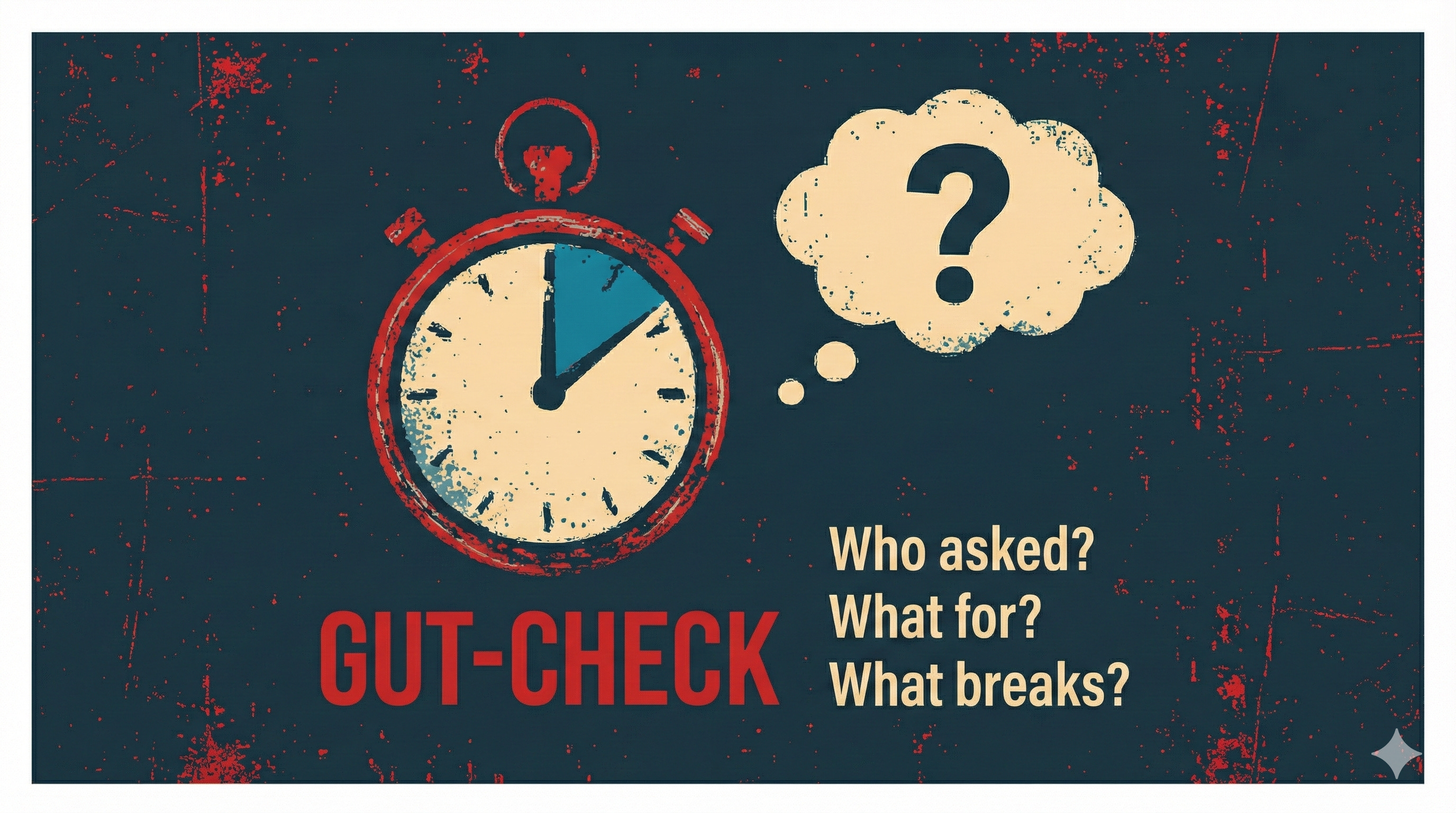
Use this quick diagnostic. Ask it out loud.
Who asked for this: A named customer. A clear segment. A real pattern. Not “we’ve been hearing.”
What were they trying to get done in that moment: Speed. Certainty. Control. Avoiding a mistake. Finishing something before a deadline.
What breaks if we do exactly what they asked: Cost. Consistency. Trust. The experience for the next thousand customers.
If the room can’t answer all three, you’re not making a customer-led decision.
You’re dodging responsibility.
I’ve watched these questions shift conversations instantly. People stop hiding behind the phrase and start talking about tradeoffs. That’s where real decisions live.
The script leaders actually need
Most leaders don’t lack conviction. They lack words.
They worry that pushing back will sound dismissive. Or arrogant. Or out of touch.
So they stay quiet.
Here’s a script you can use without sounding defensive or academic. Say it as-is.
“I hear the request. I don’t think doing exactly that solves the underlying problem. Here’s what I think they’re really struggling with, and here’s the option I’m proposing instead.”
That sentence does three things at once.
It acknowledges the customer.
It shows you’ve thought past the surface.
It makes the choice yours.
No apology. No hedging. Just ownership.
Teams don’t need leaders who echo feedback. They need leaders who interpret it.
A 15-minute exercise for teams drowning in edge cases
If your backlog is full of “special cases,” this is for you.
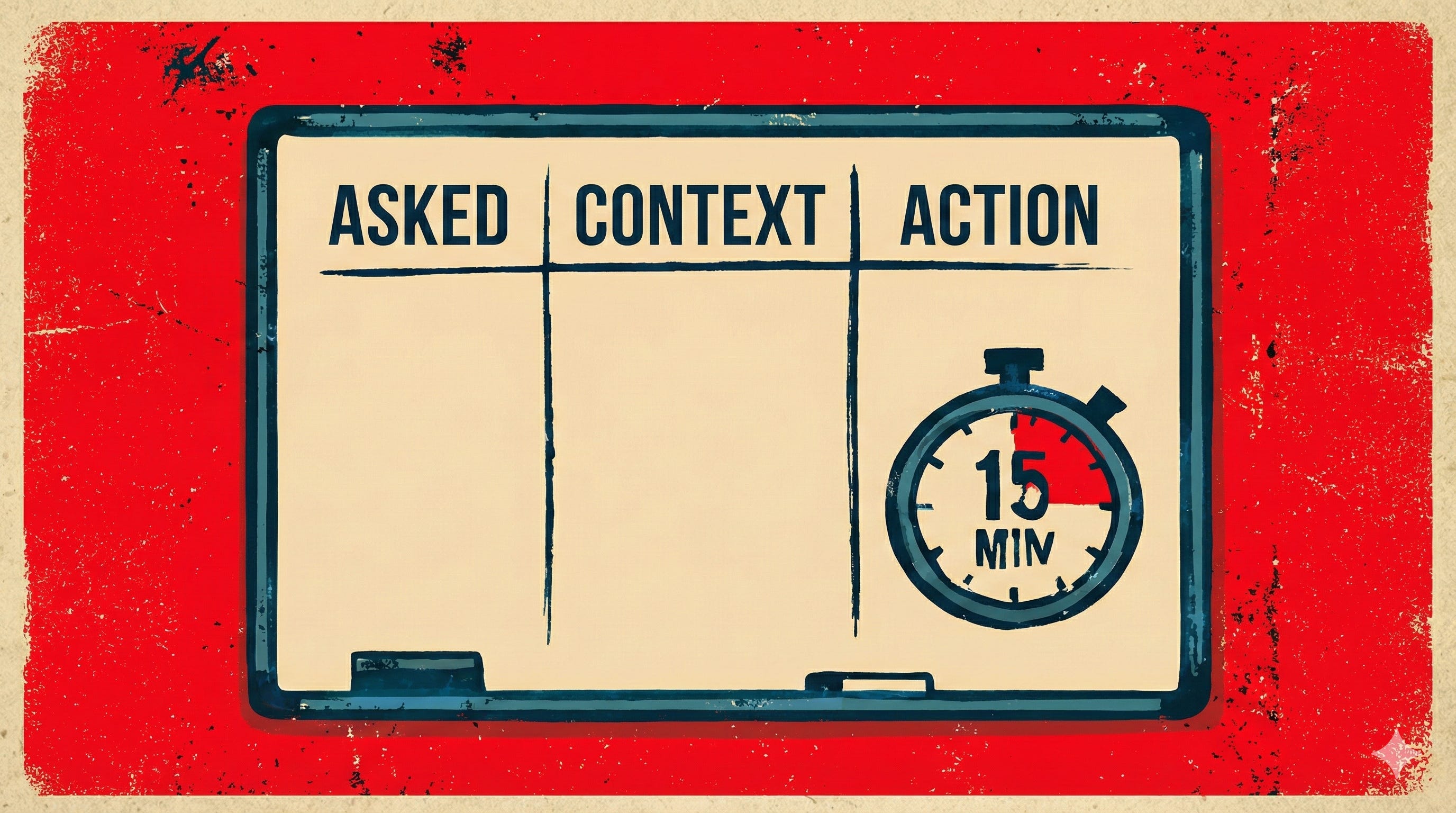
Run a request autopsy.
Keep it short. Keep it honest.
Pick one recent customer request that sparked debate or crept into the roadmap.
Draw three columns.
What they asked for
What was happening in their world
What we actually changed
Then ask the question everyone avoids.
Did this reduce confusion for the next thousand customers, or did it just quiet one loud moment?
If it’s the second, don’t shame it. Name it.
That was a patch.
Patches have a place. They just shouldn’t masquerade as strategy.
When teams see this pattern a few times, something clicks. They start designing for clarity instead of noise.
When saying no is the most customer-friendly move
This is the part no one likes to admit.
Sometimes the right answer is no.
Not because you’re rigid. Because inconsistency taxes customers more than constraints ever will.
Here’s a simple rule that’s saved me more than once.
If a request increases cognitive load for the majority to help a minority, pause hard.
Customers say they want flexibility. Their behavior punishes unpredictability every time.
They hesitate.
They second-guess.
They lose trust.
Protecting customers from that contradiction is part of the job, even when it’s uncomfortable.
Especially then.
Try this before the week is over
Don’t forward this. Don’t workshop it. Do something with it.
Ask your team to flag one decision where “the customer asked for it” was used as the reason.
Revisit it together.
Not to undo it.
To understand it.
What problem were you avoiding owning?
What tradeoff went unsaid?
What would you choose next time if you had to explain it to a new hire?
That reflection builds judgment.
Judgment is the job.
Customers don’t hire you to echo their requests.
They hire you to make sense of their chaos.
That responsibility doesn’t feel safe.
It feels like leadership.
What Successful CX Leaders Do on Sundays
DCX Links: Six must-read picks to fuel your leadership journey delivered every Sunday morning. Dive into the latest edition now!
👋 Please Reach Out
I created this newsletter to help customer-obsessed pros like you deliver exceptional experiences and tackle challenges head-on. But honestly? The best part is connecting with awesome, like-minded people—just like you! 😊
Here’s how you can get involved:
Have feedback? Tell me what’s working, what’s not, or what you’d love to see next.
Stuck on something? Whether it’s a CX challenge, strategy question, or team issue, hit me up—I’m here to help.
Just want to say hi? Seriously, don’t be shy. I’d love to connect, share ideas, or even swap success stories.
Your input keeps this newsletter fresh and valuable. Let’s start a conversation—email me, DM me, or comment anytime. Can’t wait to hear from you!
www.marklevy.co
Follow me on Linkedin
Thanks for being here. I’ll see you next Tuesday at 8:15 am ET.
👉 If you enjoyed this newsletter and value this work, please consider forwarding it to your friends and colleagues or sharing it on social media. New to DCX? Sign Up.
✉️ Join 1,450+ CX leaders who stay ahead of the next customer curve.
Human-centered insights. Plug-and-play frameworks. Smart tools that actually work.
All designed for CX pros who want to build with purpose—and deliver with impact.
👉 Subscribe today and get the tools to elevate your strategy (and your sanity).