

The Front Door Has a Mind of Its Own
Plus: Robot clerks, policy clocks, AI answer tests, and the awkward little question every CX team is going to inherit.


Your daily signal on AI and CX — minus the hype.
Join CX, support, and operations practitioners to compare how AI is changing the way teams understand service demand, improve workflows, and reduce friction at the next DCX AI Roundtable on June 23

DCX Stat of the day: Galbot estimates a robot-run convenience store on Hong Kong’s Hung Hom waterfront could increase foot traffic by up to 40%. People
In this issue:
→ A convenience store gets a robot employee
→ The customer journey gets a compliance clock
→ AI answers become something teams have to prove
→ Bad proof becomes a customer trust problem
→ The escape hatch becomes part of the experience
🔍 DEEP DIVE
Meet the Clerk Who Never Takes a Break

A 24-hour convenience store on Hong Kong’s Hung Hom waterfront is getting a new employee: Xiao Gai, a humanoid robot from Galbot.
The job description is not exactly tiny. Stock shelves. Pick items. Handle checkout. Understand voice commands. Recognize targets. Make decisions in the store environment.
Easy joke: great, now even buying gum needs a robot strategy.
Useful read: AI is moving out of the side panel and into the customer’s path.
This is not a recommendation widget. It is not a chatbot floating in the corner. It is a service worker standing between the customer and the purchase.
That changes the job for CX.
Can the robot understand what the customer wants? Can it recover when the item is missing? Can it explain a price, a substitution, a return rule, or an age restriction? Can a customer get help when the novelty wears off and the interaction just needs to work?
That last part is the real test.
Bottom Line: Physical AI will not be judged by how futuristic it looks. It will be judged by how well it handles ordinary customer friction without leaving people stuck in front of a machine.
📬 Copy-Paste Take
Customer-facing AI is about to show up in more visible places. Before we put it in front of customers, we need to define what it can do, what it must never decide alone, and how a customer gets out when the interaction fails.
🧭 OPERATOR PLAYBOOK
Build the Escape Hatch Before the Demo
Pick one journey where AI could become the first thing the customer meets.
Store help. Product search. Booking. Checkout. Claims. Returns. Account access. Appointment changes. Support triage.
Audit the journey for four handoff risks:
Intent: What does the AI need to understand?
Authority: What can it actually decide or complete?
Escape: How does the customer get to a human or safer channel?
Repair: Who fixes the mess if the AI creates one?
Then test the boring stuff.
Missing item. Confusing request. Angry customer. Policy exception. Payment problem. Accessibility need.
That is where the demo usually stops and the customer experience begins.
Ask your team: Where would a customer feel trapped if this AI interaction failed?
Watch for: Customers do not experience AI as innovation. They experience it as access, help, delay, refusal, or recovery.
📊 MARKET REALITY CHECK
Compliance Just Joined the Journey Map

Colorado’s Consumer Protections for Artificial Intelligence law gives CX teams a preview of the next headache. And honestly, it is a useful one.
The law requires deployers of high-risk AI systems to complete impact assessments, review deployments annually, notify consumers when a high-risk system is a substantial factor in a consequential decision, offer correction of incorrect personal data, and provide an appeal path with human review when technically feasible.
The number to notice is 90 days.
Developers and deployers have disclosure obligations tied to known or reasonably foreseeable algorithmic-discrimination risks, and the summary repeatedly uses a 90-day window after discovery or credible notice.
That means AI-powered customer journeys are becoming evidence systems.
If AI affects eligibility, access, credit, insurance, healthcare, housing, legal services, or other consequential decisions, the organization needs more than a nice journey map. It needs documentation, review, correction, appeal, and escalation paths that actually work.
Why it matters: The more AI shapes customer access and outcomes, the more CX strategy has to include explainability, documentation, and recovery by design. Legal may own the statute. The customer will feel the process.
AI decision + customer impact = evidence obligation
🧰 TOOL WORTH KNOWING
Patronus AI: A Smoke Alarm for Bad AI Answers
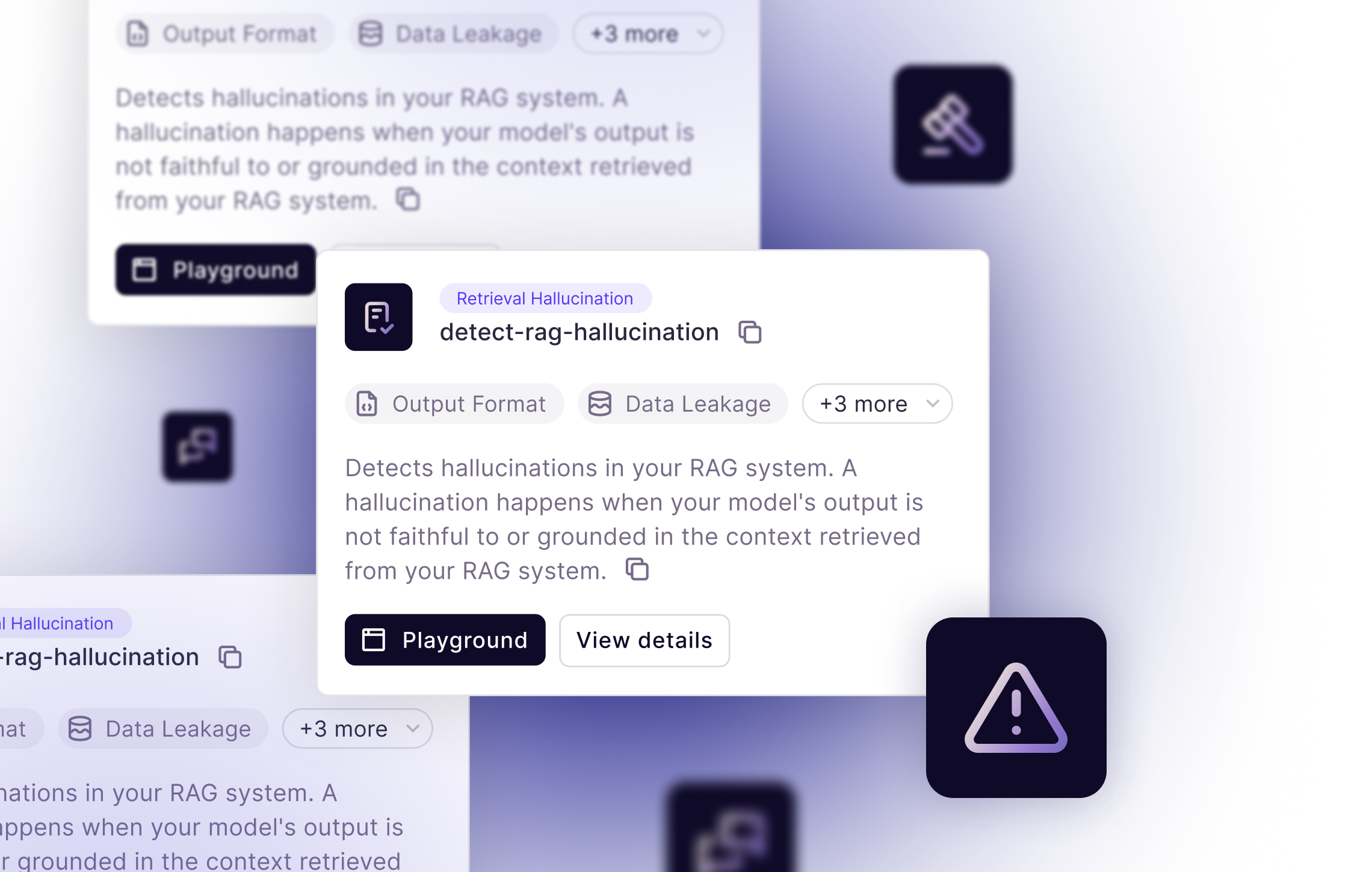
What it does: Patronus AI Customer Service helps teams evaluate, debug, and monitor LLM applications and agents. Teams have used it to evaluate support chatbots for quality, retrieval context, hallucination, summarization, tone, guardrails, and safety.
CX use case: Testing the answers customers actually get before those answers become screenshots, complaints, chargebacks, cancellations, or escalations.
Worth watching because: As AI moves into stores, shopping, service, search, and policy-heavy journeys, CX teams need more than a launch checklist. They need a repeatable way to test whether the AI gives the right answer, uses the right source, escalates at the right moment, and knows when confidence is dangerous.
Bottom line: If AI can shape what customers believe or do, answer testing becomes part of managing the experience.
📡 90-SECOND CX RADAR
The EU AI Act uses a risk-based framework and gives regulators serious penalty power, including fines that can reach €35 million or 7% of worldwide annual turnover for specified prohibited practices.
For CX teams, this is the part to watch: AI experience design will not stay separate from compliance. Customer-facing teams will need to know which AI uses are simple assistance, which require transparency, and which create real exposure.
The Case Study Needs a Receipt
KPMG pulled an agentic AI report after named organizations disputed claims about how they were using AI. The customer-facing lesson is simple: polished AI-generated proof can move through trusted channels before anyone checks whether the claim is real.
That same failure pattern can show up in service answers, product recommendations, sales guidance, and employee-facing knowledge tools. If the AI sounds certain, someone still has to check the receipt.
✅ YOUR MOVE
The next CX problem may not look like a bad chatbot. That would be too easy.
It may look like a robot clerk, an AI shopping assistant, an automated eligibility decision, a recommendation engine, a service answer, or a policy explanation that quietly becomes the customer’s path forward.
This week, pick one journey where AI could become the gatekeeper.
Then answer three questions:
What can it decide?
What proof does it need?
How does the customer recover when it is wrong?
If the recovery path is unclear, the experience is not ready.
When AI becomes the front door, access, proof, and recovery become the customer experience.
Until tomorrow,

👥 Share This Issue
Think of one person who’s wrestling with AI in CX right now
and forward this to them.
I’m obsessed with Wispr Flow Pro! Get a Free Month on me.
If someone forwarded this to you, they thought you needed to see it before your next AI planning meeting. Get your own copy.