
The Mind Is the Interface: The New Psychology of CX
The brain, not your process map, decides the customer experience.
Why CX Needs a New Lens

CX is flooded with buzzwords. “Delighting the customer.” “Driving engagement.” “Creating seamless experiences.
If you’ve worked inside a company for more than ten minutes, you know what this language is for: avoiding the real conversation.
Customers aren’t thinking about “journeys” or “experience layers.” They’re just trying to get something done without wrestling your internal chaos.
They react. They judge. They decide.
That’s the truth, stripped of the adjectives.
If you want to understand real CX, stop relying on dashboards that only tell flattering stories and look at how people behave when they’re not being surveyed or nudged. CX psychology doesn’t care about your QBR narrative; it cares about how minds work.
And once you see that, the jargon fog stops being impressive and starts being a red flag.
The Old CX Model Is Cracking

For years, CX efforts revolved around maps, diagrams, blueprints — the whole design-thinking starter kit.
They looked great in conference rooms and executive reviews.
They just didn’t fix anything.
Customers don’t show up with your workflow memorized. They show up tired, annoyed, and busy. Half of them are multitasking. A few are hungry. None of them are interested in your “orchestration layer.”
If the experience feels like work, they’ll tense up.
If it feels good, they’ll lean in.
If it feels slow, they’ll disappear with no explanation.
No “initiative” or “strategic alignment effort” changes that.
Psychology does.
That’s the only layer customers actually interact with.
And if your CX plan needs a glossary to make sense, that’s the first sign it won’t.
A Better Way Forward

If the mind is the interface, the job isn’t to polish steps. It’s to understand the psychology those steps trigger. Everything else is set dressing.
Four principles quietly shape every customer decision.
Ignore them and you’re chasing your tail.
Work with them and the whole thing starts to feel… well, sane.
This article gives you more than enough to start experimenting right away — one moment, one principle, one change. You don’t need a committee or a budget cycle. You just need the willingness to test something real instead of debating terminology.
And when you eventually want the structure that turns small experiments into a persistent habit — the kind that rewires how a team thinks — that deeper pattern already exists. The Psychology of CX 101 + read-along workbook lay it out without drowning you in jargon. You’ll know when you’re ready for that step.
For now? Start here.
Pick a principle.
Try something small.
Watch what shifts.
The rest becomes obvious once you stop talking about CX and start poking at it.
Principle 1: Clarity
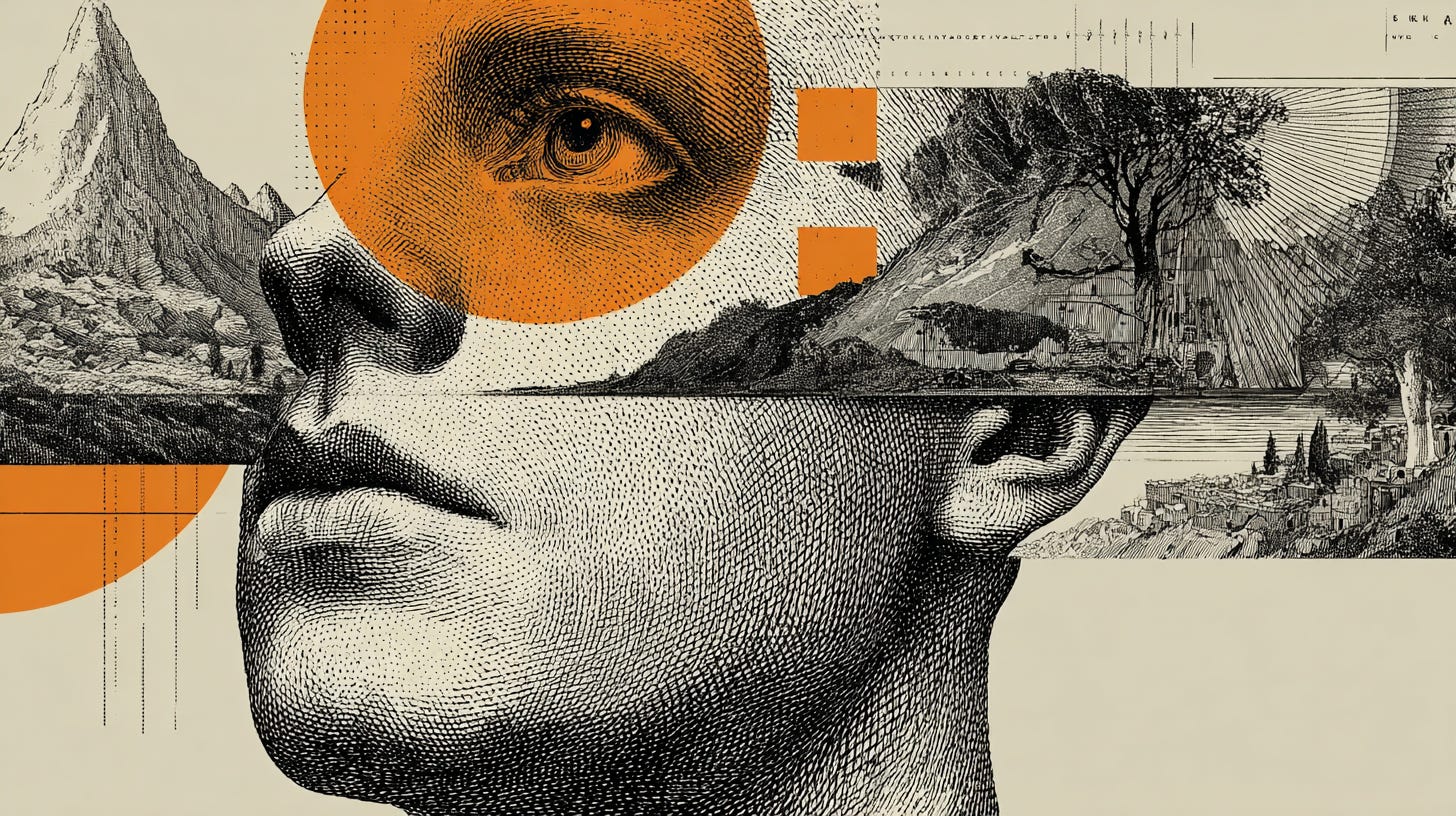
Clarity wins. Every time.
Buzzwords kill clarity. Also every time.
Most friction in CX comes from writing meant to impress colleagues instead of helping actual people.
Teams keep saying, “They’ll figure it out,” which mainly reveals they’ve never watched someone fail to complete a basic form.
A few fixes that don’t require a single meeting:
One instruction at a time.
Words real people use.
Fewer choices — seriously, fewer.
If your label needs an explanatory tooltip, the problem isn’t the customer.
Sprint 1: Cognitive & Mental Processing
(Workbook pp. 14–27; Book Part III pp. 17–38)
- Run the 10-Second Clarity Test: show one screen or step to two people for ten seconds, remove it, and ask them what they thought they were supposed to do.
- Redesign whatever they couldn’t explain instantly.
- Measure the difference — time-to-decide, % who got it on first view.
Reality always wins the argument.
Principle 2: Emotion
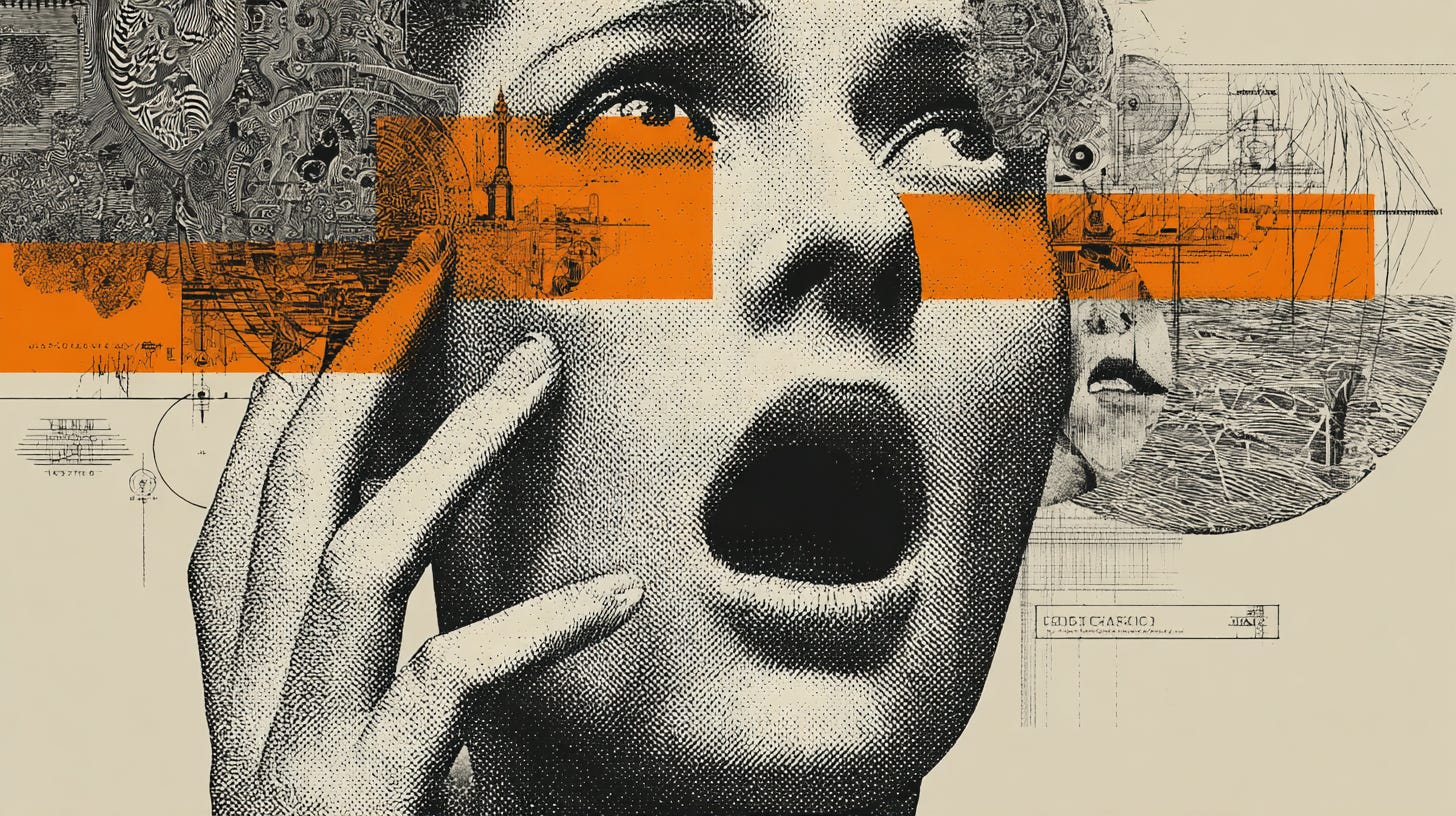
People don’t make rational decisions. They make fast, emotional ones and then justify those decisions with whatever logic is nearby.
A tiny human moment — a helpful save, a real message, a sign that someone is actually paying attention — will beat any bloated “personalization engine.”
A few simple moves:
Add one moment that feels human.
Rewrite one robotic message so it sounds like a person.
End the experience with clarity, not corporate wallpaper.
If your “human touch” required twelve emails and four approvals, something got lost along the way.
Sprint 2: Emotional & Social Dynamics
(Workbook pp. 28–44; Book Part IV pp. 39–61)
- Run the Empathy Echo Test: ask two people to narrate their emotions aloud as they move through one flow — where they eased up, where they tensed, where something felt off.
- Rewrite a touchpoint based on their emotional “peaks and dips,” then run the same test again.
- Record the trust rating (1–5) and the verbatims.
The emotional truth is usually louder than the functional one.
Principle 3: Motivation
People like progress. Even symbolic progress.
A progress bar that starts at 20%.
A checklist with the first item pre-checked.
A clear next step instead of five competing ones.
This isn’t “gamification.”
It’s how human motivation works.
Some quick ways to use that fact:
Add a simple progress cue to one flow.
Start people at step one automatically.
Offer one next step — not a buffet of equally confusing options.
When customers bail early, the problem is usually motivation, not “funnel leakage.”
Sprint 3: Motivation & Engagement
(Workbook pp. 45–62; Book Part V pp. 62–84)
-Try the Endowed Progress Quick Win: take a multi-step flow and give people an artificial head start (start them at 20%, pre-check the first item).
- Then run two versions side by side — one with the head start, one without — and compare completion rates and drop-off points.
Momentum is measurable, and the data is almost always embarrassing for the “no progress cue” version.
Principle 4: Flow
Flow isn’t workflow. It’s whether the experience makes sense to an actual human being who is distracted, tired, or holding a coffee.
Flow breaks when we force customers into our internal logic:
Asking for information they don’t have.
Chatbots that defend the company instead of helping the person.
Mandatory account creation for a one-time purchase — a classic move.
Find the moment where people hesitate. That hesitation is the entire story.
Fix it and flow comes back.
If you need three teams and a “change-management plan” to fix a two-second hesitation, it’s not a friction problem. It’s an overthinking problem.
Sprint 4: Experience & Design Flow
(Workbook pp. 63–76; Book Part VI pp. 85–104)
- Run a Friction Audit: watch two people complete the same task and say “stop” every time they hesitate, reread, or look confused.
- Document each stall point, then redesign just one of those moments.
- Re-test the same flow and measure time-to-complete and ease ratings.
Most “big” CX problems are born from microscopic moments like these.
Tools Do Not Fix Thinking
Companies love tools. They’re shiny, expensive, and perfect for internal victory laps. But tools don’t fix thinking. They accelerate whatever thinking you already have — good or bad. A messy experience wrapped in AI is still a messy experience.
It just fails at scale.
How CX Actually Improves
Not through “transformations.”
Not through roadmaps with twelve stages.
Not through decks thick enough to be used as doorstops.
CX improves through small, targeted experiments that change customer behavior.
One moment.
One principle.
One measurable improvement.
Sometimes a single rewritten sentence does more than an entire reorg.
That’s why The Psychology of CX 101 and the companion workbook exist — not as props, but as the quiet structure underneath the experiments. You notice their value once you’re already moving — not before.
CX gets better through small experiments, not massive overhauls. Pick one moment. Apply one principle. Test it. Then watch how a clearer sentence or a simpler option can change everything around it.
Teams that experiment learn faster and gain confidence.
Where to Start
Pick the principle that bothers you the most.
That discomfort is the only honest signal in the room.
Start with Sprint 1:
Grab two people.
Run the test.
You’ll learn more in 90 minutes than you have from months of meeting notes.
One instruction. One improvement. One proof.
Ignore psychology and you’re basically rearranging buzzwords.
Work with psychology and the whole system stops fighting you.
That’s the point.
What Successful CX Leaders Do on Sundays
DCX Links: Six must-read picks to fuel your leadership journey delivered every Sunday morning. Dive into the latest edition now!
👋 Please Reach Out
I created this newsletter to help customer-obsessed pros like you deliver exceptional experiences and tackle challenges head-on. But honestly? The best part is connecting with awesome, like-minded people—just like you! 😊
Here’s how you can get involved:
Have feedback? Tell me what’s working, what’s not, or what you’d love to see next.
Stuck on something? Whether it’s a CX challenge, strategy question, or team issue, hit me up—I’m here to help.
Just want to say hi? Seriously, don’t be shy. I’d love to connect, share ideas, or even swap success stories.
Your input keeps this newsletter fresh and valuable. Let’s start a conversation—email me, DM me, or comment anytime. Can’t wait to hear from you!
www.marklevy.co
Follow me on Linkedin
Thanks for being here. I’ll see you next Tuesday at 8:15 am ET.
👉 If you enjoyed this newsletter and value this work, please consider forwarding it to your friends and colleagues or sharing it on social media. New to DCX? Sign Up.
✉️ Join 1,450+ CX leaders who stay ahead of the next customer curve.
Human-centered insights. Plug-and-play frameworks. Smart tools that actually work.
All designed for CX pros who want to build with purpose—and deliver with impact.
👉 Subscribe today and get the tools to elevate your strategy (and your sanity).


