

Trust Now Needs Proof
Deepfakes are bleeding out of politics and into the customer journey


Your daily signal on AI and CX — minus the hype.
📌 DCX Stat of the day: In 2025, the FTC received 3 million fraud reports, and consumers reported $15.9 billion in losses.
In this issue:
→ Deepfakes turn proof into a CX requirement
→ Fraud now hits service, not just marketing
→ Apple pushes assistants toward routed experiences
→ Smart homes get one AI front door
→ Digital banking still breaks at the basics
CONTEXT
Fake content keeps getting better. Trust keeps getting harder.
Reuters reported on March 28 that AI deepfakes are already spreading through the 2026 midterms, with weak disclosure and almost no federal guardrails. That reads like a politics story. It is one. But it is also a customer experience story, and probably the more useful one for most operators.
Once synthetic audio and video get cheap enough, every high-trust interaction gets more fragile. Payment alerts. Account recovery. Refund approvals. Callback requests. Service outreach. Identity checks.
The question stops being, “Was that easy?” and becomes, “Was that actually you?”
WHY IT MATTERS
A lot of CX teams still treat fraud as something owned by security, compliance, or risk. That split is getting expensive.
The moment a customer doubts the message, the channel, or the person on the other end, the journey starts to break. Response rates fall. Escalations rise. More people call back. More cases stall out. The operational cost shows up quickly.
Trust erosion is not abstract. It hits cost-to-serve.
EXEC SUMMARY
🎯 Exec Briefing: Why this should be on your agenda
Deepfakes are changing the job.
It is no longer enough for an interaction to be smooth. Now it also has to feel provably real. That changes the standard for service design, especially around money, identity, access, and personal information.
Teams need stronger proof at high-risk moments. They also need better recovery when a customer hesitates, refuses, or flags something as suspicious.
📬 Send this to your COO
AI is making fake messages, fake voices, and fake confidence cheaper to produce. That pressure is going to hit service, payments, and account recovery before most teams are ready for it. The next CX gap is not speed. It is proof.
🔎 Deep dive
Proof design is replacing reassurance copy
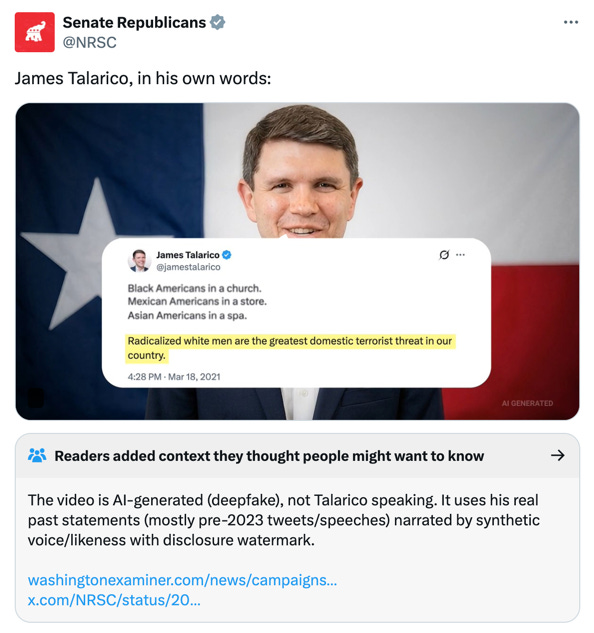
Proof design is starting to matter more than reassurance copy.
Most brands still answer trust with language. Secure. Protected. Verified. That worked better when fraud looked sloppy. It works less well when the fake version sounds polished.
So the shift is simple: less reassurance, more evidence.
Customers need signals they can actually check. A callback through a known channel. Step-up verification that feels proportionate. Clear markers for official outreach. A simple way to pause, confirm, or report something suspicious without losing progress.
This is where a lot of teams get it wrong. They add friction and call it safety. Usually that just makes life harder for legitimate customers while better scammers adapt.
The stronger move is more precise: add proof where the stakes are high, and keep the low-risk path fast.
Source: Reuters
OPERATOR PLAYBOOK
Audit your high-trust journeys before fraud does.
Start with the moments where hesitation is most likely because the downside feels personal: account recovery, payment changes, refund approvals, proactive service outreach.
Then look for four things:
Can the customer confirm the interaction through a second trusted channel?
Does the proof reduce doubt without exposing more sensitive data?
If suspicion shows up, does the handoff to a human preserve context?
If the customer raises a false alarm, can they continue without starting over?
Then ask a harder question: are your fraud controls catching bad actors, or mostly punishing honest customers?
One useful prompt for the team: where does the customer need proof today but only get copy?
Signal: In the AI fraud era, trust is becoming a product requirement.
📈 Market Reality Check
Fraud is not edge-case noise anymore
The FTC told Congress last week that consumers submitted 3 million fraud reports in 2025 and reported $15.9 billion in losses. That is up from 2.6 million reports and more than $12 billion the year before. Investment scams drove the largest dollar losses. Imposter scams remained the most reported category.
That does not mean every brand has the same exposure. It does mean fraud is no longer a niche risk sitting at the margins. It is becoming a normal operating condition.
When losses rise that fast, verification and recovery stop being back-office concerns. They become part of experience design.
More fraud pressure plus more convincing synthetic content means proof-first journeys are worth more.
🧰 Tool Worth Knowing
TELUS SmartHome Assistant
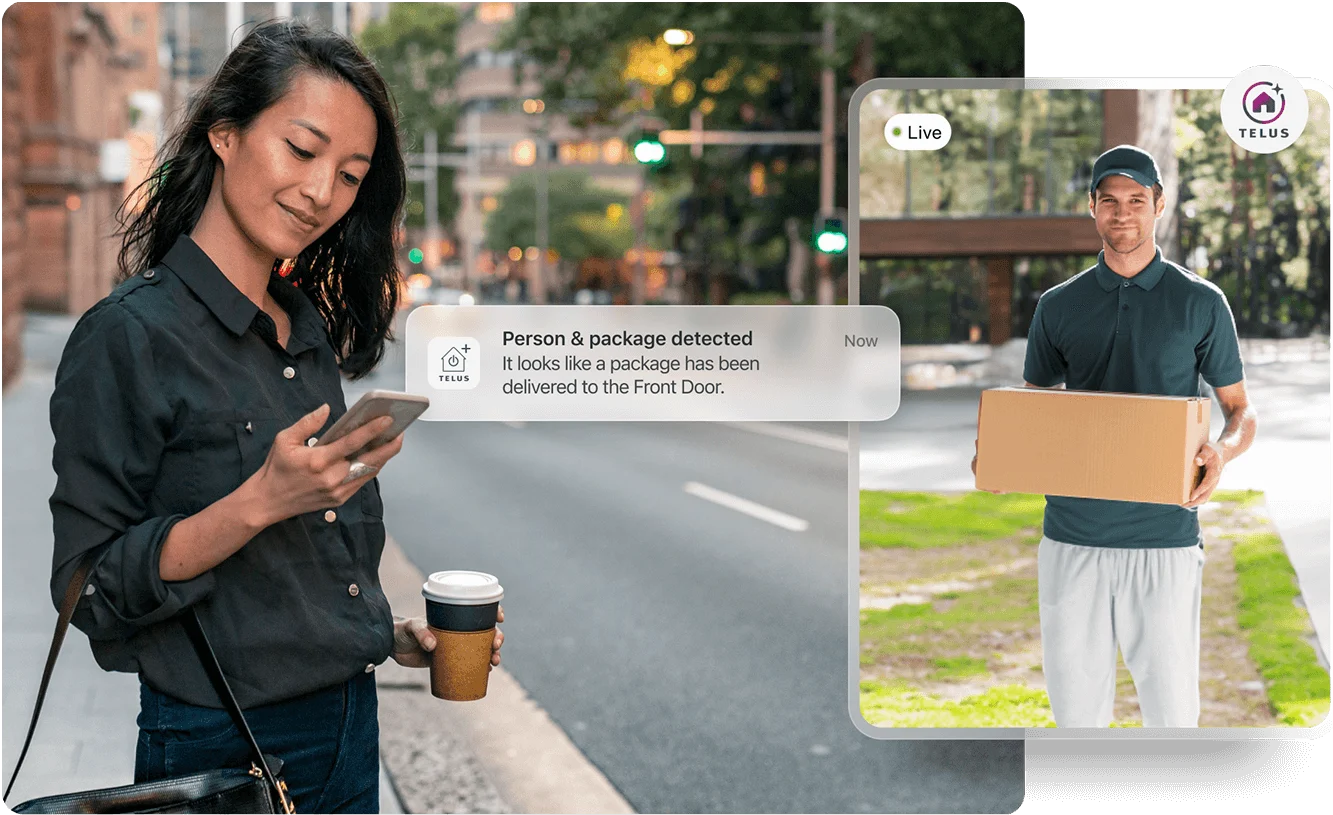
What it does: TELUS launched a smart home assistant that uses multimodal AI and a generative interface to manage connected devices through one front door instead of a pile of separate apps.
CX use case: It is a useful signal for teams trying to reduce app-switching and fragmented control. One interface. One login. One place to act. That is where consumer AI starts to feel practical.
Why it matters: It frames AI less as a chatbot and more as an orchestration layer for everyday tasks.
Bottom line: The consumer AI products that win may do so by removing toggling, not by sounding clever.
⚡ 90-Second CX Radar
Apple hires ex-Google executive to head AI marketing amid push to improve Siri
Apple hired Lilian Rincon, who previously worked on shopping and assistant products at Google. The implication is straightforward: assistants are becoming traffic directors. Brands will need to think about discoverability, utility, and trust inside routed experiences, not just in owned apps.
Lloyds exposed the personal data of up to 447,936 customers after a software defect during an overnight update. No AI angle needed here. It is a reminder that trust does not collapse only when fraud gets smarter. It also breaks when basic digital reliability slips.
🧭 Your Move
Pick one high-trust journey this week and map the moments where a customer has to decide whether to believe you.
Then replace one weak reassurance signal with one stronger proof signal.
The brands that get this right will feel calmer, clearer, and safer. That will matter more than sounding innovative.
When fake gets cheaper, proof becomes part of the product.
Until tomorrow,

👥 Share This Issue
Share this issue with a CX leader dealing with fraud, service design, or digital trust.
I’m obsessed with Wispr Flow Pro! Get a Free Month on me.
