


Welcome to the DCX weekly roundup of customer experience insights!
Customers rarely see the operating model. They see whether the bus arrived, whether someone helped, and whether the next person knew what was going on.
And why would they look any deeper? A missed update or a dirty station tells them plenty about how the company works.
Employees read the system the same way. They notice whether an idea gets tested, disappears into a queue, or dies with no answer. That tells them whether speaking up is worth the effort next time.
So what is the operation telling people before anyone opens the survey results?
This Week’s Must-Read Links
DART’s record score still comes down to the basics

The numbers moved: Dallas Area Rapid Transit’s latest customer survey put overall satisfaction at 74.9%, its highest level since 2019. NPS rose 10.8 points to a record 33.7, and nearly nine in ten riders said they planned to keep using the system.
People made the difference: More than 6,100 qualified riders responded. The presence of DART personnel was the strongest driver of satisfaction. Customer service representatives, transit center staff, GoLink agents, and real-time information also ranked among the best parts of the trip.
The repair list is still basic: Riders also called out bus reliability, safety, train cleanliness, and communication during disruptions. None of that sounds especially grand. It is the work, though. Customers can inspect those conditions on every trip, and they will judge the broader promise accordingly.
A score needs an owner: Tie each weak area to someone who can change it, a service measure customers can actually feel, and a date for checking whether the work helped. Otherwise, a record score becomes a nice announcement instead of a sharper repair list.
Ask your team: Which basic service condition is limiting customer confidence, and who can fix it?
Frontline ideas need somewhere to go
The idea is already on the floor: MIT Sloan Management Review’s work on frontline innovation starts with an operating problem. Employees closest to customers can see what needs to improve, but they often conclude that new ideas are not welcome.
People learn when to stop asking: A suggestion disappears. The experiment never gets time. A manager treats initiative as a distraction. Eventually, employees stop offering what they know, and the company mistakes silence for a lack of ideas.
The manager is the gate: The authors put real weight on managers who can fund an idea, protect a small test, and help an employee develop confidence in their own judgment. Senior sponsorship helps. The local manager still decides whether the idea survives Tuesday afternoon.
Give the idea a route: Frontline teams need a small test budget, a named review point, and a quick way to show what changed for the customer. Explain rejected ideas too. People will keep contributing if they can see the company listened and made a decision.
Ask your team: What did a frontline employee notice this month, and what would it take to test it?
Travelers use a few cues to judge the whole trip

Forty thousand reviews, a short list of cues: A peer-reviewed study in the Journal of Retailing and Consumer Services examined how travelers evaluate airports and airlines across the same trip. Cleanliness, efficiency, staff interactions, and reliability carried much of the broader judgment.
The trip changes the standard: Business, family, couple, and solo travelers did not weigh every part of the experience the same way. Their goals changed the importance of efficiency, comfort, and predictability. A single journey score can bury those differences.
One journey, several owners: A dirty gate area or confusing transfer can color the airline and airport together. Reviews then carry that combined judgment to future travelers. Each provider owns part of the trip. The customer is still left with one memory.
Review the handoff together: Segment reviews by travel purpose, then map the cues customers use at each transition. When a problem crosses ownership lines, airport, airline, concessions, and service teams need to examine the same failure. Splitting the work cannot mean splitting accountability.
Ask your team: Which small cue is shaping a much larger judgment about the journey?
The service queue is carrying purchase intent

The return question may contain the next sale: Jodi Cerretani, vp of marketing, Gladly argues that retail service should not be managed only for containment. A shopper asking about a return may also need help with sizing, gifting, or a replacement. Treating that moment as one ticket to close can miss both the customer's job and the next purchase.
Efficiency metrics set the ceiling: Deflection, handle time, and tickets closed are useful for capacity. They can also teach teams to end conversations before they understand what the customer is trying to accomplish. If agents are expected to protect loyalty or recommend something useful, they need history, preferences, and previous conversations without making the customer repeat them.
Measure value without turning service into a sales trap: Track support-to-sale conversion, revenue per conversation, retention, and CSAT together. Then review whether recommendations solved the customer's need or simply added pressure.
Ask your team: Which service conversation has commercial value we cannot currently see, and what guardrail would keep the advice useful?
DCX Stat of the Week
Loyalty members say they move more of their spending
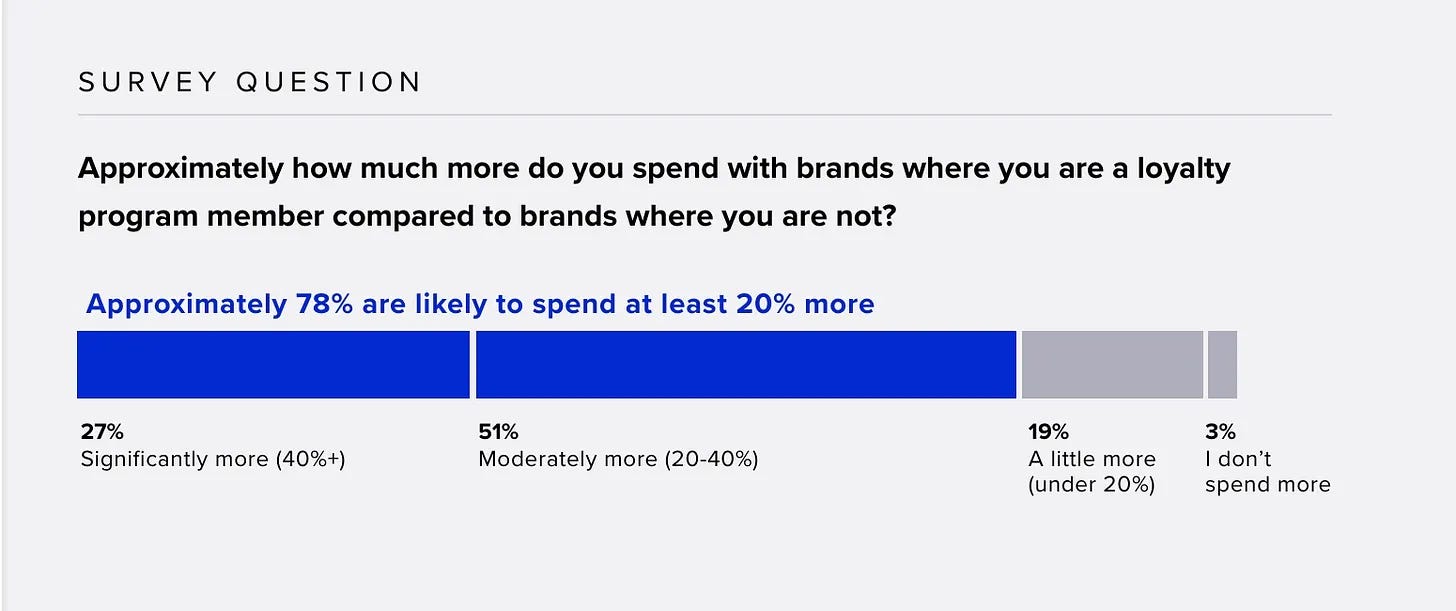
Among surveyed consumers enrolled in at least one loyalty program, 78% said they spend at least 20% more with enrolled brands than with brands where they are not members.
Takeaway: The commercial opportunity is real. So is the execution risk. Customers have to see the value, and using the reward cannot become another job.
Use this in a meeting: If members are willing to move at least 20% more spending toward enrolled brands, redemption friction is a revenue problem.
Source: Merkle, 2026 Loyalty Barometer Report
DCX Case Study of the Week
Employees had stopped believing the survey mattered

CX Challenge: C.H. Robinson was changing its strategy and operating model, but employees couldn’t see how their work connected. Engagement fell 7.3 points. Confidence in the survey process had dropped 16.5 points over four years. More questions wouldn’t fix that.
Action Taken: The company built its cultural framework with employees, tied goals and scorecards to the new model, used A3 problem-solving with people closest to the work, opened leadership forums, and required action plans after surveys.
Result: Within 12 months, engagement rose 5.9 points. Strategy understanding improved 8.9 points, confidence in it rose 11.8 points, trust in senior leaders increased 10.9 points, and survey credibility recovered 9.5 points.
Lesson for CX Pros: A survey earns credibility when people can see what happened next. Name the decision, the owner, and what changed. They’re also being asked to act on customer feedback. If their input disappears, why would they believe the customer listening program works differently?
Further Reading: Perceptyx
Use this in a meeting: The survey collects the signal. Credibility comes from showing what the business did with it.
Got a case study to share? Reply and let me know!
One Last Thing
Customers notice whether the system carries the work across the handoff. Employees notice the same thing with feedback.
If nothing travels, neither group needs long to figure out what the promise is worth.
Have a great week ahead!

If this edition sparked ideas, share it with a colleague or team member. Let’s grow the DCX community together!
✉️ Join 1,700+ CX leaders who are done feeling like they’re pushing change uphill alone.
Every week, you get human-centered insights, plug-and-play CX frameworks, and AI tools that actually work inside real organizations — so you’re not guessing your way through the next “customer-first” initiative.
Human-centered, commercially-aware, and honest about what it really takes to move the customer curve.
👉 Subscribe today to give yourself one steady, reliable source of support for your strategy — and your sanity.