

Your Product Is Charging Loyal Customers an Interaction Tax
Every extra tap looks small inside the roadmap. For a customer who repeats the same task every day, it compounds quickly.

A product can become easier to explain and harder to use at the same time.

That’s what happens when a familiar workflow gets “simplified” by people who don’t have to use it hundreds of times a year.
The new interface may look cleaner in the presentation. The navigation may fit the design system better. New customers may understand the labels more quickly.
Then the update reaches the people who actually live in the product.
A recent YNAB discussion captures the frustration. Longtime users described familiar actions gaining extra taps, terminology changing between devices and years of muscle memory becoming less useful overnight. In another thread, users questioned why a frequently used control had been buried under “Show More.”
The changes weren’t catastrophic. That’s partly why this problem is easy to dismiss.
One more tap. A renamed field. A control moved into a menu. A workflow that takes a few seconds longer.
Viewed once, the cost is trivial. Repeated every day, it becomes part of the relationship.
The customers who know your product best often pay the highest price

Product teams spend a lot of time worrying about the learning curve for new users. That makes sense. If people can’t understand the product, they won’t stay long enough to become experienced users.
But mature products have another curve to protect: the fluency their existing customers have already built.
Those customers know where things are. They’ve developed routines and shortcuts. They can complete important tasks without stopping to think about the interface.
That fluency saves time, reduces errors and makes the product feel dependable. It’s one of the reasons the customer keeps paying rather than starting over somewhere else.
A redesign can erase some of that value in an afternoon.
The customer didn’t ask the company to make that investment for them. They learned the product because using it well made their work or life easier. When the company rearranges a familiar workflow, it’s spending customer knowledge as though that knowledge belongs to the business.
It doesn’t.
Interaction inflation rarely arrives as one bad decision
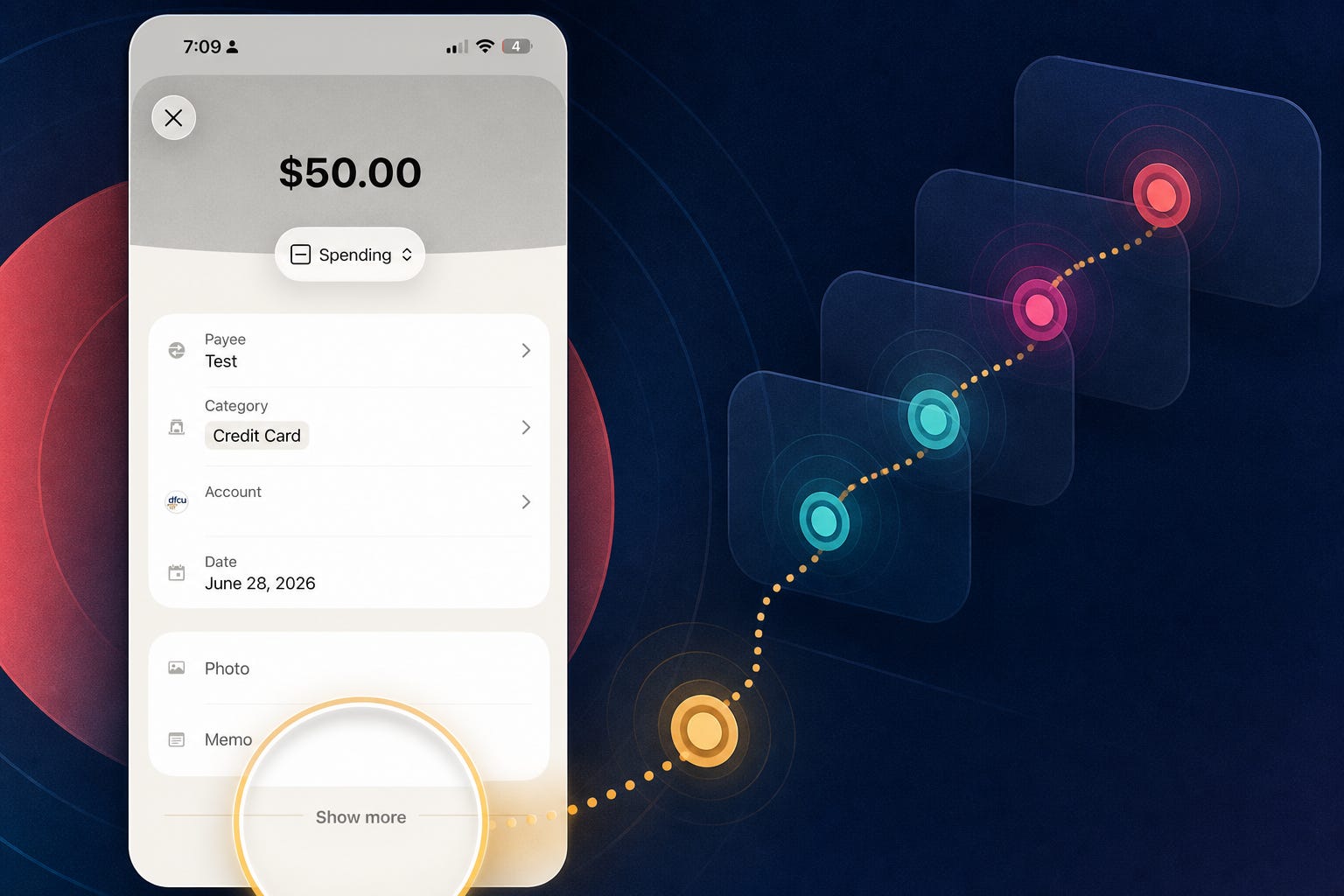
There’s usually a reasonable explanation for every change.
A menu has become crowded. A design system needs to be consistent. New capabilities need somewhere to live. Research suggests first-time users don’t understand an old label. A mobile screen needs to accommodate more options.
Each decision can survive a product review on its own.
The customer experiences the accumulation.
I think of this as interaction inflation: the gradual increase in effort required to complete a familiar task, often disguised as product improvement.
The product still works. The customer can still reach the outcome. But the exchange rate has changed. What once took one tap now takes three. What used to be obvious now has to be found. What had become automatic requires attention again.
Frequency turns those small changes into a real cost.
If someone performs a task twice a year, another tap barely matters. If they perform it twenty times a day, the redesign has inserted itself into thousands of future interactions.
That’s why the angriest reactions often come from experienced customers. They aren’t necessarily resistant to change. They’re the people with the clearest understanding of what the change costs.
A cleaner interface can still produce a worse product
Companies tend to evaluate redesigns through the lens of the new experience.
Can people find the feature? Do they understand the terminology? Does the interface look more consistent? Can a new user finish the task?
Those are useful questions. They leave out what the existing customer lost.
How much knowledge became obsolete? Which high-frequency tasks gained steps? How many people are now pausing where they used to move without thinking? Did the redesign improve comprehension by making routine operation slower?
That tradeoff becomes more serious when the product has habitual users.
In a recent MyFitnessPal Reddit thread, the reaction wasn’t confined to aesthetic dislike. The customer who started the discussion said the new interface had become complicated enough that they planned to cancel a paid membership and look for another product.
Three Reddit threads aren’t a dataset. But they expose a cost that product analytics can easily miss: customers can keep using a product while becoming steadily less willing to recommend, renew or forgive it. That’s the commercial consequence hiding inside what companies often write off as predictable resistance to change.
The customer isn’t complaining because the color moved. They’re reconsidering the relationship because the product has become harder to operate.
Loyal customers shouldn’t be treated as free labor
Redesigns create work.
Someone has to find the relocated control, interpret the new language, rebuild the shortcut or figure out whether the feature they relied on still exists.
Companies usually assign that work to the customer.
There’s no line for it in the project budget. It doesn’t appear in the release notes as a cost. The redesign launches, the product team moves on and experienced users begin reconstructing the routines the company disrupted.
Some will adapt. Others will search Reddit for a workaround, keep an older version installed or start looking at competitors.
A few will leave.
By the time cancellation shows up in the data, the internal story may already be that the redesign succeeded. Adoption happened because the update was unavoidable. Usage remained high because customers still needed the product. The new interface tested well among people who hadn’t spent years using the old one.
None of that means the experience improved.
Mature products need an interaction-inflation budget
This isn’t an argument for freezing a product.
Old interfaces accumulate their own problems. Familiarity can protect confusing design. Customer habits shouldn’t prevent a company from fixing genuine flaws or adding valuable capabilities.
The issue is how cheaply companies treat the effort they impose on experienced users.
Give every redesign an interaction budget. For the five workflows customers use most frequently, record the steps, time and reversals required before and after the change. Any increase should come with a specific customer benefit and an accountable owner. If the team can’t explain the return, the extra effort shouldn’t ship.
If extra effort is necessary, the company should be able to explain what customers receive in return.
That creates a more honest standard than asking whether the new interface feels cleaner.
It asks whether the improvement is worth the customer knowledge being discarded.
Customer fluency is an asset

Companies talk constantly about loyalty while casually disrupting one of the things that creates it.
Fluency makes a product feel like it belongs in the customer’s life. The interface stops demanding attention. The customer can focus on the budget, the workout, the project or whatever job brought them there.
That ease takes time to build.
A company has every right to change its product. But if it keeps the right to alter a customer’s workflow, it also inherits a responsibility to understand what the change takes away.
The next time a redesign adds a tap, moves a control or renames a familiar action, don’t ask only whether customers can still finish the task.
Ask how often they’ll have to pay for the change.

www.marklevy.co
Follow me on Linkedin

What Successful CX Leaders Do on Sundays
DCX Links: Six must-read picks to fuel your leadership journey delivered every Sunday morning. Dive into the latest edition now!
Thanks for being here. I’ll see you next Tuesday at 8:15 am ET.
👉 If you enjoyed this newsletter and value this work, please consider forwarding it to your friends and colleagues or sharing it on social media. New to DCX? Sign Up.
✉️ Join 1,700+ CX leaders who stay ahead of the next customer curve.
Human-centered insights. Plug-and-play frameworks. Smart tools that actually work. All designed for CX pros who want to build with purpose—and deliver with impact.
👉 Subscribe today and get the tools to elevate your strategy (and your sanity).