

Agentic AI Needs Guardrails, Not Hype
The funding is flashy. The real question is whether these agents can handle messy customer work without making things worse.


To opt-out of receiving DCX AI Today go here and select Decoding Customer Experience in your subscriptions list.
I’m obsessed with Wispr! Get a Free Month of Wispr PRO.

Start your workday smarter with CX AI news, tools, and data.
📅 March 18, 2026 | ⏱️ 5 min
Good Morning!
Agentic AI is having a moment. Now the real work starts.
Today’s issue is about what happens when AI moves past demos and into operations, where workflow design, trust, guardrails, and better agent support matter more than the hype.
The real question: Agentic AI is not useful just because it can act on its own. It is useful when it does the right work, stays within clear limits, and hands off cleanly when it gets stuck.
That is where many teams are now. Vendors are pushing AI deeper into customer operations just as customers are getting more cautious about what they trust.
For CX leaders, the opportunity is not just speed. It is building systems that are useful, trustworthy, and easy to recover from when something goes wrong.
🧠 THE DEEP DIVE: Agentic AI Is Becoming an Operating Model
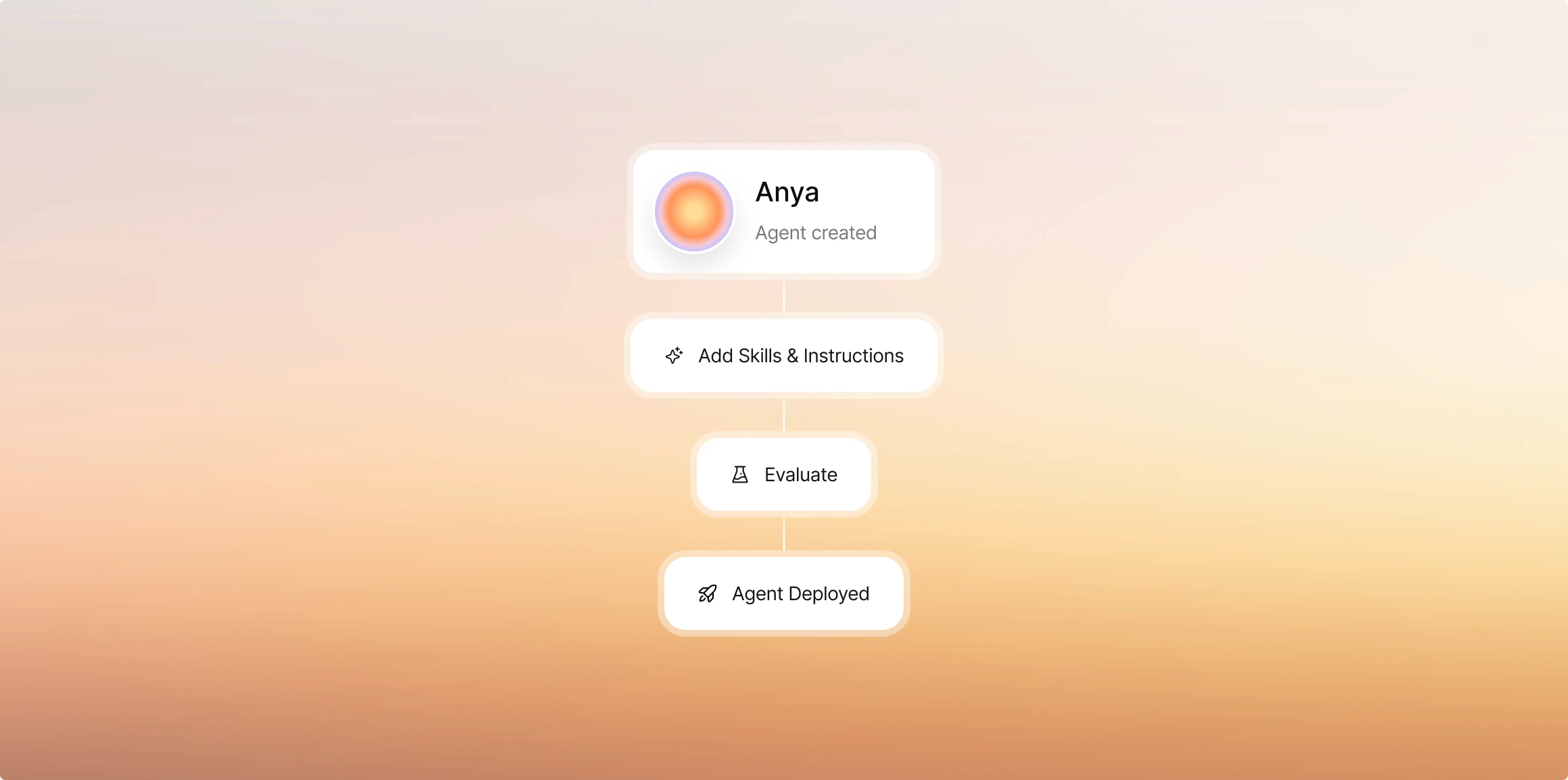
Agentic AI is moving past the “look what it can do” phase. Now the real question is whether it can hold up inside an actual business.
That is why Wonderful stands out. Yes, the company raised $150 million at a $2 billion valuation. But the more useful story for CX leaders is what it is trying to build: AI agents designed to work inside real workflows, connect to core systems, act on live data, and be monitored like any other operating layer.
1. This is not a chatbot story. It is a workflow story.
Wonderful frames the platform as enterprise agent infrastructure for complex work. Its agents are designed to work across channels and workflows, from customer interactions to back-office tasks, while carrying context across longer-running jobs.
For CX teams, that matters because the next wave of value is not one more automated answer. It is work getting done across systems, rules, and exceptions without creating more customer effort.
2. What makes this interesting is the control layer.
The product story is much stronger than the funding headline. Wonderful says the platform benchmarks, routes, and optimizes across leading models in real time. It also includes automated evaluations, guardrails, role-based access control, audit logging, and privacy controls.
That is what operators should care about. Once agents start acting inside service workflows, the question is not just whether they are smart. It is whether we can trust them, test them, and fix them quickly when they drift.
3. Systems-of-record access changes the stakes.
Wonderful says its agents are integrated into core systems, work on real data, and can update systems of record. That is a big shift.
The value goes up because the agent can move work forward. The risk goes up too, because a bad action is no longer just a bad answer. It is a bad update inside the business.
That is why approvals, traceability, and rollback logic matter a lot more than the demo.
4. Observability is becoming part of the product. Good.
The platform also highlights real-time monitoring for resolution rates, latency, business tags, and user sentiment, along with traceability for agent actions and reasoning.
That is a sign the category is getting more operational. CX teams do not just need agents that work. They need agents they can watch, audit, tune, and improve in production.
5. There is at least one metric, but treat it carefully.
Wonderful includes a customer testimonial saying ELTA Hellenic Post scaled agentic handling of customer support by nearly 4x in less than two months while maintaining an 86% success rate in production.
That is more useful than having no metric. But it is still a vendor-published testimonial, not independent proof, so treat it as directional.
My take:
This is a better agentic AI story than most because it sounds less like hype and more like a real operating model. Less, “wow, it can talk,” and more, “can it run safely inside a complex business?”
That is the right conversation. The winners here will not be the companies that automate the most steps. They will be the ones that know where an agent can act, where it needs limits, and how to recover cleanly when things get messy.
The funding is flashy. The control model is the real story.
What CX leaders should do this week:
Pick one workflow where your team still copies, checks, and moves information across multiple systems. That is a strong test case for agentic AI.
But start with the boring stuff first: what the agent can do, what it can update, what it cannot touch, how it is monitored, and when it has to hand off to a person.
📊 CX BY THE NUMBERS: Customers Want AI To Help, Not Pretend
Data Source: Gartner survey released March 16, 2026
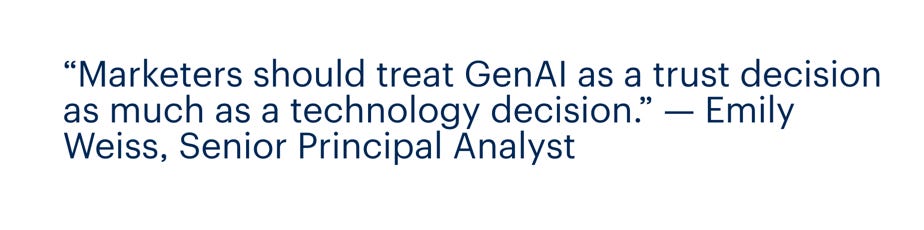
That operational question matters even more because customers are already skeptical about what AI is doing in front of them.
50% of consumers say they would rather buy from brands that avoid using generative AI in customer-facing content. That points to a trust problem.
61% say they often question whether the information they use for daily decisions is reliable. Every message starts with less trust than it used to.
68% say they often wonder whether the content they see is even real. That raises the bar for clarity, proof, and credibility.
The Insight:
Customers are not saying, “no AI ever.” They are saying, “do not make this weird.”
They want AI to be useful, clear, and easy to trust. For CX leaders, that means using AI where it reduces effort or improves service in a way customers can actually feel. It also means being careful about where AI shows up and how visible it should be.
🧰 THE AI TOOLBOX: Cresta Knowledge Agent
What it does: Cresta Knowledge Agent helps contact center agents find the right answer in real time without bouncing across multiple systems.
The problem: Agents lose time jumping between tools, knowledge bases, and policy pages while the customer waits.
How it works: On a live call, the system listens, reads screen context, and surfaces relevant guidance in real time. Instead of digging through multiple tools, the agent can stay focused on the customer and the conversation.
Why it matters:
Less searching and tab-jumping
Better answers based on the customer’s actual situation
More confidence for agents in the moment
Best fit: It works best when agents have to use multiple systems during the same interaction. It is less useful when the underlying knowledge base is messy, outdated, or poorly managed.
Key takeaway: Use it to make agents faster and more confident. Do not use it as a workaround for broken knowledge management. Also worth noting: the company talks about better outcomes, but it did not share hard numbers in the release.
⚡ SPEED ROUND: Quick Hits
IBM Completes Confluent Deal To Feed AI Agents Live Data — AI is only as useful as the data it can act on, and stale data leads to bad service.
Court Temporarily Lets Perplexity Shopping Agents Keep Working On Amazon — Agentic commerce is moving fast, but rules around access, permission, and trust are still catching up.
Algolia Says B2B Teams Are Shifting From AI Expansion To Search Optimization — A useful reminder that better search still does a lot of heavy lifting in service and digital experience.
📡 THE SIGNAL: Make Sure The AI Can Handle Real Life
Here is the leadership point: agentic AI sounds exciting until it runs into a real customer moment. That is when you find out whether you built something useful or just something impressive.
The teams that get this right will treat AI like part of the operating model, not just a shiny layer on top.
Before you roll anything out, ask one simple question: if this agent gets it wrong in a messy moment, have we made it easy to recover?
See you tomorrow.

👥 Share This Issue
If this issue sharpened your thinking about AI in CX, share it with a colleague in customer service, digital operations, or transformation. Alignment builds advantage.
📬 I have some bad news…
The other day, I got a question about my eCourse, 30 Days to Greater Influence:
“Hey, this sounds like the right move. I’m just wondering if I should jump in now… or wait a few months until things calm down.”