

AI Agents are Moving Into the Messy Middle
Plus: Google moves shopping into AI agents, Zendesk pushes service agents into real workflows, and consumers get practical about AI support.


Your daily signal on AI and CX — minus the hype.
📌 DCX Stat of the day: Google says people shop across Google more than 1 billion times a day, supported by a Shopping Graph with more than 60 billion product listings. Google Shopping
In this issue:
→ Google makes the cart proactive
→ AI support gets a wait-time reality check
→ Service agents move from answers to workflows
→ Search agents start calling businesses
→ Checkout data gets stress-tested
🔎 Deep dive
Google wants the cart to do more of the thinking
Google introduced Universal Cart at I/O, and the CX shift is easy to miss if you only look at the shopping feature. The cart can now work across merchants and across Search, Gemini, YouTube, and Gmail. It can watch for price drops, flag stock changes, read payment perks, and spot product incompatibilities before the customer checks out.
That means the buying journey is moving into an AI-managed layer. The customer may get less effort. That’s useful. But you inherit a new operating standard. Your product data, availability, offers, shipping promises, payment rules, and return paths have to be clean enough for an agent to act on them without guessing.
This will show up first in discovery and checkout. A messy product feed used to hurt conversion quietly. Now it can trigger the wrong purchase, a failed checkout, or a support issue your team has to clean up after the fact. Fun little mess.
📬 Copy-Paste Take
Agentic commerce raises the operating bar. If AI agents start helping customers choose, compare, and buy, our product data, inventory accuracy, pricing logic, payment handoffs, and service recovery paths become part of the customer experience. We should audit the buying journey as if a third-party agent is now one of our most important users.
OPERATOR PLAYBOOK
Pressure-test the AI-assisted checkout path
This is where CX, product, ecommerce, finance, legal, and care need to get in the same room.
Not for a brainstorm. For a failure drill.
Audit every agentic buying flow for four things:
Product data an AI agent can understand without filling gaps.
Inventory, price, delivery, promo, and substitution logic.
Payment, tax, loyalty, financing, and return handoffs.
Recovery paths when the wrong item gets purchased.
Then test whether a customer can move from discovery to purchase to support without losing context.
Ask your team: Where does the customer regain control if the agent makes the wrong call?
Signal: The next journey risk is the gap between AI intent and your operating truth.
📈 Market Reality Check
Customers prefer humans until waiting costs them
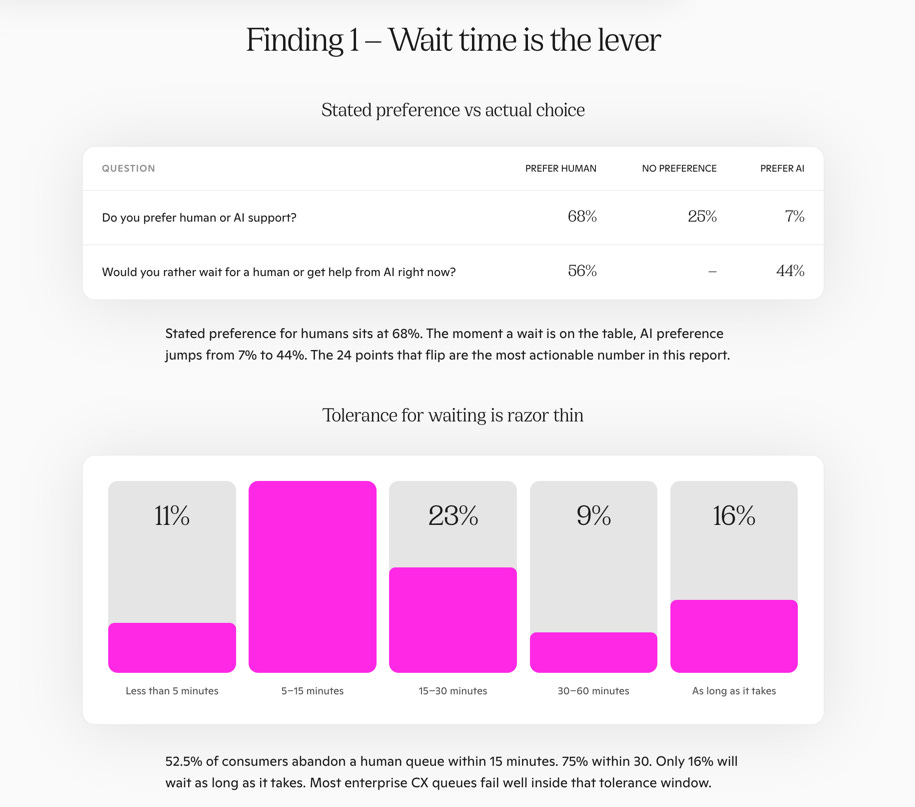
Lorikeet surveyed 1,083 consumers across the US and Europe and found the headline tension every CX team should care about: 68% say they prefer human support, but AI preference jumps from 7% to 44% when the choice becomes “wait 15 minutes for a human or get help from AI right now.”
That does not mean customers suddenly love bots. It means the stated preference for humans gets weaker when the human path is slow, repetitive, or inconvenient. Same old story, sharper numbers. If your queue is long and your bot is useless, customers get the worst version of both channels. If your AI can resolve the issue cleanly, speed becomes part of trust.
Human preference - wait tolerance = AI adoption window.
🧰 Tool Worth Knowing
Zendesk Agent Builder
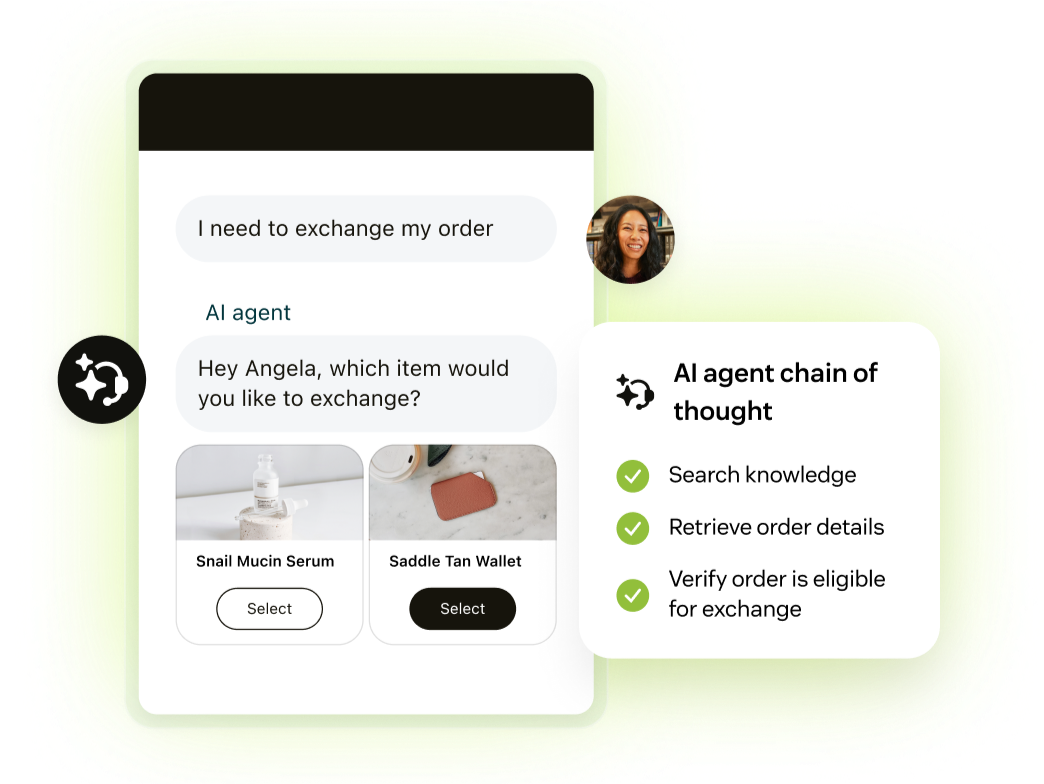
What it does: Lets service teams build, test, deploy, and tune custom AI agents tied to their own policies, workflows, data, and business logic.
CX use case: Useful for teams that want AI agents to do more than answer FAQs. Think order updates, account changes, refund paths, knowledge retrieval, issue routing, and governed handoffs across messaging, email, voice, and external AI surfaces.
Worth watching because: Zendesk is pushing toward a full “service workforce” model, with AI agents, copilot tools, quality scoring, workflow connectors, and MCP support sitting inside one operating layer. That matters because most AI service failures are not answer failures. They’re context, permission, workflow, and handoff failures.
Bottom line: This is worth watching if your support operation is past the chatbot phase and now needs AI agents that can act inside real service workflows without creating cleanup work for humans.
NEW: The DCX AI Today - AI Tool Directory - If you lead a CX team and want a curated shortlist of tools worth evaluating, this is your starting point.
⚡ 90-Second CX Radar
Google Search agents start calling businesses for customers
Google says Search will expand agentic booking and, for select categories like home repair, beauty, and pet care, let users ask Google to call businesses on their behalf. That sounds convenient until your frontline team starts receiving AI-mediated calls with partial context and very human expectations.
CAVA puts AI behind the bowl line
CAVA is building CAVA Core and CAVA Current to connect data, operations, staffing, inventory, and personalization. The CX point is not “restaurants are using AI.” It is that consistency, wait times, prep accuracy, and personalization are starting to depend on systems customers never see.
Consumers are starting to stop noticing AI
PYMNTS says AI adoption is starting to look less like a destination and more like a layer inside everyday tasks: shopping research, service interactions, writing, planning, and trip support. That is the customer expectation shift. Once AI feels normal somewhere else, your static search box, clunky FAQ, or dead-end chatbot feels older faster.
🧭 Your Move
If your AI roadmap still starts with “where can we automate?” you’re probably aiming too late in the journey.
The better question this week: where will an AI agent depend on our data, policies, inventory, content, workflow rules, or recovery paths to make a customer-facing decision?
That applies to the cart. It applies to support. It applies anywhere the customer expects the company to know what just happened.
Audit the journey for the agent now, before the customer teaches you where it breaks.
Until tomorrow,

👥 Share This Issue
Think of one person who’s wrestling with AI in CX right now
and forward this to them.
I’m obsessed with Wispr Flow Pro! Get a Free Month on me.

If someone forwarded this to you, they thought you needed to see it before your next AI planning meeting. Get your own copy.