

Did the Customer Actually Understand?
A cancer-support pilot raises a basic question: did the customer understand, or did the screen simply move on?


Your daily signal on AI and CX — minus the hype.
DCX Stat of the day: More than 80% of AI-assistant users worry about how their conversation data is used, yet roughly 60% don’t know whether their assistant trains on those conversations. arXiv
In this issue:
→ Translation doesn’t prove the customer understood
→ Consent needs more than a checkbox
→ Privacy concern rarely becomes usable control
→ CallRail gives missed calls some memory
→ Action agents still need an owner
🔍 DEEP DIVE
Consent Can’t Be Another Checkbox

BandhuCare is getting ready for a pilot with head and neck cancer patients in India. The app answers routine questions by text or voice in eight Indian languages. It also turns conversational symptom updates into standard patient-reported measures and summarizes them for clinicians.
Here’s the part I’d watch. One AI layer pulls from a clinician-curated knowledge base. A second checks whether the response is actually grounded there. The consent agent explains the information in plain language, then checks whether the patient understood it before asking them to proceed.
That’s a bigger deal than it sounds, and it travels well beyond healthcare. We tend to treat translation as if understanding comes along for free. It doesn’t. A sentence can be readable and still leave the decision muddy. A fluent answer can hide uncertainty, miss a cultural cue, or push someone forward who isn’t sure what they just agreed to. In a high-stakes journey, the system needs to know when to explain again, stop, or bring in someone who can help.
Bottom Line: “The AI answered” is a weak success measure. The customer needs to understand enough to make a safe, informed next move.
📬 Copy-Paste Take
Before we call an AI interaction successful, we should be able to show that the customer understood the answer, its limits, and what happens next. In a high-stakes journey, readability isn’t consent. Completion isn’t comprehension.
🧭 OPERATOR PLAYBOOK
Test the Meaning, Not Just the Words
Take one AI-assisted explanation, disclosure, or consent flow and check four things:
The decision the customer thinks they’re making.
The language, literacy, disability, or context barriers that could change meaning.
The signal that the customer is confused or unsure.
The person or channel that can explain it differently.
Then ask a customer to describe the choice, the consequence, and the next step in their own words.
Ask your team: What do we currently count as consent or completion without checking comprehension?
Signal: Closing the interaction isn’t the goal. Reducing the customer’s uncertainty is.
📊 MARKET REALITY CHECK
Concern Isn’t the Same as Control
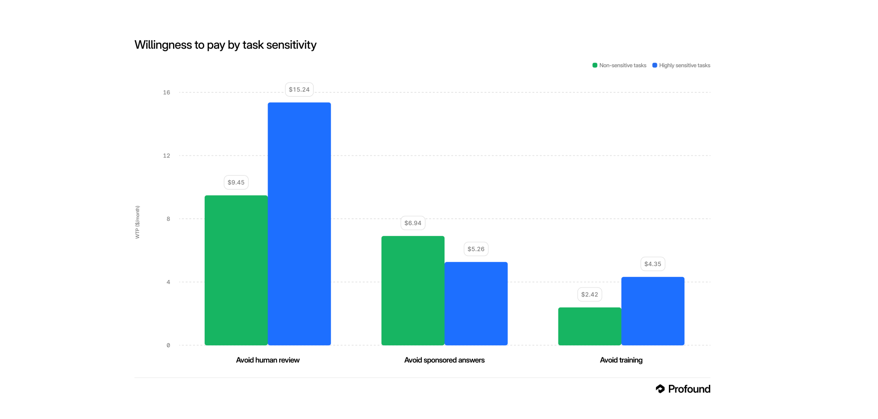
Customers are worried about AI privacy, but many can’t tell what the product is actually doing with their conversations. In a weighted survey of 1,999 U.S. adult AI-assistant users, more than 80% were concerned about how their conversation data was used. Roughly 60% didn’t know whether their assistant trained on those conversations. Only 18% had paid for stronger privacy protection.
Customers don’t treat every privacy issue the same way. In the study’s choice experiment, users valued keeping human reviewers out of their conversations at $11.20 a month. That’s nearly four times what they placed on preventing model training. It doesn’t prove what every customer will pay. It shows that human access, model training, memory, and sponsored influence are separate concerns.
Why it matters: Tell customers who can see their data, what the system remembers, and how to change it. Put those controls in front of them before they share something sensitive. Don’t bury them in a settings maze.
Concern without usable control is just anxiety with a settings page.
Data Source: arXiv
🧰 TOOL WORTH KNOWING
CallRail Voice Assist
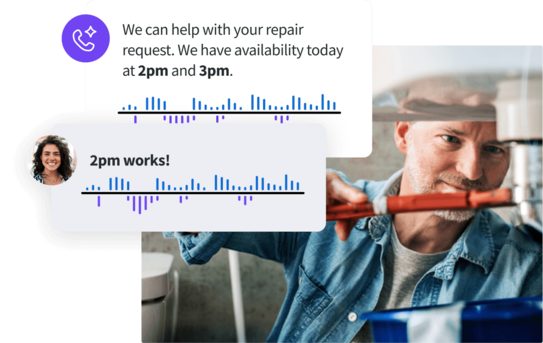
What it does: CallRail's Voice Assist answers calls for small businesses, handles common questions, captures what the customer needs, and can now continue the conversation by text. It follows up after missed calls or hang-ups and keeps the call-and-text history together.
CX use case: Think about a plumber, repair shop, or local service business. The phone rings while everyone is already helping somebody. Voice Assist can capture the new customer’s need so the follow-up doesn’t begin with, “Tell me again why you called.”
Worth watching because: This is a very ordinary customer problem with real money attached. CallRail says 28% of business calls go unanswered on average. Voice Assist customers report 44% more answered calls, and leads are seven times more likely to engage than through voicemail. Those are vendor-reported engagement measures, not proof of resolution. Still, they point at a costly gap in the small-business journey.
Bottom line: Picking up is useful. The experience gets better only if the context survives, expectations stay honest, and urgent or unusual needs reach a person quickly.
The DCX AI Today - AI Tool Directory - If you lead a CX team and want a curated shortlist of tools worth evaluating, this is your starting point.
📡 90-SECOND CX RADAR
Large action models push CX from answers into execution
A Genesys executive makes the case that the next shift is from language models that interpret intent to action models that coordinate work across systems. Utility Warehouse reportedly more than doubled containment in complex billing and service-restoration journeys using this approach.
Why it matters: Once an agent can authenticate, update, rebook, compensate, or restore service, “Did it give a good answer?” is no longer enough. Someone has to own the approved outcome, the exception path, and the evidence that the customer was actually helped.
✅ YOUR MOVE
Pick one AI interaction where the customer agrees, authorizes, accepts, or moves forward.
Ask three people who weren’t involved in designing it to complete the flow. Then ask them what they agreed to, what the AI can do with their information, and what happens next.
Don’t rescue the test with extra explanation. Whatever gets lost between the screen and their answer is what you need to fix.
If the customer can’t explain the choice, the journey isn’t finished.
Until Monday,

👥 Share This Issue
Think of one person who’s wrestling with AI in CX right now
and forward this to them.
I’m obsessed with Wispr Flow Pro! Get a Free Month on me.

If someone forwarded this to you, they thought you needed to see it before your next AI planning meeting. Get your own copy.