

Don’t Ship the Agent and Walk Away
Plus: OpenAI adds an improvement loop, Bank of America puts answers beside the rep, and Glia sets response freedom by topic.


Your daily signal on AI and CX — minus the hype.
DCX Stat of the day: Bank of America says EricaAssist cuts average call time by nearly one minute per interaction while keeping the employee in the conversation.
In this issue:
→ Service agents get a post-launch improvement loop
→ Bank reps receive guidance in under three seconds
→ Nearly one-third of service failures get no recovery
→ Banks can set response freedom by topic
→ CX platforms push agents deeper into operations
🔍 DEEP DIVE
The Demo Is Over. Now the Customer Changes.
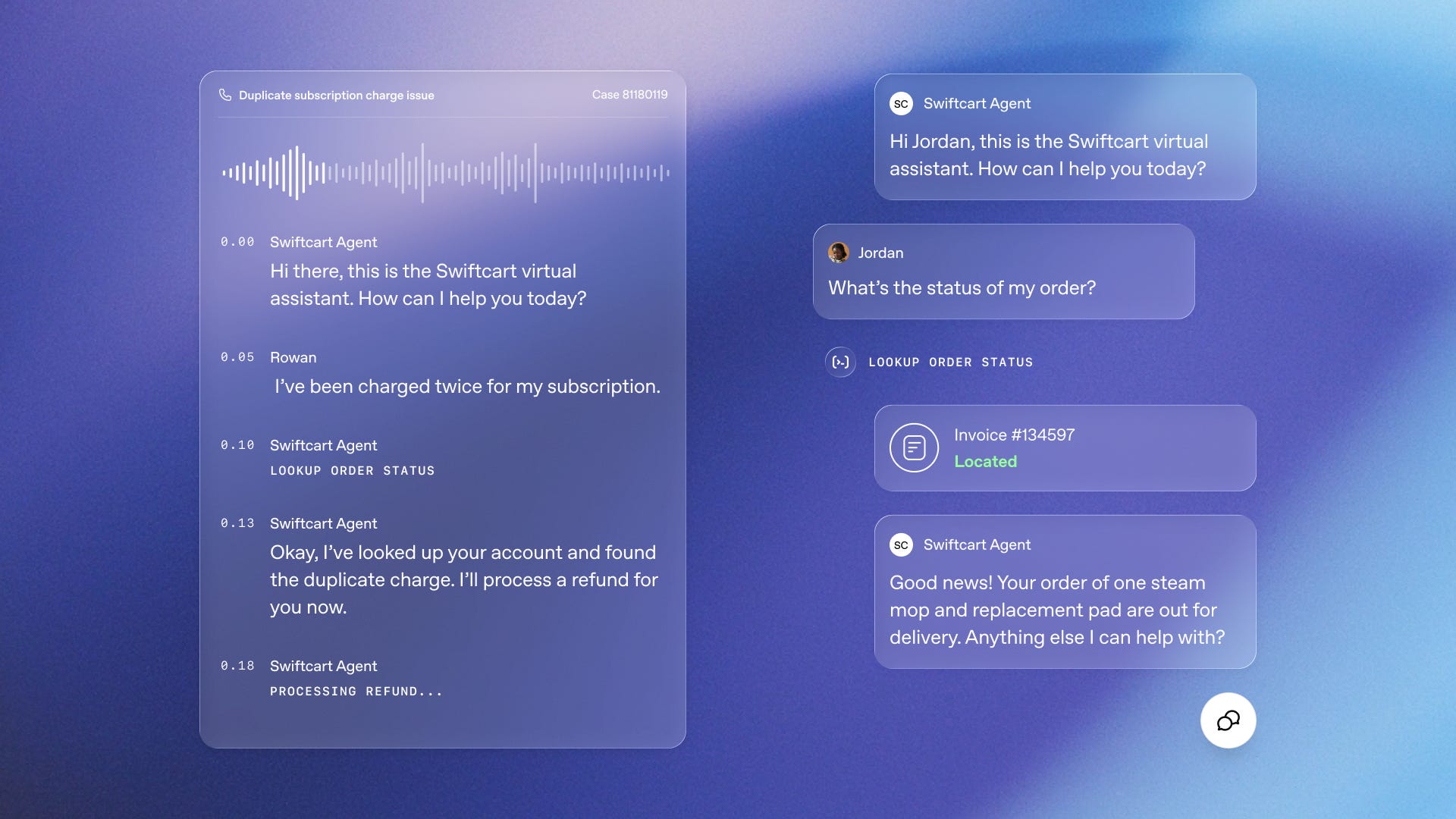
OpenAI has launched Presence, a managed product for putting voice and chat agents into live customer and employee workflows. The interesting part isn’t another agent answering a billing question. It’s what happens after the agent meets real customers.
Presence combines policies, approved actions, simulations, evaluations, escalation rules, and a Codex-powered improvement process. Production conversations expose gaps. Codex proposes changes. Teams test those changes against the live version and approve a controlled rollout. That sounds suspiciously like software release management, because that’s what customer-facing AI now needs.
OpenAI says its own phone agent resolves 75% of inbound issues without human help and cut handoffs by 15 percentage points in ten days. Those are company-reported results, but they point to the right operating question. An agent’s launch score matters less than whether the team can spot a bad pattern, trace the cause, test a fix, and change behavior without creating a new customer problem.
Bottom Line: The service agent isn’t finished when it goes live. Someone needs to own how it learns without turning customers into unpaid testers.
📬 Copy-Paste Take
Treat every customer-facing AI agent like a live service product. Give it an owner, a change log, failure thresholds, regression tests, and a rollback path. If nobody can explain what changed after last week’s bad conversations, the agent isn’t being managed.
🧭 OPERATOR PLAYBOOK
Run the Friday Failure Review
Audit every live AI service workflow for four things:
Failure pattern: Which intents, customers, policies, or actions create repeat contacts, escalations, or corrections?
Decision boundary: What can the agent answer, recommend, approve, or change without human review?
Change control: Who tests and approves new prompts, policies, tools, and workflow behavior?
Recovery path: Can the team roll back a bad change and repair the affected customer journey quickly?
Then test whether the latest fix improves the failed journey without breaking three adjacent ones.
Ask your team: What did our agent learn from customers last week, and who approved the change?
Signal: A dashboard is observation. A controlled improvement loop is operations.
📊 MARKET REALITY CHECK
No Recovery Is a Second Failure
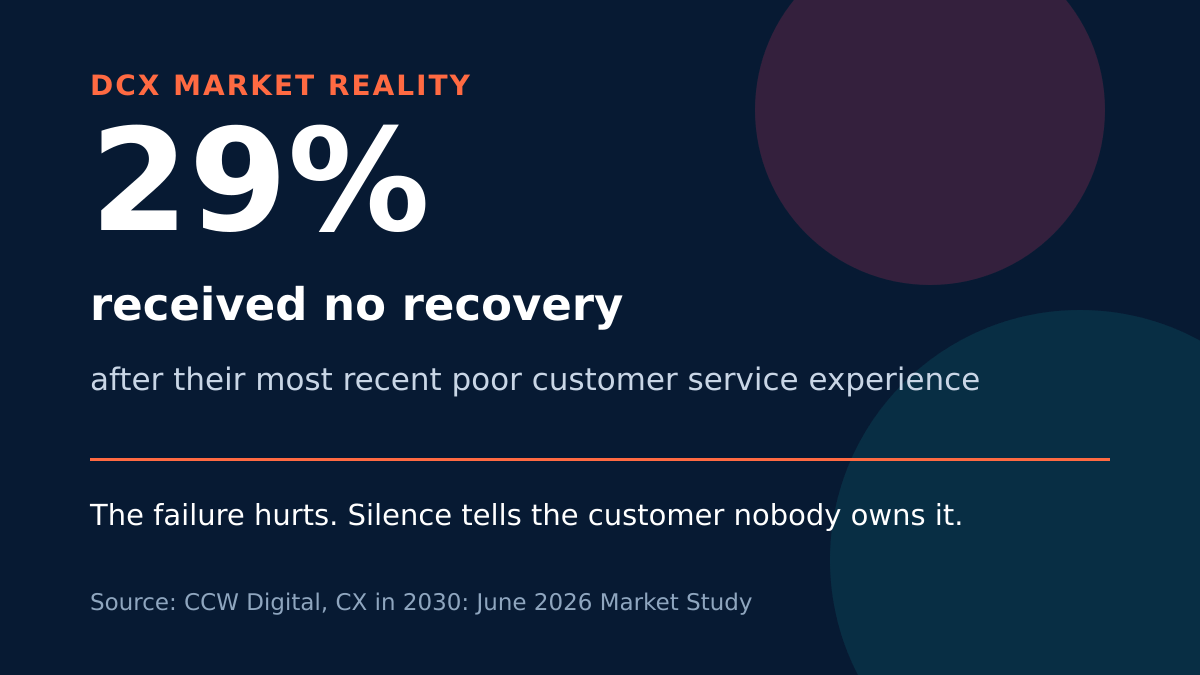
After their most recent poor customer service experience, 29% of consumers said the company took no action. The original failure is only half the problem. Inaction tells the customer that the company either didn’t notice the breakdown or chose not to own it.
The finding doesn’t isolate AI-caused failures or prove which recovery action works best. It does expose a management gap. Monitoring a bad answer, broken handoff, or repeat contact creates no customer value unless someone can trigger outreach, remediation, and a fix to the underlying journey.
Why it matters: An agent-improvement loop is incomplete if the model gets fixed but the affected customer hears nothing.
Detection without recovery = observability without ownership
🧰 TOOL WORTH KNOWING
Glia Banker Adds a Risk Dial
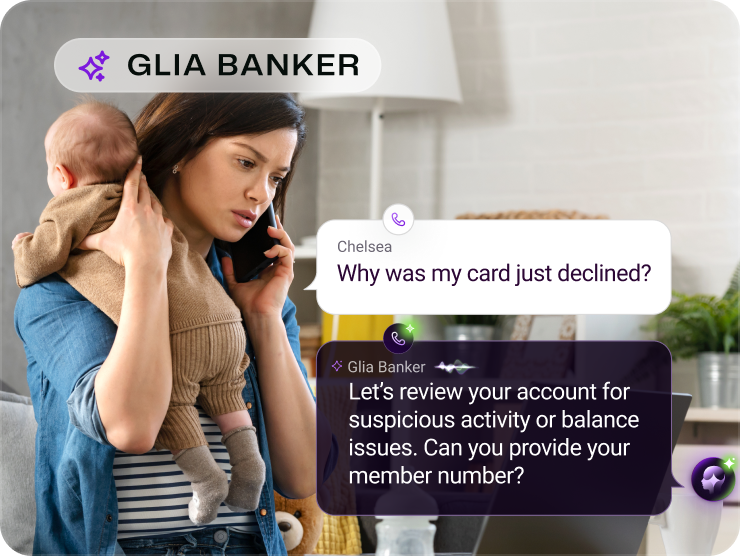
What it does: Glia Banker now lets financial institutions choose among three response modes by topic. Strict Mode returns approved wording. Rephrase Mode adapts approved answers to the customer’s language without adding information. Compose Mode generates from institution-approved content.
CX use case: A bank can allow a more natural answer for branch hours while keeping loan, fraud, or wire-transfer explanations inside tighter boundaries.
Worth watching because: It turns AI governance into a journey-level design choice instead of one blanket setting for every conversation.
Bottom line: The right amount of conversational freedom depends on what the customer is trying to do and how much harm a variable answer can create.
The DCX AI Today - AI Tool Directory - If you lead a CX team and want a curated shortlist of tools worth evaluating, this is your starting point.
📡 90-SECOND CX RADAR
CX agents move from the front door into operations
Observe.AI and AWS are pushing customer, frontline, and operations agents onto one production platform. The useful shift is continuous visibility into quality, compliance, intent trends, root causes, and automation performance, not another isolated bot at the channel edge.
Why it matters: CX teams will need one operating view across what the agent says, what it does, and what the customer has to do next.
Shoppers want help without surrendering the final click
Zip says 68% of 1,755 surveyed US shoppers used an AI tool in the past three months, but 79% want full control over the final purchase decision.
Why it matters: Customers may welcome faster research and comparison while still expecting a visible stop before money moves.
✅ YOUR MOVE
Pick one live AI journey this week. Skip the launch deck and review the last 25 failures.
Look for the pattern behind the bad answer, repeated explanation, unnecessary escalation, or unsafe action. Then name the owner who can change the agent and the operator who can repair the customer impact.
A live agent needs a release process, not a victory lap.
Until tomorrow,

👥 Share This Issue
Think of one person who’s wrestling with AI in CX right now
and forward this to them.
I’m obsessed with Wispr Flow Pro! Get a Free Month on me.

If someone forwarded this to you, they thought you needed to see it before your next AI planning meeting. Get your own copy.