

Give the Agent a Badge
Plus: Customers still check AI’s homework. The next test is whether they can check its actions.


Your daily signal on AI and CX — minus the hype.
DCX Stat of the day: 86% of consumers explore the original source after reading an AI-generated summary. WordPress VIP
In this issue:
→ Customers still check AI answers
→ Agent accountability gets practical
→ AI CX economics meet gravity
→ Bland puts agents on the phone
→ SSA keeps humans in the service model
🔍 DEEP DIVE
The Bot Needs an Owner
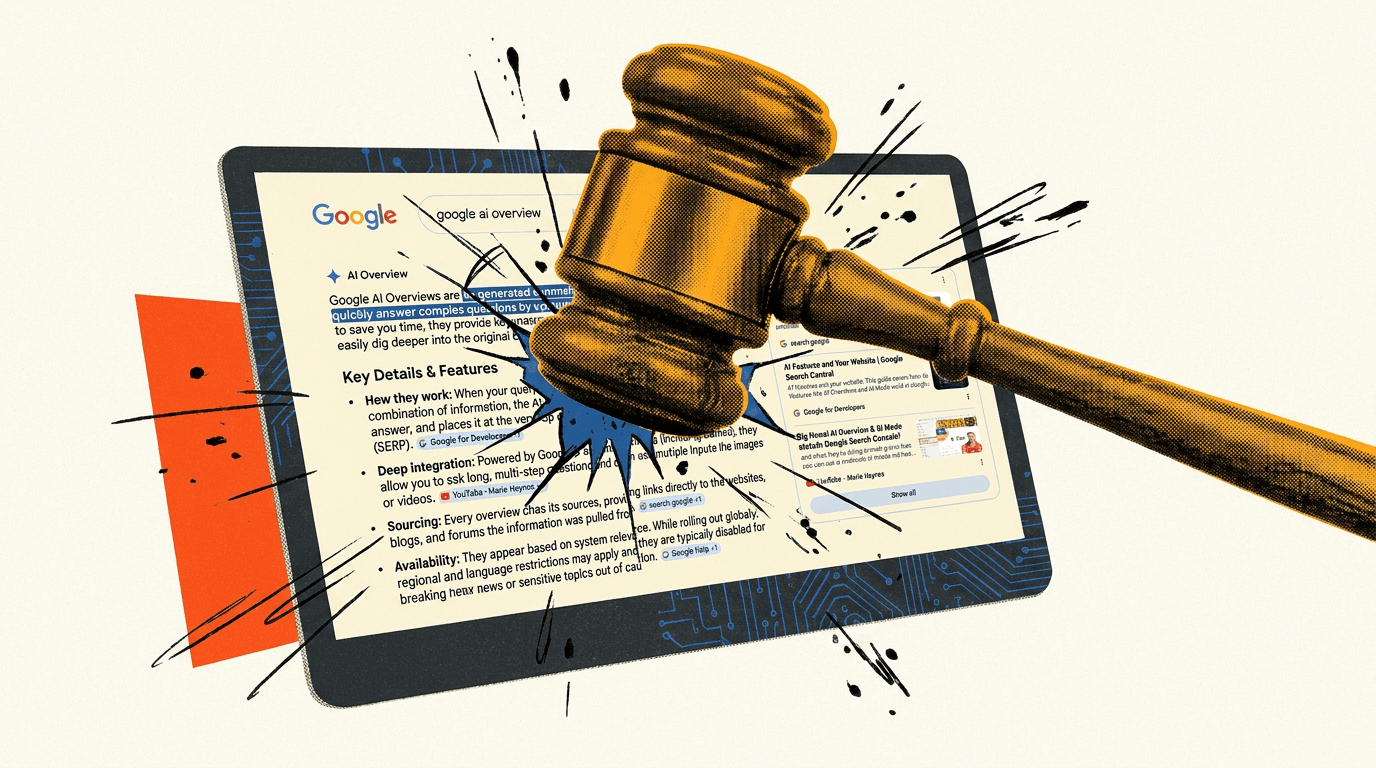
Customers are already telling us the trust gap is still open. 86% click through after an AI-generated summary because they want the original source. Translation: the answer may be useful, but people still want a receipt.
Now move that behavior into service operations. The agent isn’t summarizing a web page. It is refunding, waiving, routing, recommending, checking eligibility, changing a record, or making a recovery promise. Suddenly the receipt matters even more.
A German court found Google responsible for what its AI search summaries tell people. That is the proof point operators should sit with. When AI misleads a customer, the company that put the system in the journey may still own the damage.
Ownership has to move back to the business process. If an agent can act inside a customer journey, someone has to define its scope, permissions, evidence, thresholds, escalation path, and decision log before it touches the workflow.
That is a technical control. It is also the customer trust layer. When a customer challenges the outcome, the business needs to explain what the agent knew, which rule it followed, who approved the authority, and how the customer can recover.
Bottom Line: Agentic CX only scales when every automated action has a named owner, a visible permission boundary, and a receipt the customer can challenge.
📬 Copy-Paste Take
Before we let any AI agent refund, waive, route, approve, deny, recommend, or change a customer record, we need a simple permission map: who owns the process, what the agent can do, when a human approves first, what proof the customer gets, and how the customer can challenge the outcome.
🧭 OPERATOR PLAYBOOK
Write the Badge Before the Job Description
Start with the customer moments where automation can change a real outcome: money, access, eligibility, identity, privacy, price, service priority, or recovery.
Audit every agent-enabled workflow for four things:
The business owner who is accountable for the outcome.
The exact actions the agent can and can’t take.
The approval point for high-stakes or hard-to-reverse decisions.
The customer-facing receipt and recovery path.
Then test whether a frontline employee can answer this in plain English: “Why did the agent do that, and what can we do now?”
Ask your team: Which AI action would embarrass us most if a customer asked for the receipt?
Signal: If nobody owns the permission boundary, the customer will experience the gap as a service failure.
📊 MARKET REALITY CHECK
Automation Still Has to Pay Rent

The market is getting less patient with AI-powered CX promises that do not show up as durable execution.
Concentrix shares fell more than 24% after the company reported softer guidance, even though reported revenue was $2.46 billion, up 1.9% year over year. That isn’t a customer-journey story on its face. But it is a useful pressure check for every AI CX roadmap: automation still has to improve the economics customers buy, instead of merely improving the slideware executives admire.
The data doesn’t prove AI is hurting CX providers. It does show that the market is asking a harder question: can human operations, AI agents, back-office workflow, and customer outcomes come together in a way that improves margin, retention, and service quality?
Why it matters: AI in CX is entering the proof phase. The business case can’t stay at “faster answers” when buyers care about cost-to-serve, repeat contact, resolution quality, compliance exposure, and customer recovery.
Automation promise minus operating proof equals investor impatience.
🧰 TOOL WORTH KNOWING
Bland

What it does: Bland lets teams build, deploy, and monitor AI voice agents for phone-based work, including customer service, AI receptionist flows, outbound sales, lead qualification, and IVR replacement.
CX use case: Useful for teams that still have a lot of customer work trapped in the phone channel: appointment setting, call routing, after-hours reception, lead follow-up, simple service questions, and handoffs into existing contact-center or CRM systems.
Worth watching because: Phone is where AI receipts get hard. A voice agent can sound confident, move quickly, and still leave the customer wondering what was promised, what was changed, and who owns the next step.
Bottom line: If Bland or any voice agent touches live customer calls, design the call record, escalation trigger, consent language, and recovery path before the first “Hi, how can I help?” hits the line.
The DCX AI Today - AI Tool Directory - If you lead a CX team and want a curated shortlist of tools worth evaluating, this is your starting point.
📡 90-SECOND CX RADAR
SSA Wants Agentic AI With Guardrails
The Social Security Administration’s AI chief said agentic AI is ready for mission use only with governance, security, continuous testing, and modernized data infrastructure. The most useful part: SSA is still treating in-person help as part of the service model, not as something digital AI gets to erase.
Why it matters: Public-sector AI has to improve access without quietly pushing the hardest customers into a thinner channel.
✅ YOUR MOVE
Customers still verify AI answers. That tells us something useful: trust isn’t automatic, even when the answer sounds confident.
Now agents are moving from talk to action. That makes permission, proof, and recovery part of the experience, not a back-office compliance chore.
Pick one customer-impacting action your team wants AI to handle this year. Refunds. Appointment changes. Eligibility checks. Recommendations. Complaint routing. Account updates.
Now write the badge before you write the prompt: owner, scope, approval rule, decision log, customer receipt, and recovery path.
If customers still check AI’s answers, they will absolutely check its actions.
Until tomorrow,

👥 Share This Issue
Think of one person who’s wrestling with AI in CX right now
and forward this to them.
I’m obsessed with Wispr Flow Pro! Get a Free Month on me.

If someone forwarded this to you, they thought you needed to see it before your next AI planning meeting. Get your own copy.