

Make the Bot Earn the Transfer
Plus: Siemens says one AI routing agent now handles 90% of inbound calls, but the useful lesson is where it stops.


Your daily signal on AI and CX — minus the hype.
DCX Stat of the day
Siemens says its Amazon Connect Customer AI Agent now handles 90% of inbound calls autonomously, either resolving the request directly or routing the caller to the right destination without human intervention. AWS
In this issue
Siemens replaces the old phone-tree guessing game with natural-language routing.
Oreo appeared in only 10% of AI chatbot recommendations for cookies.
Dscout shows how AI research tools can keep real customer input in the decision loop.
Deep Dive
The Phone Tree Is Becoming a Judgment Call
Siemens Global Business Services supports finance, procurement, HR, sales operations, order and delivery management, employee lifecycle queries, and technical support across more than 80 countries. That is exactly the kind of service surface where old IVR menus break down.
The customer problem is simple: callers often do not know which internal bucket owns their issue. So they guess, wait, repeat themselves, get transferred, and start over.
Siemens says its production AI routing agent replaces that menu tree with natural-language intent detection. A caller says what they need. The system identifies the intent, resolves common questions from a knowledge base when it can, routes to the right team when it should, and hands the conversation to a human with context when confidence drops.
That last part is the operator lesson. The goal is not to make the customer prove they deserve a person. The goal is to remove the guessing, keep the receipt, and make escalation feel like continuity instead of failure.
The dangerous version of this is a fluent wall between the customer and help. The useful version is a better traffic controller.
📬 Copy-Paste Take
AI service agents should not be measured only by deflection. Measure whether they identify intent correctly, preserve context, and recover gracefully when they are wrong. A customer who reaches a human faster, with the problem already summarized, is not a failed automation. That is the automation doing its job.
OPERATOR PLAYBOOK
Build the Escape Hatch First
Before you put an AI agent in front of a high-volume service entry point, pressure-test four things:
Intent map: What are the top reasons people actually contact you, in their own words?
Confidence threshold: At what point does the agent stop trying and hand off?
Context handoff: What exactly does the human receive before speaking to the customer?
Recovery clock: How quickly can you detect a bad routing pattern and fix it?
The best question for the service team is: What is the first sentence the customer hears after the AI gives up?
If that sentence sounds like, “Can you start from the beginning?”, the design is not ready.
Market Reality Check
Loyalty Has to Be Machine-Readable

Accenture Consumer Pulse Research 2026 report has a sharp example hiding inside the agentic-commerce conversation: Oreo, one of the world’s most recognized brands, appeared in only 10% of AI chatbot recommendations for cookies.
That is not a branding problem in the usual sense. It is a visibility problem in the agent layer.
Accenture says Mondelez is overhauling its $3.5 billion digital commerce strategy around that reality: unblocking crawlers, restructuring its digital presence, and making product content machine-readable across its portfolio.
The CX lesson is bigger than cookies. A customer can love a brand and still have their agent fail to find it, trust it, compare it, or choose it. In an agent-mediated journey, loyalty depends on proof the machine can parse and performance the customer can feel.
That brings today’s Siemens story into sharper focus. Whether the agent is routing a call or choosing a product, the operating question is the same: can the system understand the intent, read the evidence, make the right next move, and recover when the answer is not obvious?
Market signal: If the agent cannot read the promise, the customer may never see it.
Tool Worth Knowing
Dscout
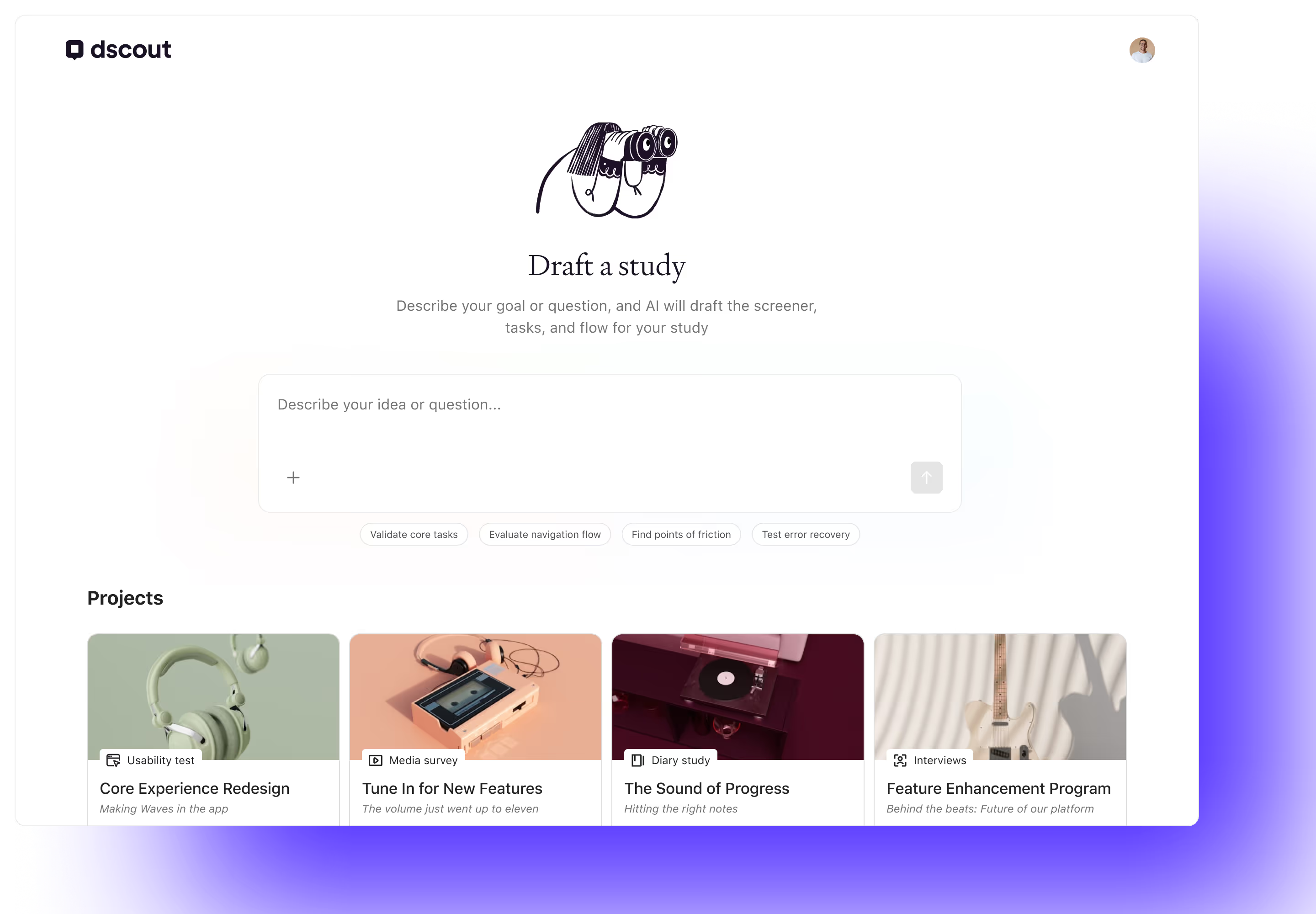
What it does: Dscout is an AI-powered feedback and testing platform for product, research, and experience teams. Its AI Studio can draft studies from a question, Figma prototype, or URL; run AI-moderated interviews; surface patterns and takeaways; and ask source-backed questions of the data.
CX use case: When teams are redesigning a service flow, testing a new AI assistant, or deciding which customer problem deserves automation, Dscout gives them a faster way to hear from real people before the roadmap hardens.
Worth watching because: Today’s Siemens story is about getting the handoff right. Dscout is useful on the other side of that decision: testing whether customers understand the flow, where they get stuck, what language they actually use, and what the AI should never guess.
Caution: AI can make research faster, but it can also make teams overconfident. The value comes from better questions, real participant input, and clear evidence before the business changes the customer journey.
The DCX AI Today - AI Tool Directory - If you lead a CX team and want a curated shortlist of tools worth evaluating, this is your starting point.
90-Second CX Radar
Retail AI chatbots still have a trust-and-use problem
EMARKETER reports that 38.2% of U.S. digital shoppers have not used a retail AI chatbot and are not interested in doing so. That is a useful counterweight to shopping-agent hype. Discovery, education, handoff, and a clearly better task path still matter.
WhatsApp pushes AI agents deeper into business messaging
The Meta Business Agent rollout in India gives businesses a familiar messaging surface for support, booking, lead qualification, and commerce. The customer journey question is whether brands make handoff and accountability as easy as the chat.
Your Move
Pick one high-volume service entry point this week. Phone, chat, email, portal, WhatsApp, whatever carries the most customer confusion.
Do not start by asking, “Can AI answer this?”
Ask: What does the customer need the system to understand before anyone answers?
That is where the real design starts.

👥 Share This Issue
Think of one person who’s wrestling with AI in CX right now
and forward this to them.
I’m obsessed with Wispr Flow Pro! Get a Free Month on me.

If someone forwarded this to you, they thought you needed to see it before your next AI planning meeting. Get your own copy.