

Make the Bot Show Its Work
Plus: a bank can resolve most messaging conversations with AI. The harder question is whether the customer who needs judgment, empathy, or recovery gets seen fast enough.


Your daily signal on AI and CX — minus the hype.
DCX Stat of the day: Commonwealth Bank says 84.6% of self-service messaging interactions were resolved inside the messaging channel in May 2026. Microsoft Source Asia
In this issue:
→ Service AI gets decision rights
→ Vulnerable customers need daylight
→ AI budgets hit bad plumbing
→ Chatbot security becomes CX work
→ Your handoff needs receipts
🔍 DEEP DIVE
The Handoff Is the Experience Now

Commonwealth Bank and Microsoft are showing where service AI is actually headed: away from the cute chatbot in the corner and toward an operating layer that decides where the customer goes next.
The bank’s platform uses Copilot Studio, Microsoft Foundry, and Dynamics 365 to interpret intent, route work, and keep context attached when the conversation moves. Simple questions can stay in self-service. Fraud disputes follow guarded paths. Sensitive or vulnerable language can push the interaction to a human specialist, with summaries and suggested responses waiting for the employee.
That is the part worth stealing.
The CX win is not “the bot handled it.” That is a vanity metric with nicer shoes. The win is whether the system knows the difference between a status question, a policy question, a fraud dispute, a vulnerability signal, and a moment where the customer needs judgment.
A customer who needs help should not have to perform distress convincingly enough to escape the automation.
Bottom Line: Service AI earns trust when it makes the hard cases easier to see, faster to route, and harder to ignore.
📬 Copy-Paste Take
Before we celebrate AI resolution rates, inspect the exception path. Which customer phrases trigger a human? Which regulated journeys stay deterministic? What context transfers? Who owns the recovery when the route is wrong? A high self-service number is useful only if the customers who need judgment, empathy, or repair are visible by design.
🧭 OPERATOR PLAYBOOK
Write the Bot’s Stop Rule
AI service design needs a stop rule before it needs a victory lap.
Audit every AI-assisted service flow for four things:
Intent: What can AI answer without judgment?
Risk: What policy, fraud, vulnerability, or complaint signal changes the path?
Handoff: What does the employee see before saying hello?
Repair: Who fixes the customer impact when routing fails?
Then test the transfer like a customer having a bad afternoon, not like a demo team clicking the happy path.
Ask your team: What exact customer language, account condition, policy risk, or frustration signal forces the system to slow down and bring in a human?
Signal: If the stop rule lives in someone’s head, it does not exist for the customer.
📊 MARKET REALITY CHECK
The Checkbook Found AI. The Plumbing Did Not.
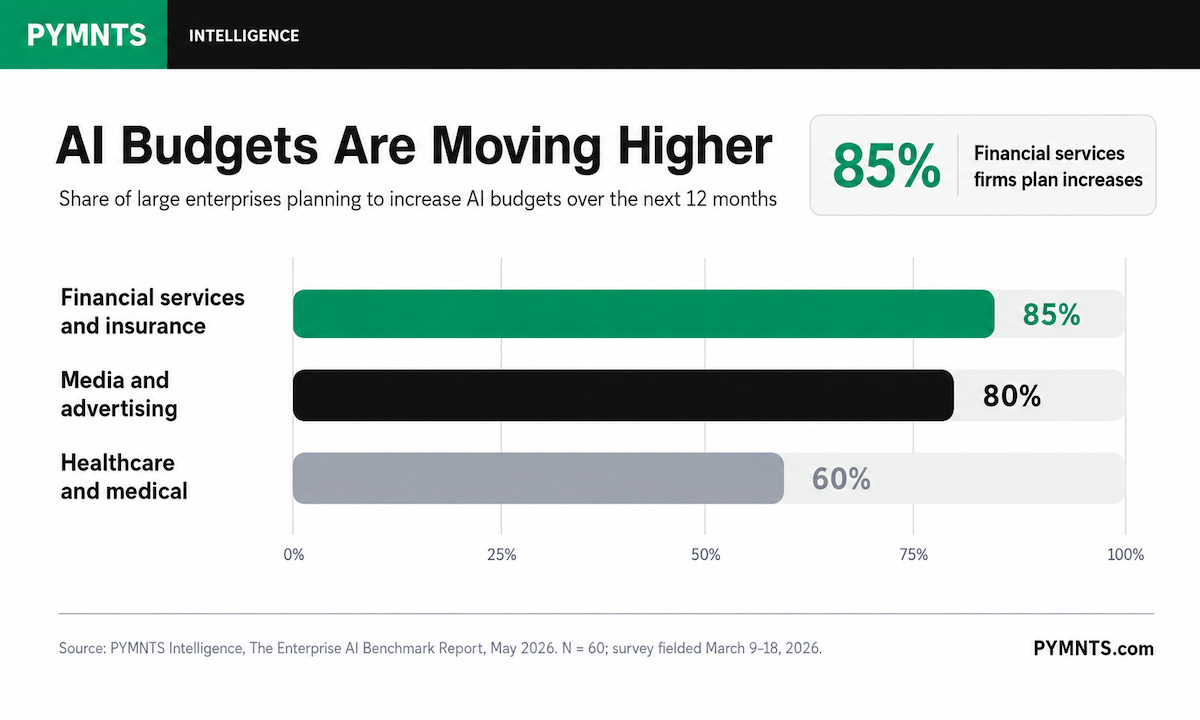
PYMNTS Intelligence reports that 85% of financial services and insurance firms plan to increase AI budgets over the next 12 months, based on a March survey of 60 senior technology executives at U.S. enterprises with at least $1 billion in annual revenue.
Good. The board is awake.
Less good: the same report says 30% of financial firms cite data quality and fragmentation as the top barrier to further AI deployment. Translation: the checkbook found AI before the plumbing was ready.
Why it matters: Regulated-service AI inherits the quality of the data, permissions, knowledge base, routing logic, and ownership underneath it. More budget helps only if it pays for the unglamorous work customers actually feel.
AI budget without data discipline = faster confusion.
🧰 TOOL WORTH KNOWING
Varonis Atlas AI Security
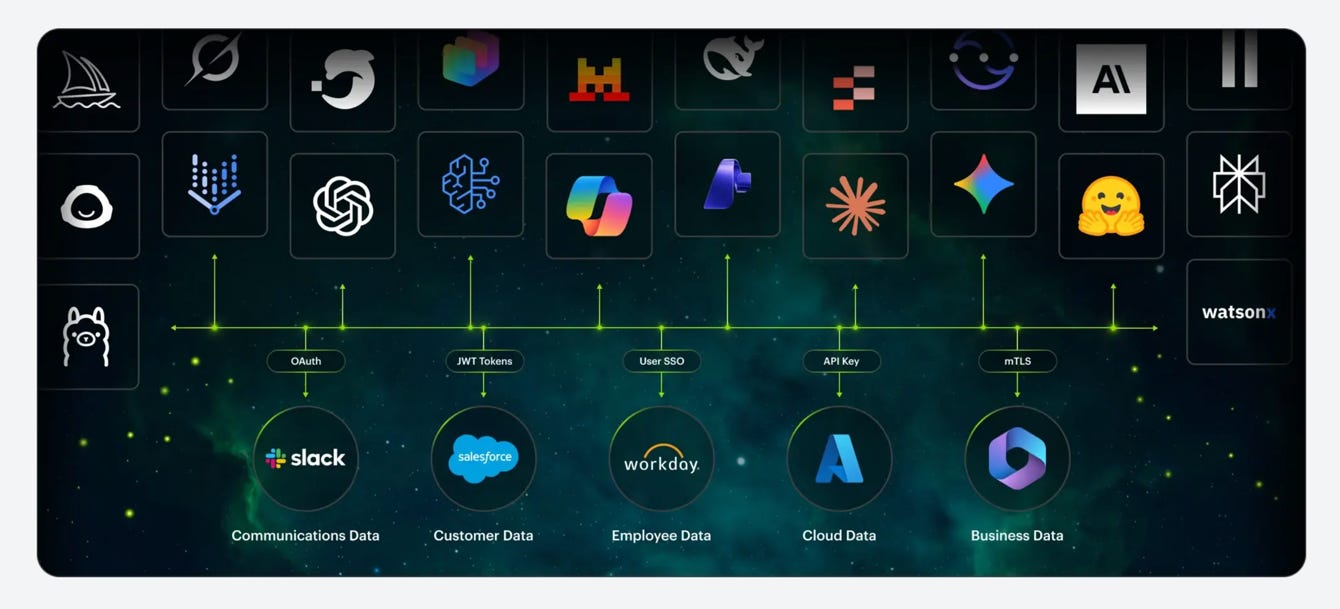
CX use case: For teams deploying AI service agents, the customer conversation is now part of the trust boundary. Chat logs, account details, insurance data, complaint histories, and authentication clues need visibility, guardrails, and audit trails.
Worth watching because: Axios reported this week that Google patched a Dialogflow CX flaw that could have exposed or hijacked customer-service chatbot conversations. Varonis says Atlas can inspect prompts and responses in real time, enforce policies, and show audit trails of AI interactions, including LLM calls, data access, and guardrails.
Bottom line: If AI is going to sit inside service journeys, CX and security need to review the same customer conversation before the customer has to.
The DCX AI Today - AI Tool Directory - If you lead a CX team and want a curated shortlist of tools worth evaluating, this is your starting point.
📡 90-SECOND CX RADAR
Google patched a chatbot flaw that could have exposed customer conversations
Axios reported that Varonis found a critical vulnerability in Google’s Dialogflow CX platform, which is used for customer-service chatbots and voice assistants. Google said the issue was fully mitigated, with no known indication of customer compromise.
Why it matters: Customer support AI now carries the same trust burden as the rest of the service journey. The bot is a conversation, a data surface, a permission question, and a recovery risk wearing one friendly little chat bubble.
✅ YOUR MOVE
Service AI is getting real enough to be boring. That is usually when the risk starts.
Banks are building orchestration layers that decide where the customer goes next. That makes the handoff the new proof point.
This week, pick one AI-assisted service journey and inspect the transfer moment. Look for the first place a customer could be misrouted, misunderstood, exposed, or left without a clear human path.
Then ask for the receipts: the trigger, the transcript, the employee view, the override, the audit trail, and the owner of the fix.
Automation should make routine cases faster and hard cases impossible to miss.
Until next week,

👥 Share This Issue
Think of one person who’s wrestling with AI in CX right now
and forward this to them.
I’m obsessed with Wispr Flow Pro! Get a Free Month on me.

If someone forwarded this to you, they thought you needed to see it before your next AI planning meeting. Get your own copy.