

Measure the Friction Before the Survey
Plus: AI is starting to turn calls, chats, complaints, and app behavior into a live operating map. The hard part is making someone own what it finds.


Your daily signal on AI and CX — minus the hype.
DCX Stat of the day: BBVA says its AI systems analyze more than 220,000 monthly calls between customers and remote relationship managers in Mexico, plus 10,000 to 20,000 NPS surveys every day. BBVA
In this issue:
→ Surveys meet the messy real journey
→ Customer pain gets a new evidence trail
→ Travel advisors become AI operators
→ DoorDash builds memory into shopping
→ Meal planning moves closer to checkout
🔍 DEEP DIVE
The Complaint Is Already Talking
BBVA, one of the largest banks in the world, is using generative AI to analyze selected customer conversations across calls, chats, complaints, web, and app interactions, then combine that evidence with NPS comments and digital behavior.
That sounds like a measurement upgrade. It is really an ownership test.
Surveys tell you what a customer remembers after the fact. Calls and complaints show where the work actually broke. App behavior shows whether one customer’s friction is becoming a pattern. The useful move is not collecting more sentiment. It is connecting the evidence to the team that can fix the broken login, unclear form, blocked payment, confusing policy, or repeated service question.
The customer consequence is simple: if the bank can see friction faster, customers should not have to keep reporting the same problem in different channels. The business consequence is also simple: a live friction map is only valuable if it changes queues, product backlogs, policy wording, and recovery ownership.
Bottom Line: AI can make customer pain easier to see, but visibility without ownership just creates a more sophisticated dashboard of things nobody fixed.
📬 Copy-Paste Take
Before adding another survey, ask what customer evidence you already have but do not use well: calls, chats, complaints, app exits, repeat contacts, refund notes, and field comments. The gap is rarely signal. The gap is who owns the fix once the signal becomes visible.
🧭 OPERATOR PLAYBOOK
Give the Signal a Place to Land
Do not treat AI-based experience measurement as a better listening tool. Treat it as a routing system for customer pain.
Audit every high-volume journey for four things:
Which customer signals already exist before the survey.
Which signals show repeated effort, confusion, delay, or distrust.
Which team owns the root cause behind each signal.
Which fixes can be tested without waiting for another quarterly report.
Then test whether the same customer issue appears in more than one channel. If it shows up in calls, complaints, app behavior, and survey comments, it is probably not an attitude problem. It is a journey problem with witnesses.
Ask your team: What customer pain do we keep measuring because nobody has agreed to own it?
Signal: The best experience metric is the one that gets a decision made.
📊 MARKET REALITY CHECK
AI Is Joining the Back Office, Too

Travel advisors are already using AI for the invisible work behind a high-trust trip: research, itinerary building, supplier comparison, booking administration, client communications, trip audits, and approval-controlled actions.
PhocusWire reports that 59% of advisors are using generative AI, up from 41% a year earlier. Tern says AI use among 6,900 advisors nearly tripled in the last year. Fora says daily AI users generated 3.5 times more bookings and 3.5 times more repeat clients per advisor than non-users.
That does not prove AI caused the whole performance gap. It does show where the operating pressure is moving. Customers may still want the human advisor, but the advisor who can audit options, summarize constraints, check details, and communicate faster has a different service ceiling.
Why it matters: AI is changing the employee capacity layer behind complex service promises, far beyond the customer-facing chat window.
Better back-office memory = fewer customer surprises.
🧰 TOOL WORTH KNOWING
Ask DoorDash
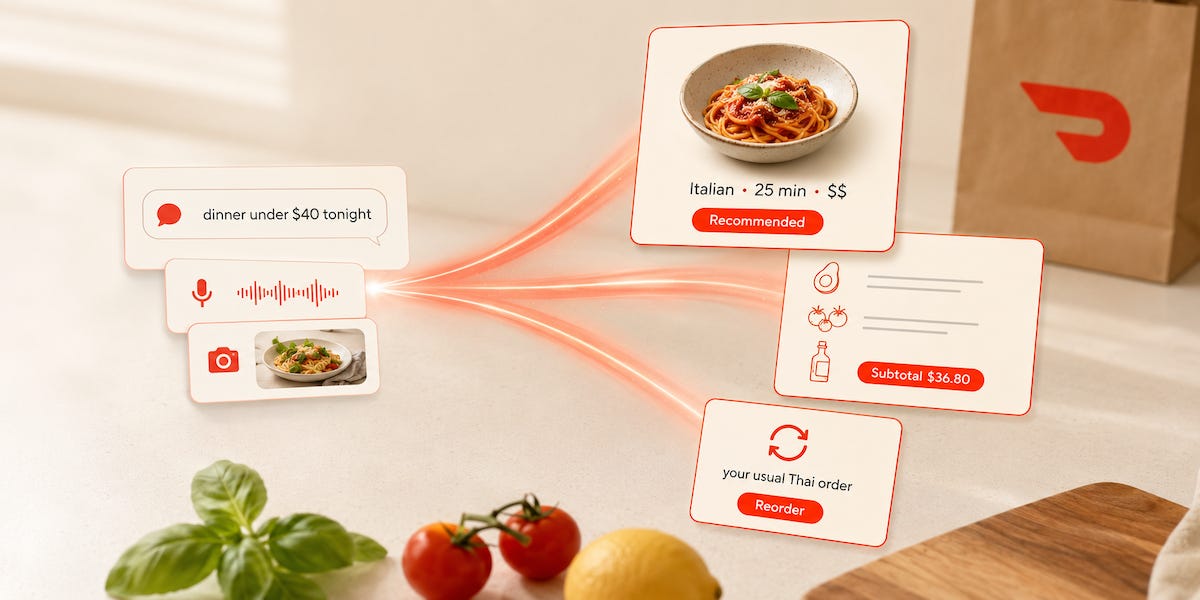
What it does: Ask DoorDash is a shopping assistant architecture that combines an LLM with specialized agents, live backend services, customer memory, and tool access for catalog, cart, checkout, and order-history tasks.
CX use case: It helps shoppers move from vague intent to usable choices without making every request a new search session.
Worth watching because: InfoQ reports DoorDash saw roughly 24% higher grocery checkout conversion, 17% larger baskets, and 7% fewer conversational turns during a seven-day evaluation. That is the right kind of test: did the assistant reduce effort and move the customer closer to a successful task?
Bottom line: Personalization gets useful when memory, inventory, cart logic, and confirmation rules work together. Otherwise, it is just a charming search box with a better vocabulary.
More: InfoQ
The DCX AI Today - AI Tool Directory - If you lead a CX team and want a curated shortlist of tools worth evaluating, this is your starting point.
📡 90-SECOND CX RADAR
Woolworths tests meal planning that can reach the basket
Woolworths’ My Woolies Chef is an app-native food AI assistant built around recipes, preferences, household needs, product information, local availability, and shopping functionality.
Why it matters: The grocery journey includes deciding, planning, substituting, checking availability, and getting the right items into the cart without making dinner feel like project management.
✅ YOUR MOVE
AI is making more customer evidence visible before the survey ever arrives.
That only helps if the business has a place for the evidence to go.
This week, pick one journey with heavy repeat contact. Pull three signal types from it: survey comments, service conversations, and digital behavior. Then ask where the same friction appears across all three.
Look for four things:
The repeated customer question.
The moment customers abandon or escalate.
The team that can change the root cause.
The smallest fix you can test in two weeks.
If AI helps you hear the customer sooner, the next question is not what the customer said. It is who changes the system because they said it.
Until tomorrow,

👥 Share This Issue
Think of one person who’s wrestling with AI in CX right now
and forward this to them.
I’m obsessed with Wispr Flow Pro! Get a Free Month on me.

If someone forwarded this to you, they thought you needed to see it before your next AI planning meeting. Get your own copy.