

Prove the Work Disappeared
Plus: Uber cuts service roles, buying questions span all 168 hours, and Autoplay helps before the ticket.


Your daily signal on AI and CX — minus the hype.
DCX Stat of the day: Qualtrics says AI-powered customer service fails at four times the rate of any other AI application, with almost one in five customers saying it gave them no benefit.
In this issue:
→ Uber cuts 10% of customer-service roles
→ Buying questions span all 168 weekly hours
→ Quiet-hour demand still produces orders
→ Autoplay turns product activity into proactive guidance
→ Shoppers choose AI over brand sites
🔍 DEEP DIVE
A Smaller Team Is Still a Customer Promise

Uber has cut 10% of jobs in its community operations customer-service organization. The company tied the reorganization to simplifying operations, strengthening in-person collaboration, and making better use of AI.
The internal logic deserves attention. Uber’s memo said the organization had become too complex and fragmented, and that frontier technology couldn’t scale on top of fragmented processes. That’s a real operating problem. AI laid over a broken service system usually makes the break travel faster.
But a smaller team doesn’t prove the work disappeared. The work may come back as repeat contacts, slower exceptions, weaker recovery, more customer effort, or more supervision for the people who remain. Uber didn’t disclose the size of the unit, expected savings, automation performance, or customer outcomes.
A headcount reduction is a capacity decision. It becomes an AI result only when the company can show what demand was removed, what customers now resolve more easily, and which recovery capacity remains protected.
Bottom Line: If AI removes service roles, measure the work that vanished and the effort that didn’t move to the customer.
📬 Copy-Paste Take
Before cutting service capacity because of AI, prove four things: demand was removed instead of displaced, repeat contacts aren’t rising, exception coverage is protected, and the remaining team isn’t spending the savings checking the machine.
🧭 OPERATOR PLAYBOOK
Audit the Capacity Claim
Take one AI-enabled service journey and compare the 30 days before and after the staffing change:
Demand removed: Which contacts, tasks, and follow-ups genuinely stopped?
Customer effort: Did repeat contact, channel switching, complaints, or abandonment rise?
Exception coverage: Can people still recover urgent, high-risk, and emotionally charged cases?
Verification tax: How much employee time now goes to checking, correcting, and explaining AI output?
Add a stop condition before the cut. If customer effort or unresolved exceptions rise beyond it, restore capacity or narrow the automation.
Ask your team: Which work disappeared, and which customer or employee picked up the rest?
Signal: Lower headcount is visible. Displaced effort hides in the journey.
📊 MARKET REALITY CHECK
Buying Questions Arrive 24/7
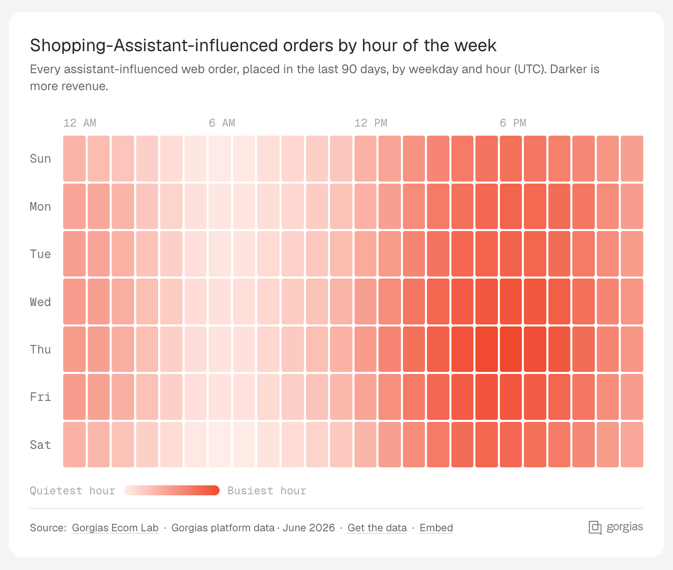
Gorgias found assistant-influenced orders occur during every hour of the week. The busiest hour generated only about 3.5 times as many orders as the quietest.
The pattern uses web orders placed during the last 90 days across merchants running Gorgias Shopping Assistant. The commercial signal is hard to miss: assisted buying journeys keep producing orders while human coverage gets thin.
Why it matters: Pre-purchase demand doesn’t follow contact-center staffing. A question left unanswered overnight can become somebody else’s sale.
Customer demand minus staffed coverage = revenue exposed to the clock
🧰 TOOL WORTH KNOWING
Autoplay Helps Before the Ticket Exists
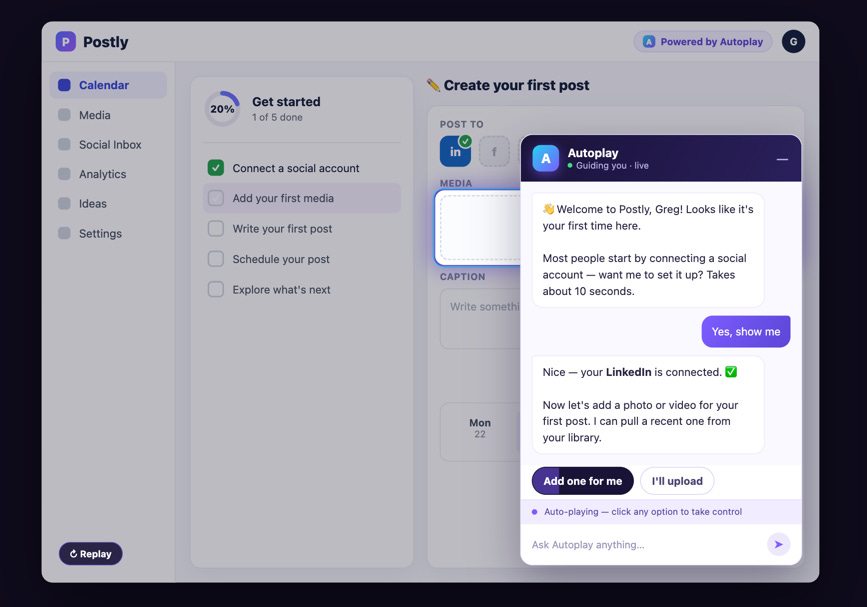
What it does: Autoplay feeds live product activity into an existing support AI agent. It turns clicks, progress, stalled steps, and completed workflows into structured context the agent can use.
CX use case: A customer stalls halfway through setup but never opens chat. Autoplay can recognize the gap, compare it with the intended journey, and trigger a relevant message, quick reply, modal, or in-app tour. Session states help the agent decide when to speak and when to stay quiet.
Worth watching because: Most support systems wait for customers to identify the problem and ask the right question. Autoplay treats behavior as the signal, moving help into the moment before confusion becomes a ticket or abandonment.
Bottom line: Proactive help earns its place only if it reduces stuck time without turning the product into a stream of interruptions.
The DCX AI Today - AI Tool Directory - for a curated shortlist of tools worth evaluating, this is your starting point.
📡 90-SECOND CX RADAR
Shoppers are choosing the AI front door
Bloomreach’s survey of 4,000 US and UK consumers found that 41.4% would choose to shop through an AI tool if forced to pick, compared with 38% who would go directly to a brand site. It also found that 80.4% said their AI shopping experience met or exceeded expectations.
Why it matters: Product data, comparison logic, policies, and brand explanations now shape the journey before many shoppers reach the company’s own experience.
✅ YOUR MOVE
Pick one service workflow where AI is part of the staffing case. Write down the capacity the model says you gained.
Then subtract repeat contacts, employee verification, exception handling, and customer recovery. If nobody owns those numbers, the savings are still a hypothesis.
Don’t count the role until you can account for the work.
Until Monday,

👥 Share This Issue
Think of one person who’s wrestling with AI in CX right now
and forward this to them.
I’m obsessed with Wispr Flow Pro! Get a Free Month on me.

If someone forwarded this to you, they thought you needed to see it before your next AI planning meeting. Get your own copy.