

Customers are Asking Your Product Pages Real Questions. Your Content is Still Talking in Blurbs.
Plus: Consumers are getting more comfortable with AI help, but only when the answer, handoff, and authority are clear.


Your daily signal on AI and CX — minus the hype.
Announcing:

A practical peer conversation for CX pros sharing what they’re trying, testing, and learning with AI to improve customer insight, journeys, operations, and support.
When: May 7 at 9:30 AM PDT
Length: 90 minutes
Location: Virtual
Cost: Free
Hosted by: Me
Reserve Your Spot
Space is limited, so everyone gets a voice
📌 DCX Stat of the day: 43% of teams with mature AI deployment reported higher quality and consistency across support, compared with 24% of teams still in initial deployment. Intercom
In this issue:
→ Amazon turns product pages into live Q&A
→ Travelers care more about resolution than channel
→ Retail AI traffic is starting to convert
→ Agentic commerce gets a trust layer
→ Uber keeps stretching the consumer app
🔎 Deep dive
The product page is turning into a sales associate
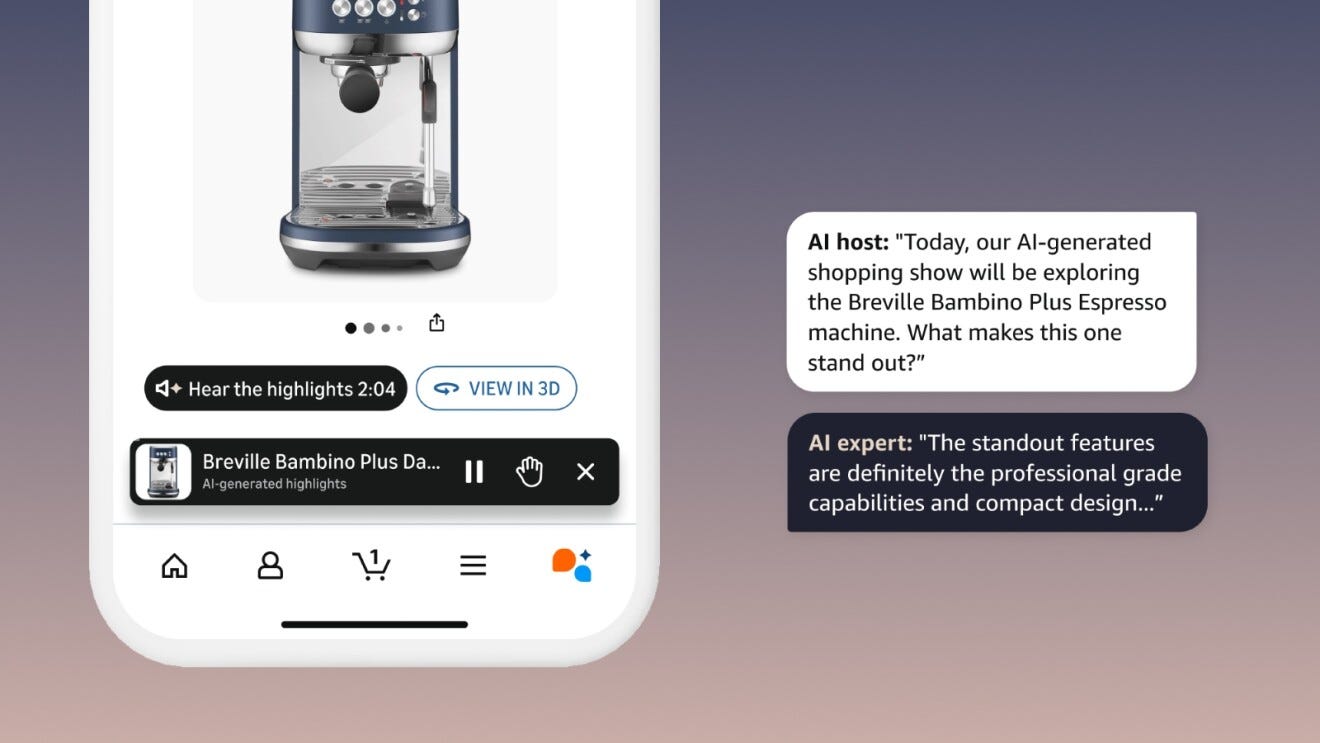
Amazon launched Join the chat, a new interactive layer inside its Hear the highlights audio shopping feature. Customers can ask AI hosts product questions by text or voice while listening to an AI-generated product summary. The hosts pause, answer in real time, then keep going. It is now available to U.S. customers on iOS and Android.
That moves online shopping closer to the thing stores used to do well: answer the question sitting between interest and purchase. “Is this coffee maker good for a beginner?” “Does this sweater feel itchy?” “Is it dishwasher safe?” Small questions. Big hesitation.
The CX implication is practical. Your product content, reviews, specs, policies, and comparison logic are becoming part of the service experience. If those inputs are thin, outdated, or written for search instead of decision-making, AI will not fix the gap. It will package the gap more confidently.
Want to try it yourself? Open any of the products below in the Amazon Shopping app and Join the chat with these sample questions—or ask your own.
La Roche-Posay Toleriane Purifying Foaming Facial Cleanser: “What is the scent like?”
BISSELL Little Green Mini Portable Carpet and Upholstery Deep Cleaner: “Is it good for pet owners?”
Soundcore P30i by Anker Noise Cancelling Earbuds: “How do they work for phone calls?”
Ninja Luxe Café Premier 3-in-1 Espresso Machine: “Is it easy to clean?”
Dreo Smart Humidifiers for Bedroom: “Can it be used with essential oils?”
📬 Copy-Paste Take
Product pages are becoming service conversations. If we want AI to help customers buy with confidence, we need to audit the questions customers ask before purchase, not just the content we already publish.
OPERATOR PLAYBOOK
Audit the questions customers ask before they buy
Treat product discovery like a support journey. Because it is one now.
Audit every product evaluation flow for four things:
The questions customers repeatedly ask in reviews, search, chat, calls, and returns.
The specs, compatibility notes, fees, exclusions, or usage limits that are easy to miss.
The places where AI can give a clear tradeoff, not a generic recommendation.
The escalation path when the customer is asking about risk, fit, money, safety, or timing.
Then test whether a shopper can get a clear answer in two turns without leaving the buying flow.
Ask your team: Which customer question keeps showing up before purchase that our site still answers badly?
Signal: The product detail page is no longer just a merchandised page. It is becoming a guided decision moment.
📈 Market Reality Check
AI shoppers are showing up with intent
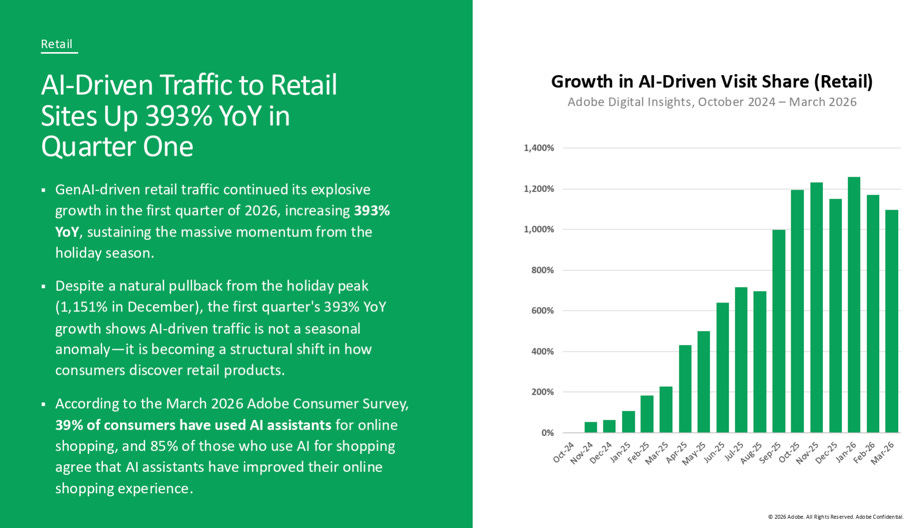
Adobe found that traffic from AI sources to U.S. retail sites grew 393% year over year in Q1 2026. In March, AI traffic converted 42% better than non-AI traffic. That is a sharp reversal from March 2025, when AI traffic converted 38% worse.
The catch: many retail pages are still not fully readable by machines. Adobe found average machine readability scores of 75% for homepages, 74% for category pages, and 66% for individual product pages.
AI traffic plus weak product content equals invisible friction.
🧰 Tool Worth Knowing
Rep AI
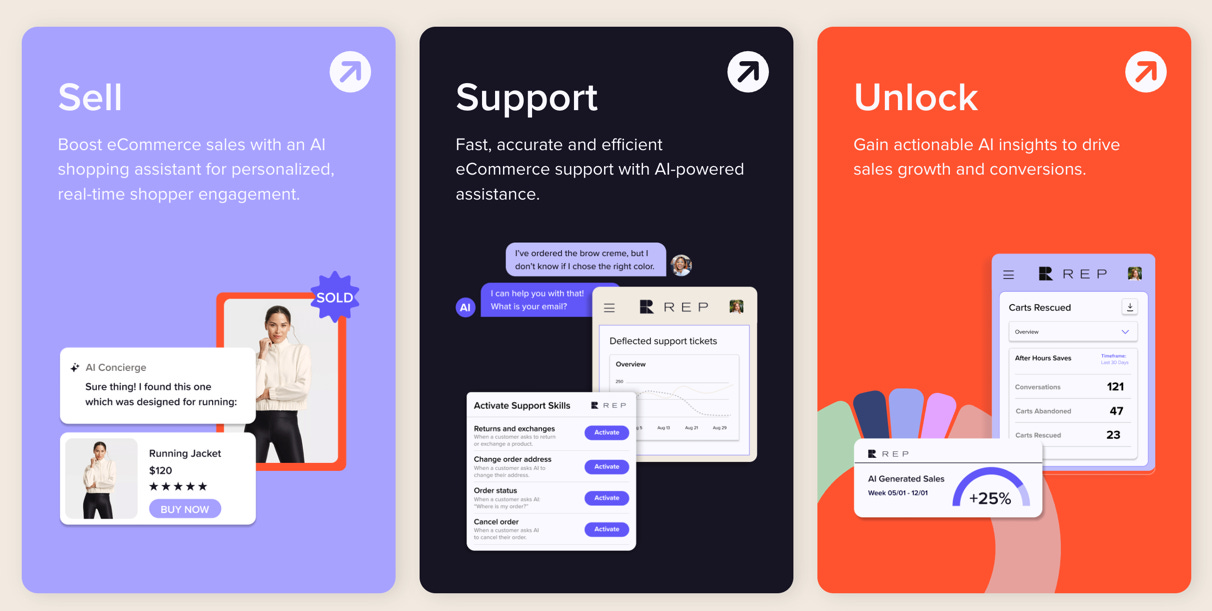
What it does: Rep AI is an ecommerce shopping and support agent for Shopify and retail brands. It helps shoppers find products, ask questions, add items to cart, and handle post-order tasks like tracking, cancellations, and returns.
CX use case: Use it where pre-purchase hesitation and repetitive support collide. Product fit questions. Returns. Order status. “Can this work for me?” moments that quietly decide conversion.
Worth watching because: It connects sales help, support automation, and shopper behavior data in the same interaction layer.
Bottom line: Worth a look if your store treats conversion and support as separate worlds. Treat the performance numbers as vendor claims until you validate them against your own baseline.
NEW: The DCX AI Today - AI Tool Directory - If you lead a CX team and want a curated shortlist of tools worth evaluating, this is your starting point.
⚡ 90-Second CX Radar
FIDO starts building the trust layer for AI agents
The FIDO Alliance announced new workstreams for agentic authentication and agent-initiated commerce. The practical issue is simple: if AI agents are going to authenticate, act, and transact for customers, brands need proof of user intent and clear limits on authority.
Uber adds hotels inside the app
Uber is adding hotel booking through Expedia inventory, giving U.S. users access to more than 700,000 hotels in the Uber app. It also announced AI-powered voice booking and unified search across rides, food, and retail. The consumer app keeps becoming the journey wrapper.
Social scams are now a $2.1 billion trust problem
The FTC says reported social media scam losses reached $2.1 billion in 2025, about eight times the 2020 figure. This is not just a fraud story. It is a trust tax on every legitimate brand trying to sell, serve, or support customers in the same digital spaces.
🧭 Your Move
This issue has one thread running through it: AI is moving closer to the customer’s moment of decision. Shopping, travel, support, payments, booking, fraud prevention. Same pressure. Different rooms.
Your move this week: pick one customer decision point and audit the AI layer around it. Ask what the customer is trying to decide, what information they need, what the system is allowed to do, and where human support needs to stay visible.
If AI is now part of the buying journey, the content behind it has to be treated like an operating asset.
Until tomorrow,

👥 Share This Issue
Think of one person who’s wrestling with AI in CX right now
and forward this to them.
I’m obsessed with Wispr Flow Pro! Get a Free Month on me.

If someone forwarded this to you, they thought you needed to see it before your next AI planning meeting. Get your own copy.