

Show Me Why Before You Act
Plus: Money advice moves into chat, shoppers draw a line at checkout, and AI-generated quotes get confidence scores.


Your daily signal on AI and CX — minus the hype.
DCX Stat of the day: Customer conversations with explicit emotional validation scored 11.84% higher on Level AI’s inferred satisfaction measure than conversations without it.
In this issue:
→ Personal finance gets a new, unlicensed front door
→ Advice needs evidence before customers act
→ Shoppers keep control at the checkout
→ Squirro puts confidence inside automated quotes
→ Public services and payments confront human oversight
🔍 DEEP DIVE
Your Money Question Has a New Advisor
People are asking general-purpose AI tools how to budget, manage debt, choose investments, and plan retirement. The OECD (Organisation for Economic Co-operation and Development) says more than one-third of people across its member countries used AI tools in 2025, and personal finance is becoming one of the places they turn for help.
That changes the financial journey before a bank, insurer, or advisor even knows a decision is being made. AI can simplify dense documents, translate unfamiliar terms, and answer questions someone may feel awkward asking a person. It can also hallucinate, blur information with personalized advice, hide commercial influence, and invite customers to share more financial data than they understand.
The awkward part for CX leaders is that the customer may arrive with a confident answer from a system the business doesn’t control. Frontline teams need a way to inspect the claim, explain the tradeoff, and correct bad guidance without treating the customer like the problem.
Bottom Line: AI can lower the effort of asking a money question while raising the cost of trusting the wrong answer.
📬 Copy-Paste Take
If customers are using AI to make financial decisions before they reach us, our journey has to do more than present an offer. It needs to show the evidence, expose the assumptions, explain the commercial influence, and give a person somewhere to challenge the answer before money moves.
🧭 OPERATOR PLAYBOOK
Audit the Moment Advice Becomes Action
Pick one journey where AI guidance can change a financial decision, purchase, quote, or application.
Audit it for four things:
Evidence: Can the customer see what facts and sources shaped the answer?
Influence: Are commissions, preferred products, and business rules visible?
Permission: Is there a clear approval step before the system acts?
Recovery: Can a person inspect, reverse, or correct the decision?
Then give the flow one plausible but wrong AI-generated assumption. Watch whether the journey catches it or quietly turns it into a transaction.
Ask your team: Where does useful guidance become a recommendation we must be able to defend?
Signal: Confidence is not evidence, and convenience is not consent.
📊 MARKET REALITY CHECK
Checkout Is the Trust Boundary

64% of Australians have used AI assistants to browse, compare, or discover products. The same share feel uncomfortable allowing AI to complete a purchase on their behalf. Only 5% are fully comfortable letting AI buy independently.
That is a remarkably clean boundary. Customers will accept help narrowing the choice. Control gets more valuable when the journey reaches payment. The findings are regional and don’t predict behavior everywhere, but they give retailers a practical warning: investment in agentic checkout is running ahead of customer permission.
Why it matters: The winning journey may not be the most autonomous one. It may be the one that makes limits, approval, authentication, and reversal easiest to understand.
Assistance builds momentum. Visible control earns the transaction.
Data Source: Adyen
🧰 TOOL WORTH KNOWING
Squirro Gives the Quote a Confidence Score
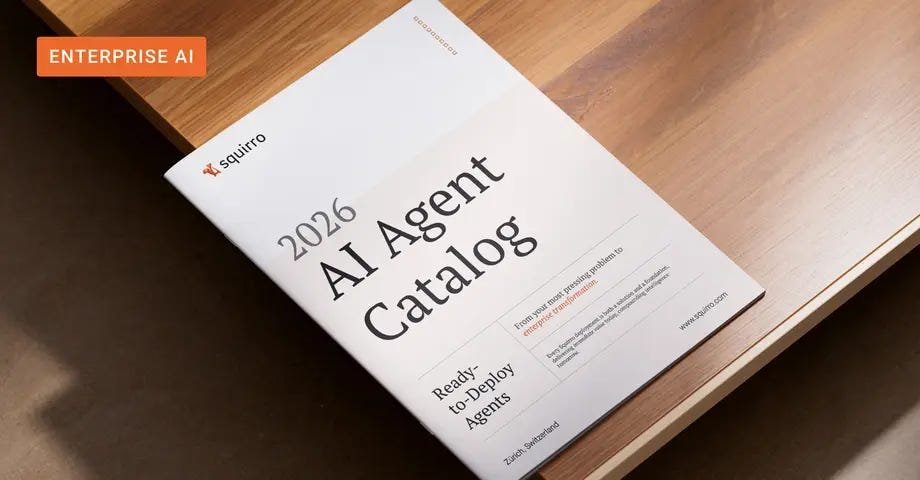
What it does: Squirro’s new catalog packages 13 enterprise agents on one shared foundation for data connections, security, governance, and audit. Its Instaquote Agent turns insurance submission documents into structured SAP quotes and assigns a confidence score at every step.
CX use case: Commercial customers can move from a document-heavy request to a quote in minutes, while uncertain cases route to a person with the source context intact.
Worth watching because: The confidence score creates a useful decision point. Teams can define when automation proceeds, when a human reviews, and what evidence has to travel with the quote.
Bottom line: A faster quote helps. A quote the business can explain, inspect, and correct is much more valuable.
The DCX AI Today - AI Tool Directory - If you lead a CX team and want a curated shortlist of tools worth evaluating, this is your starting point.
📡 90-SECOND CX RADAR
Public services get an AI invitation, with conditions
BCG found that 64% of citizens across 44 countries use AI at least weekly, while satisfaction with government digital services has fallen 13 percentage points over a decade. Nearly two-thirds still want human oversight for AI-enabled services, especially when decisions are complex or consequential.
Why it matters: Faster public service will not earn trust if citizens cannot see the safeguard, request review, or reach the person accountable for the decision.
More access is not the same as applied work
Gallup says 47% of U.S. employees now work at organizations that have integrated AI, yet one in five still do not know whether their employer has done so. The largest reported productivity gains appear in specific uses such as coding and process automation, not the broadest everyday uses.
Why it matters: Tool availability is a weak operating metric. Name the workflow, the owner, the expected customer or employee outcome, and the boundary on what AI can do.
Payments finally ask who owns the agent’s mistake
The Emerging Payments Association Asia and HSBC have launched a working group on agent identity, authorization, fraud, liability, and disputes. Its premise is blunt: agents are already transacting, while responsibility still assumes a human made the decision.
Why it matters: Agentic payment cannot scale safely until customers know who approved the action and who makes them whole when software exceeds its mandate.
✅ YOUR MOVE
Customers are inviting AI into decisions that affect their money, purchases, and access to services.
They are also drawing a clear line between getting help and surrendering control.
Choose one AI-assisted decision in your customer journey. Trace the evidence, commercial influence, approval step, confidence threshold, and reversal path. If any one of those disappears when the system acts, the customer is carrying a risk the business created.
Let AI make the path easier. Keep the consequential decision explainable and reversible.
Until tomorrow,

👥 Share This Issue
Think of one person who’s wrestling with AI in CX right now
and forward this to them.
I’m obsessed with Wispr Flow Pro! Get a Free Month on me.

If someone forwarded this to you, they thought you needed to see it before your next AI planning meeting. Get your own copy.