

Tell the Customer Who’s Talking
Plus: Europe puts AI disclosure inside the journey, customers want the name and the clock, and insurance agents move into the quote form.


Your daily signal on AI and CX — minus the hype.
DCX Stat of the day: 55% of consumers expected companies to disclose whether they were communicating with AI or a human. An even larger 64% expected estimated wait times. CCW Digital
In this issue:
→ Europe makes AI disclosure a journey requirement
→ First contact becomes a compliance moment
→ Customers want identity and wait-time clarity
→ OpenDialog enters complex insurance quote flows
→ Banks reveal the gap between access and implementation
🔍 DEEP DIVE
Put the Label Where the Decision Starts

Europe has turned a familiar CX question into an operating deadline: does the customer know when they’re dealing with AI?
The European Commission’s new guidance explains Article 50 transparency obligations that apply from August 2. Providers of covered interactive AI systems must design them so people are informed that they’re interacting with AI, unless that’s obvious. The disclosure has to arrive no later than the first interaction.
The disclosure is only the start. Customers will reasonably ask what the AI can do, what data it uses, whether a person is available, and how to challenge an answer. A tiny bot badge beside a dead-end conversation may satisfy a design ticket while leaving the customer with the same practical uncertainty.
For CX leaders, the front door now needs three things at once: a clear identity, an honest boundary, and a visible escape route. Legal can define the obligation. Product, service, and operations still have to make it usable.
Bottom Line: Disclosure works only when it helps the customer understand the interaction and what to do when automation reaches its limit.
📬 Copy-Paste Take
Before adding an AI disclosure, test the next customer question: What can this system do, what can’t it do, and how do I reach someone accountable? If the interface can’t answer those three questions, the label is carrying more responsibility than the journey.
🧭 OPERATOR PLAYBOOK
Run the First-Interaction Test
Choose one customer-facing AI interaction and review the first 30 seconds:
Is the AI identity clear before the customer relies on it?
Does the interface explain the system’s practical boundaries?
Can the customer reach human help without starting over?
Is the disclosure logged with the interaction and version?
Then ask five people who didn’t build the flow to explain what they think the system can do. Their answers will tell you whether the disclosure is working or merely present.
Ask your team: Does this notice change what the customer understands and can do next?
Signal: A compliant label can still sit inside a confusing journey.
📊 MARKET REALITY CHECK
Customers Want the Name and the Clock
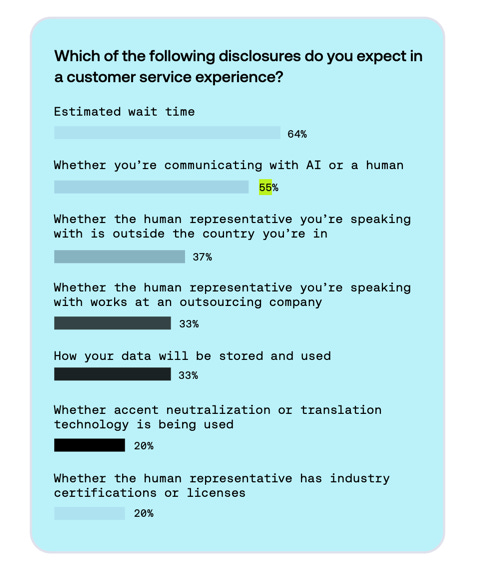
55% of consumers expected companies to disclose whether they were communicating with AI or a human. Even more, 64%, expected an estimated wait time.
Those expectations belong together. Before the conversation unfolds, customers are already trying to answer two questions: Who has me, and how long will this take? Hiding the resource or the wait creates uncertainty the rest of the journey has to overcome. The figures don’t prove that a label or countdown fixes service, but they show what customers want made visible before they commit their time.
Why it matters: Transparency starts before the answer. Service design should identify the responder, set a credible time expectation, and make the next option clear when either one changes.
Data Source: CCW Digital
Identity + time = fewer unknowns before the conversation.
🧰 TOOL WORTH KNOWING
OpenDialog Steps Into the Hard Part of the Quote
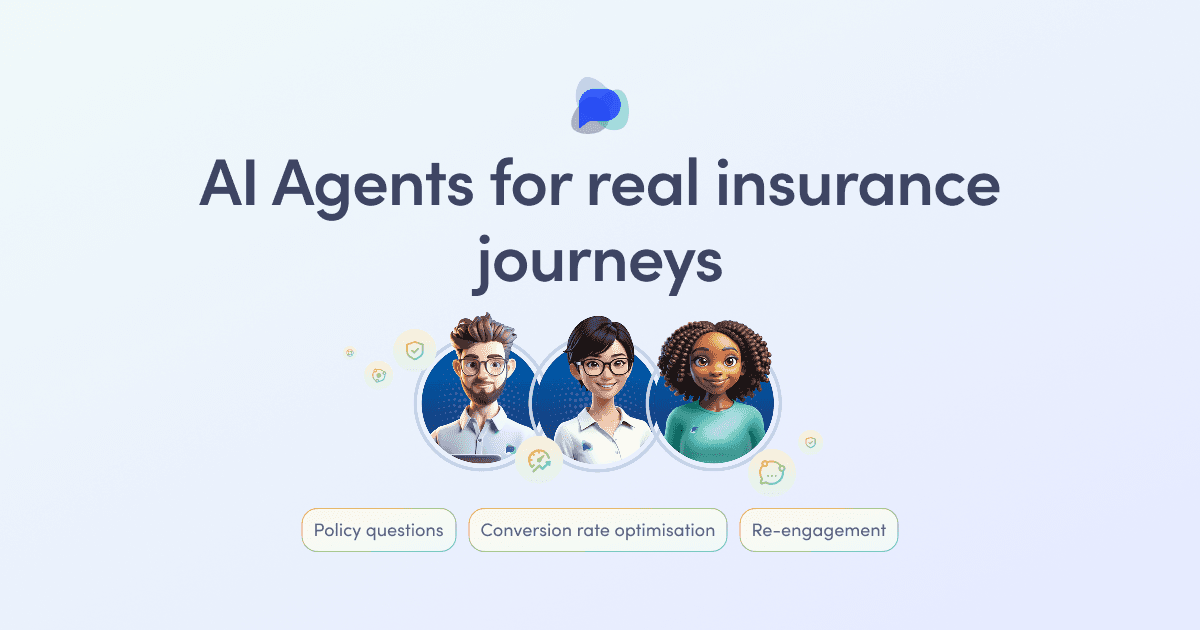
What it does: OpenDialog builds AI agents for regulated insurance journeys, including quotations, policy questions, policy changes, re-engagement, and claims.
CX use case: New partnerships with Firemelon and Aequotech bring contextual guidance into insurance comparison and quote flows. Medical Travel Compared plans to use it where medical declarations and pre-existing condition questions often create confusion or abandonment.
Worth watching because: This is a good test of whether conversational help can make a regulated product easier to understand without weakening disclosure, auditability, consent, accessibility, or the path to a human before a policy is bound.
Bottom line: The useful agent isn’t the one that talks around the form. It’s the one that helps the customer complete a difficult decision with fewer doubts and a cleaner record.
The DCX AI Today - AI Tool Directory - If you lead a CX team and want a curated shortlist of tools worth evaluating, this is your starting point.
📡 90-SECOND CX RADAR
Prompt volume is outrunning implemented workflows
More than 200,000 Bank of America employees use AI-enabled capabilities and generate more than 400,000 prompts a day. The bank has more than 300 approved AI use cases, but 34 are fully implemented.
Why it matters: Access scales faster than operating change. Track implemented customer and employee workflows, not the number of people who opened the tool.
✅ YOUR MOVE
Customers need to know when AI has entered the journey. They also want an honest signal about how long the next step will take.
Both questions are tests of operating clarity.
Pick one live AI interaction this week. Review the disclosure, the boundary, the human route, and the event log. Then test the wait-time promise: what starts the clock, what stops it, who updates the customer, and what happens when the estimate slips?
Tell the customer who’s talking. Then prove the business knows what happens next.
Until tomorrow,

👥 Share This Issue
Think of one person who’s wrestling with AI in CX right now
and forward this to them.
I’m obsessed with Wispr Flow Pro! Get a Free Month on me.

If someone forwarded this to you, they thought you needed to see it before your next AI planning meeting. Get your own copy.