

The Agent Can Build the Case. It Still Can’t Own the Decision.
The hard part starts after the answer looks good.


Your daily signal on AI and CX — minus the hype.
DCX Stat of the day: In a three-country study of 1,224 online shoppers, trust explained 64% of the variance in whether people would let an AI agent make a purchase for them. Journal of Retailing and Consumer Services
In this issue:
→ The difference between preparing a case and owning the outcome
→ Five questions worth asking before an agent gets more authority
→ Why traceability becomes a customer problem fast
→ A better way to hear what customers actually mean
🔍 DEEP DIVE
Ready Is Not the Same as Done
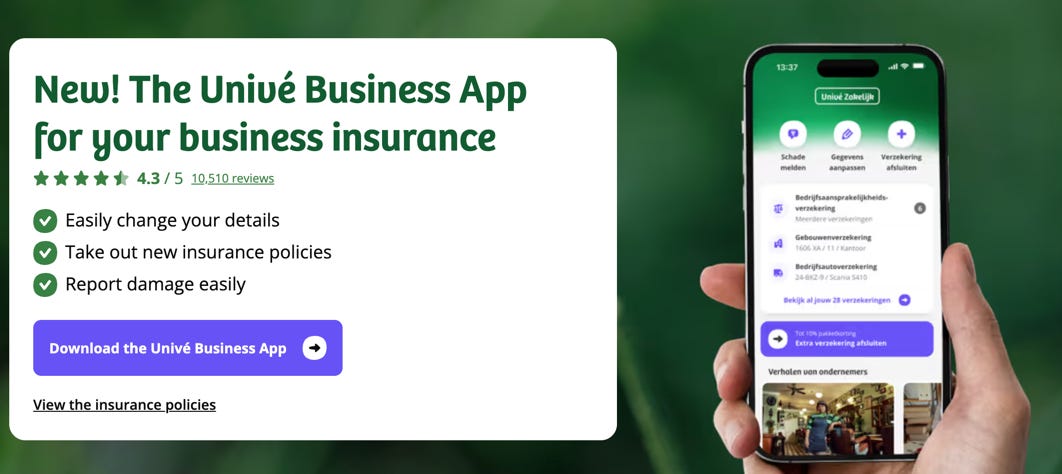
But the useful part isn’t the GPT count. It’s what they do with pet-insurance claims. An agent assembles the file, reads invoices and policy terms, flags missing information and anomalies, then prepares a traceable recommendation. Work that used to take hours can be ready in minutes.
And then it stops. A trained claims professional still makes the decision.
That may sound obvious. It isn’t. A recommendation can become the decision very quickly when the queue is long, the screen looks confident, and nobody is set up to challenge it. The customer doesn’t care that the evidence was assembled in minutes if the claim is denied incorrectly, explained badly, or sent into an appeal maze.
So I’d protect that line: let the agent prepare the case. Make a person own the answer. If that person can’t see the evidence, question the recommendation, or correct a mistake, the decision is already automated in practice.
Bottom Line: Faster preparation is great when it gives people more room to use judgment. It’s a problem when it just makes an unowned decision happen faster.
📬 Copy-Paste Take
Before we give an agent more authority, we should be able to name the evidence it prepares, the decision a person still owns, and the recovery path when the answer is wrong. Faster casework is useful. Invisible decision transfer isn’t.
🧭 OPERATOR PLAYBOOK
Try This Before You Give the Agent More Room
Pick one live workflow where AI is starting to influence a customer’s money, access, eligibility, claim, refund, or next step. Don’t start with the demo. Start with the last difficult case your team had to rescue.
Put that case on the screen with the people from operations, risk, and CX. Then work through five questions:
What information does the agent use, and which of it can be stale, missing, or wrong?
What exact action turns its recommendation into a customer outcome?
Who can stop or reverse that action?
What will the next employee see if the customer comes back unhappy?
Who owns fixing the underlying problem if the agent makes the same mistake again?
Then run the ugly version. Let the evidence conflict. Let volume spike. Let the answer sound plausible and still be wrong. If the recovery depends on somebody remembering a workaround, you have found work that needs to be made explicit before the agent gets more room.
Worth asking: Which decisions are technically still human, but in reality happen on autopilot because nobody has time to question the recommendation?
📊 MARKET REALITY CHECK
The Record Is Only Useful If You Can Explain It
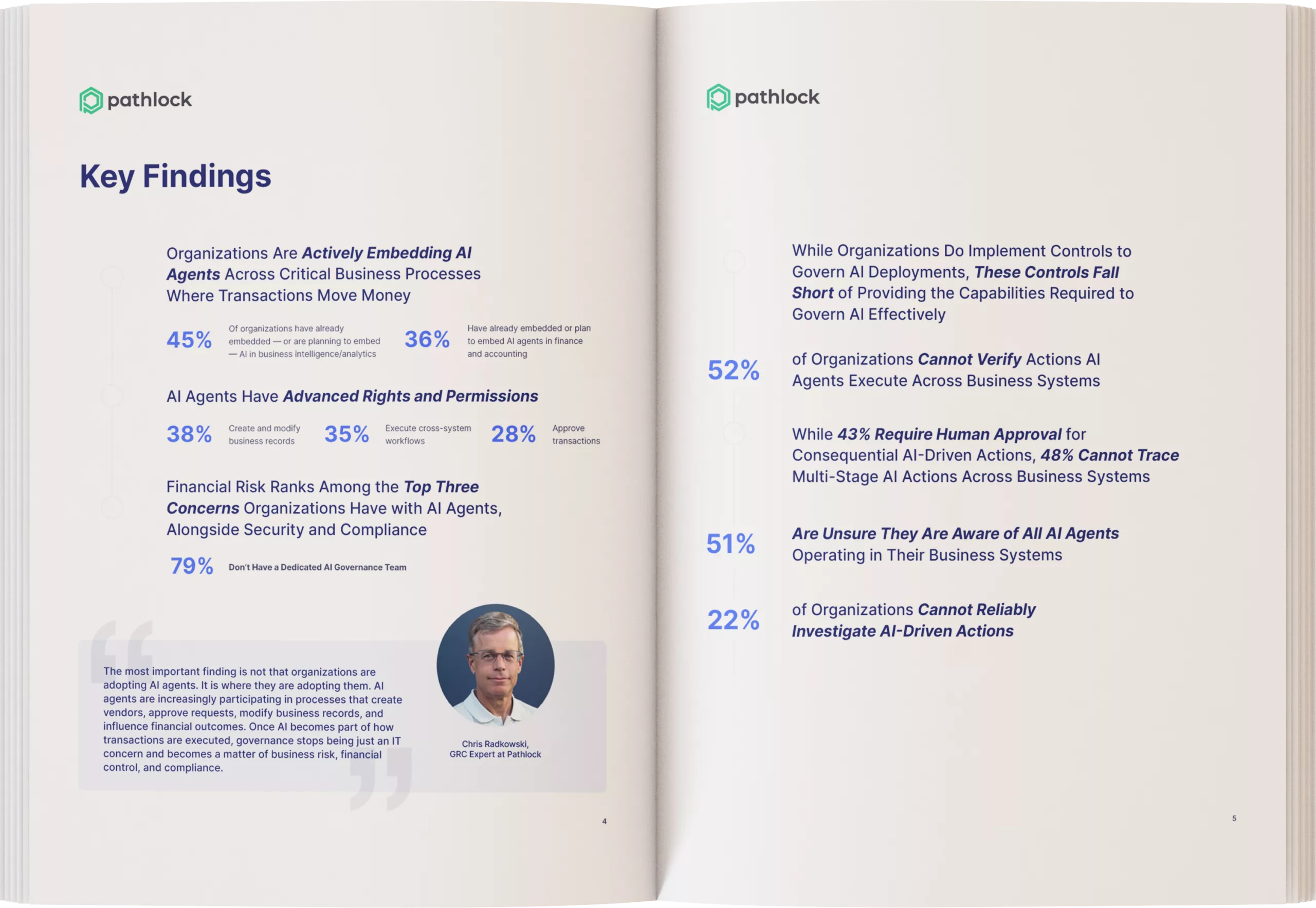
In a survey of 286 IT, compliance, and security leaders, 38% said AI agents can create or modify business records, 28% let them approve transactions, and 35% allow cross-system workflows. Nearly one-quarter had already dealt with an AI incident that required investigation or remediation.
Here is the part worth paying attention to: 52% couldn’t verify what agents did across business systems, and 48% couldn’t trace activity end to end. These are vendor-sponsored survey findings, not a count of customer harm. Still, the problem is real. Teams are letting agents alter records before they can reliably reconstruct who changed what, on what evidence, and how to undo it.
For CX leaders, that isn’t an IT detail. A wrong refund, entitlement, order, or account change becomes repeat contact. Then the customer is trying to explain a decision the company can’t explain either.
Before an agent can change a customer record, ask for four things in one place: the evidence it used, the action it took, the person responsible, and the way back if it got it wrong. If you can’t pull that together, the agent is moving faster than your recovery process.
🧰 TOOL WORTH KNOWING
Customer Conversations
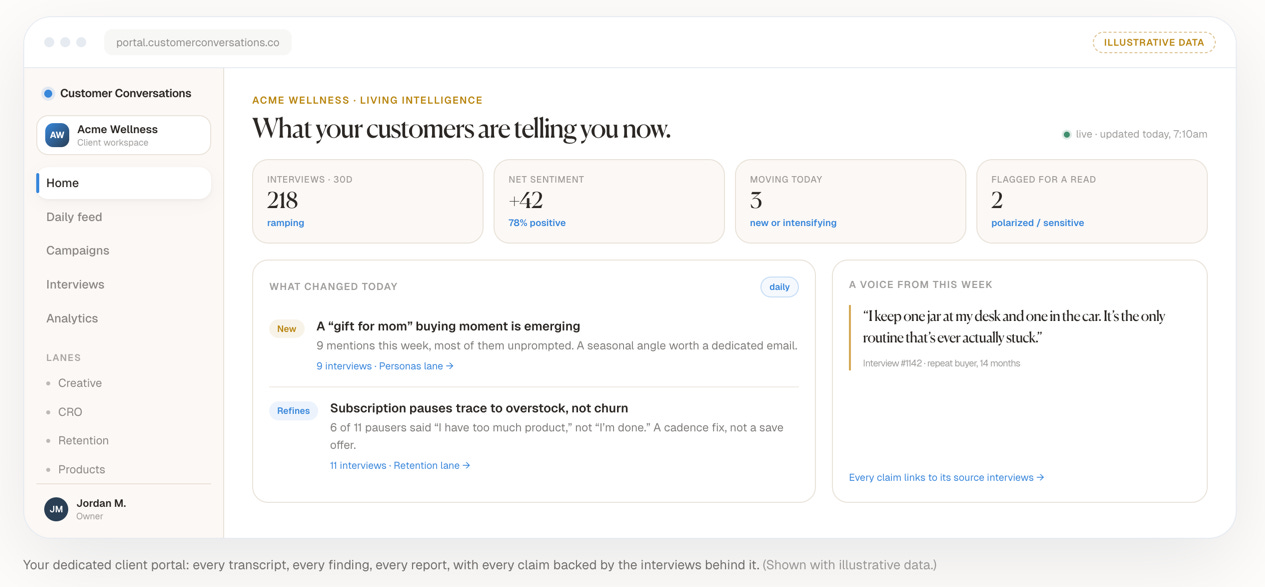
What it does: Customer Conversations runs ongoing, opt-in AI voice interviews with a brand’s own customers. It designs the program, runs adaptive conversations across the segments a team cares about, and turns what it hears into input for acquisition, creative, conversion, retention, subscription, and CX.
Why I like it: Most teams can see a cancellation, weak conversion, or bad review. The hard part is figuring out what the customer actually meant. Surveys are useful, but they stop where the logic ends. A good conversation can follow the thread, ask the next question, and get to the tradeoff or friction behind the behavior.
Where I’d start: Pick one decision you’re about to make with incomplete customer context: a pricing change, retention offer, onboarding redesign, or checkout fix. Give the program a specific segment and a specific decision. Then compare what the interviews uncover with what you already saw in surveys, tickets, analytics, or reviews.
Bottom line: More customer data doesn’t automatically create understanding. The test is whether you hear something specific enough to change the decision you were about to make.
The DCX AI Today - AI Tool Directory - The most up-to-date curated shortlist of tools worth evaluating.
✅ YOUR MOVE
This week, pick the one customer decision where an AI recommendation could create a real mess if it’s wrong. Run the five questions with the people who’d have to explain, repair, and prevent that failure.
If you can’t show the evidence, name the owner, and demonstrate the recovery path, don’t give the agent more authority yet.
Speed up the preparation. Keep the outcome owned.
Until tomorrow,

👥 Share This Issue
Think of one person who’s wrestling with AI in CX right now
and forward this to them.
I’m obsessed with Wispr Flow Pro! Get a Free Month on me.

If someone forwarded this to you, they thought you needed to see it before your next AI planning meeting. Get your own copy.