

The CRM Moat Just Got Thinner
Plus: Wall Street is asking whether customer records are still a fortress, or just another expensive place for AI to rummage around.


Your daily signal on AI and CX — minus the hype.
DCX Stat of the day: IDC predicts that by 2030, 30% of travel bookings will be executed by AI agents.
In this issue:
→ The customer record is getting a harder test.
→ Agentic shopping still needs permission, payment trust, and ad transparency.
→ Feedback data gets a cleaner home before AI touches it.
→ Prime Day, loyalty data, and banking agents become the next proof tests.
🔍 DEEP DIVE
Owning the Record Isn’t Owning the Outcome
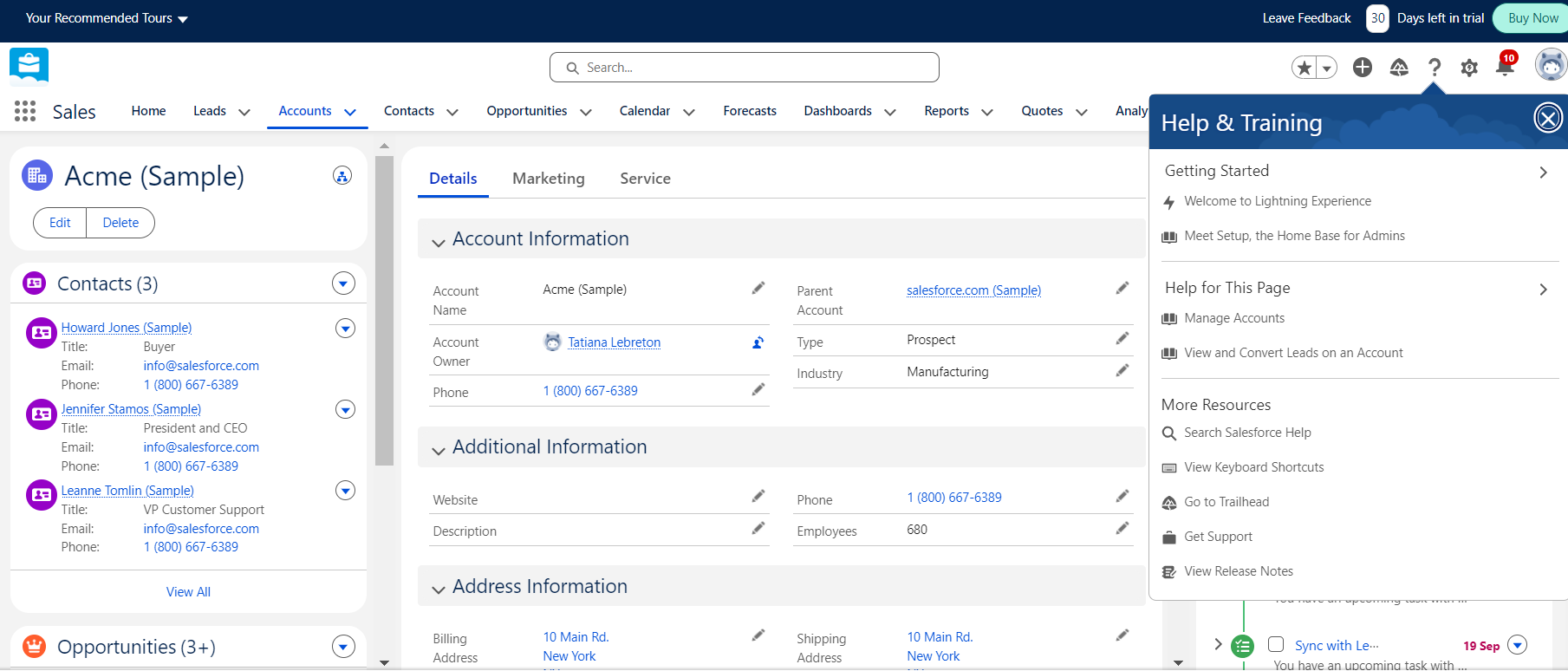
Salesforce had a rough Monday. Its stock fell for the 14th straight trading day, extending the longest losing streak in its public history. MarketWatch framed the real question neatly: can Salesforce disrupt itself before AI-native work tools disrupt the software model around it?
That sounds like an investor story. For CX leaders, it is more useful as a warning label.
For years, CRM had a simple power position: whoever owned the customer record owned the work. Sales, service, marketing, renewals, account history, cases, emails, notes, workflows. Put enough of that into one system, and the system becomes hard to leave.
AI is messing with that comfort. If agents can pull context from multiple enterprise systems, generate next-best actions, summarize history, trigger workflows, and answer the customer directly, then the value is no longer the database by itself. The value is whether the company can turn messy customer context into a clean, trusted, recoverable action.
That is a much higher bar.
The smart question for operators is not “Do we have a CRM?” Everyone has a CRM. The question is: when a customer asks for help, which system knows the truth, which system has permission to act, and which human owns the result when the machine gets cute?
Because this is where the moat thins out. A customer record that is incomplete, duplicated, stale, or disconnected from policy does not become magic because an agent can read it faster. It becomes faster confusion.
Bottom Line: The next CX advantage is proving that your data can support a decision, an action, an explanation, and a recovery path.
📬 Copy-Paste Take
Before we put more AI on top of customer data, we need to know which record is authoritative, which actions AI can take, where human approval is required, and how the customer recovers when the system is wrong. A smarter interface won’t fix a confused operating model.
🧭 OPERATOR PLAYBOOK
Pressure-Test the Customer Truth Layer
Pick one high-volume customer journey where AI is already helping or about to help: password recovery, billing disputes, order status, loyalty issues, eligibility checks, cancellation, appointment changes.
Audit every decision point for four things:
The system of record the AI is allowed to trust.
The action the AI is allowed to take without a person.
The evidence the customer can see if the answer is challenged.
The owner who fixes the experience when the answer is technically valid but practically wrong.
Then test whether the same customer question gets the same answer across chat, phone, app, email, and agent desktop.
Ask your team: If the AI gives a confident answer from incomplete customer context, who catches it before the customer pays the price?
Signal: If different channels need different explanations for the same customer, the AI problem is actually a customer-truth problem.
📊 MARKET REALITY CHECK
The Wallet Still Wants a Chaperone
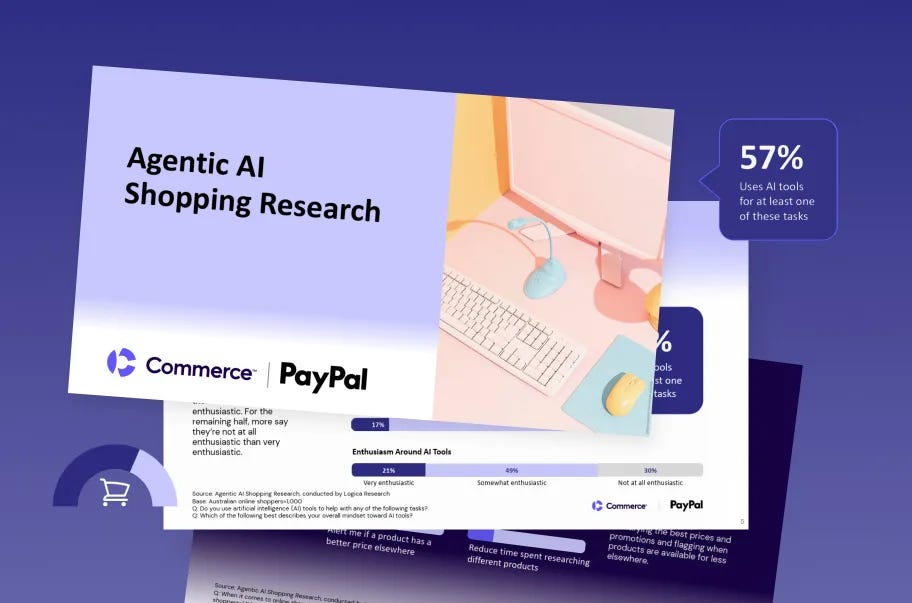
BigCommerce’s UK agentic shopping research gives us the useful tension. 64% of UK online shoppers say they are interested in trying an agentic AI shopping tool. That is real demand. But the same report shows customers are not ready to hand over the wallet and hope for the best.
The top concerns are wonderfully practical: 43% worry about a tool purchasing without approval, 39% worry about bank-account security breaches, 32% worry about the wrong product being purchased, and 29% worry about privacy or personal-data breaches. Also, 83% expect payment security to be as strong as or stronger than other methods.
That is the market reality. Customers may want an AI shopping helper, but they still want veto power, fraud protection, clean payment rails, and visible sponsored-content labels before the assistant starts acting on their behalf.
Why it matters: Agentic commerce will not be won by the assistant that clicks fastest. It will be won by the experience that makes approval, payment security, recommendation logic, and recovery feel boringly clear.
Autonomy needs a receipt trail.
🧰 TOOL WORTH KNOWING
Formbricks
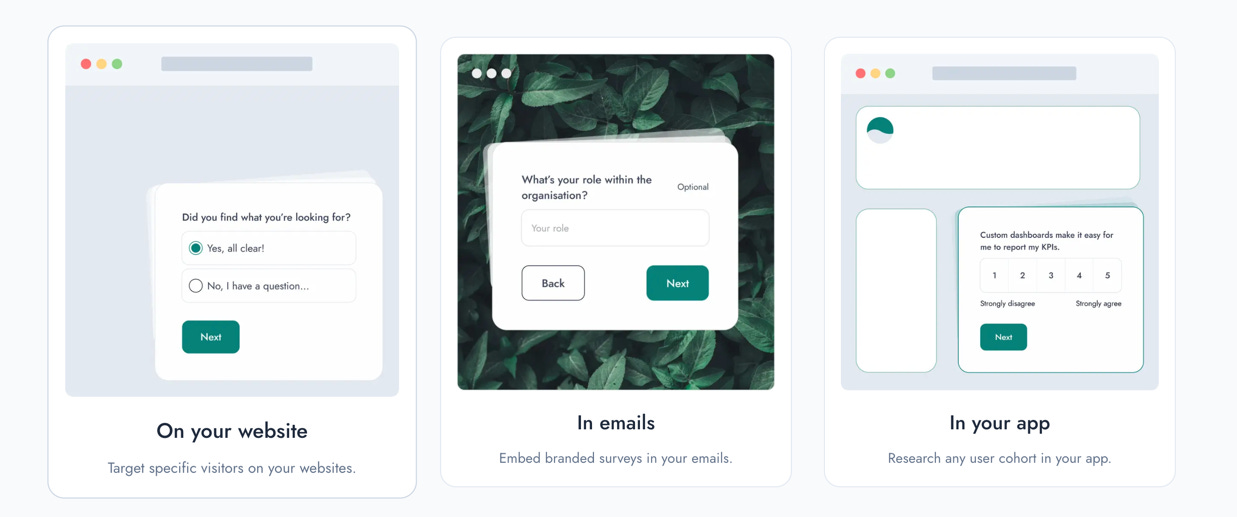
What it does: Formbricks is an open-source experience management platform for collecting feedback across websites, apps, email, and other customer touchpoints. Its 5.0 release adds Formbricks Hub, an open-source feedback backend for unifying and enriching experience data.
CX use case: Use it when you need a cleaner customer-signal layer before feeding AI. Product feedback, NPS, CSAT, CES, churn signals, support themes, reviews, chats, and survey responses can live closer together instead of being scattered across dashboards nobody checks until the quarterly deck panic.
Worth watching because: Formbricks is leaning into the right problem: AI is only as useful as the customer evidence underneath it. The 5.0 release adds feedback unification, AI-generated charts from plain-English prompts, AI survey translation, BI connectivity, APIs, webhooks, and an MCP server so teams can work with feedback in plain language.
Bottom line: Before asking AI what customers need, get the raw customer signal into a place where teams can actually inspect it, govern it, and act on it.
The DCX AI Today - AI Tool Directory - If you lead a CX team and want a curated shortlist of tools worth evaluating, this is your starting point.
📡 90-SECOND CX RADAR
Prime Day Becomes the Shopping-Agent Test
Amazon’s June 23 to June 26 Prime Day is a live test of Alexa for Shopping. Adobe survey data says 39% of shoppers have used AI for online shopping, and 85% of those users said it improved the experience.
Why it matters: The next proof point for agentic shopping will not be the launch announcement. It will be what happens under promotion pressure, price comparison, cart changes, and post-purchase cleanup.
The Loyalty Program Becomes the AI Lab
Ulta Beauty is using first-party data and AI to make product discovery more intuitive. That matters because its loyalty program already has 46.7 million members, represents about 95% of sales, and has a 70% retention rate.
Why it matters: AI personalization is easier to sell when it sits inside a relationship customers already understand. The loyalty file becomes the training ground, the offer engine, and the trust test.
The Banking Bot Gets a Specialist Brain
Backbase is folding Kasisto’s banking-specific agentic AI into its Banking OS. The useful angle is whether the agent understands banking intent, policy, eligibility, servicing workflows, and regulated handoffs.
Why it matters: Generic AI agents will struggle in journeys where the customer is asking for money movement, account help, dispute support, or financial guidance. Domain knowledge and governance are becoming part of the CX stack.
✅ YOUR MOVE
The throughline today is control.
Customers may let agents search, compare, recommend, and eventually buy. But they still want approval before money moves, security before credentials connect, and a human path when the answer feels wrong.
So pick one journey where AI is getting closer to a customer decision: a purchase, a recommendation, a loyalty offer, a banking action, a refund, a renewal.
Map three things: what data the agent trusts, what action it can take, and what receipt the customer gets when they need to challenge it.
The winning agent will not be the one with the most autonomy. It will be the one customers can understand, approve, and recover from.
Until tomorrow,

👥 Share This Issue
Think of one person who’s wrestling with AI in CX right now
and forward this to them.
I’m obsessed with Wispr Flow Pro! Get a Free Month on me.

If someone forwarded this to you, they thought you needed to see it before your next AI planning meeting. Get your own copy.