

The Last 20% Is Where the Real CX Work Begins
The AI agent can handle the conversation. The real test comes when it touches the company behind it.

The AI agent handles the first part of the conversation perfectly.
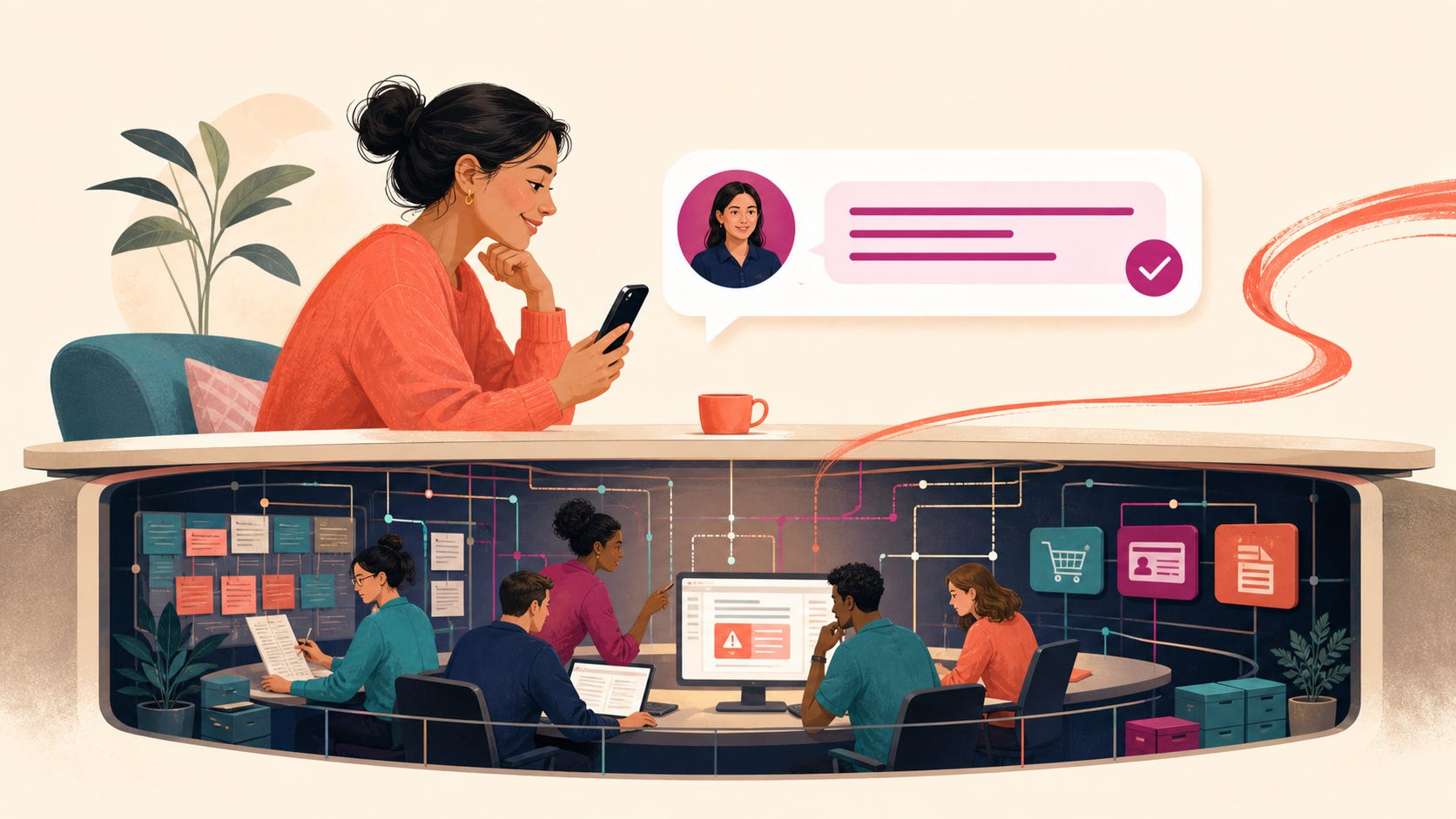
A customer contacts her broadband provider after a promotional discount expires and her bill goes up. The agent recognizes the issue, explains the increase clearly, and offers a new package at a lower price. She agrees.
Turns out the offer isn’t available in her market, even though the ordering system accepted it. Her existing discount disappears, the new one never takes effect, and her next bill is even higher. When she contacts the company again, the employee can see what happened but can’t reverse it.
A supervisor knows the fix. There’s a billing code that can restore the original discount while another team corrects the order. The procedure isn’t in the knowledge base. Employees created it after watching the same failure hurt enough customers.
The process works because someone knows when the process doesn’t work.
Before AI, an experienced employee might have spotted the market restriction and ignored the offer on the screen. Another might have caught the error before it reached the bill. The customer never saw how much judgment, memory, and improvisation stood between her and a bad outcome.
Then the company automated the conversation and discovered that the conversation was the easy part.
The clean demo meets the actual company
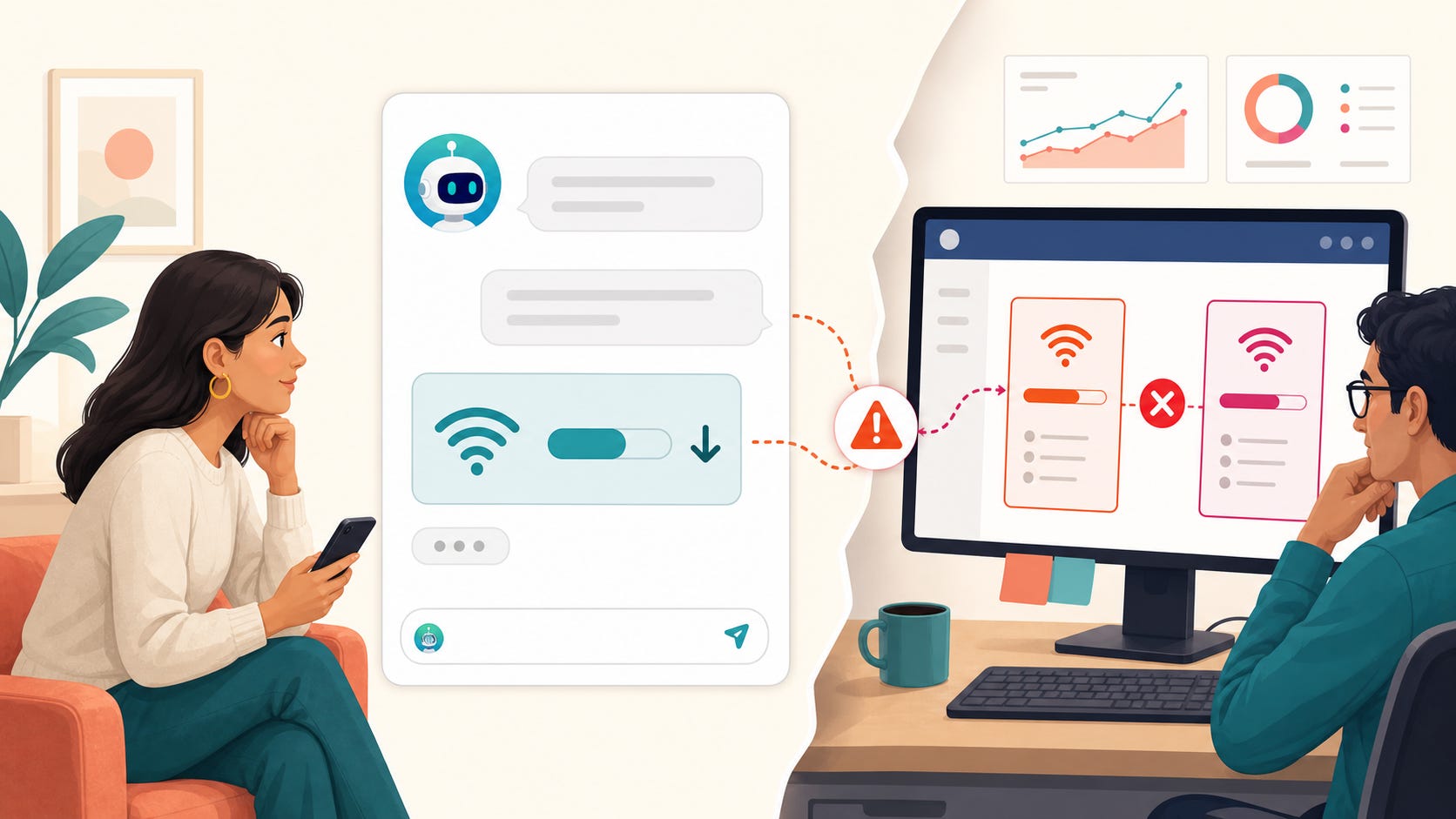
Most AI demonstrations happen inside a well-behaved version of the business. The policy is current. The customer’s situation fits the expected pattern. The necessary systems cooperate. Nobody needs to call Linda in Billing.
Real journeys expose the seams. They are where an outdated promotion, a market exception, or a payment that has not fully posted can send a customer down the wrong path. People who have worked around those gaps for years know when to pause or intervene. The system does not.
These aren’t small operational details surrounding the experience. They decide whether the company keeps the promise it just made.
When an AI rollout exposes those gaps, the instinct is to work on the bot. That is understandable; the bot is the visible new thing. But a better prompt cannot resolve a policy conflict, repair a system everyone works around, or hand decision rights to someone who has never been given them.
That is the real problem. The business is asking the model to make a promise it has not made dependable. The conversation may sound polished, but the failure shows up when the promise has to be kept.
Borrowed reliability
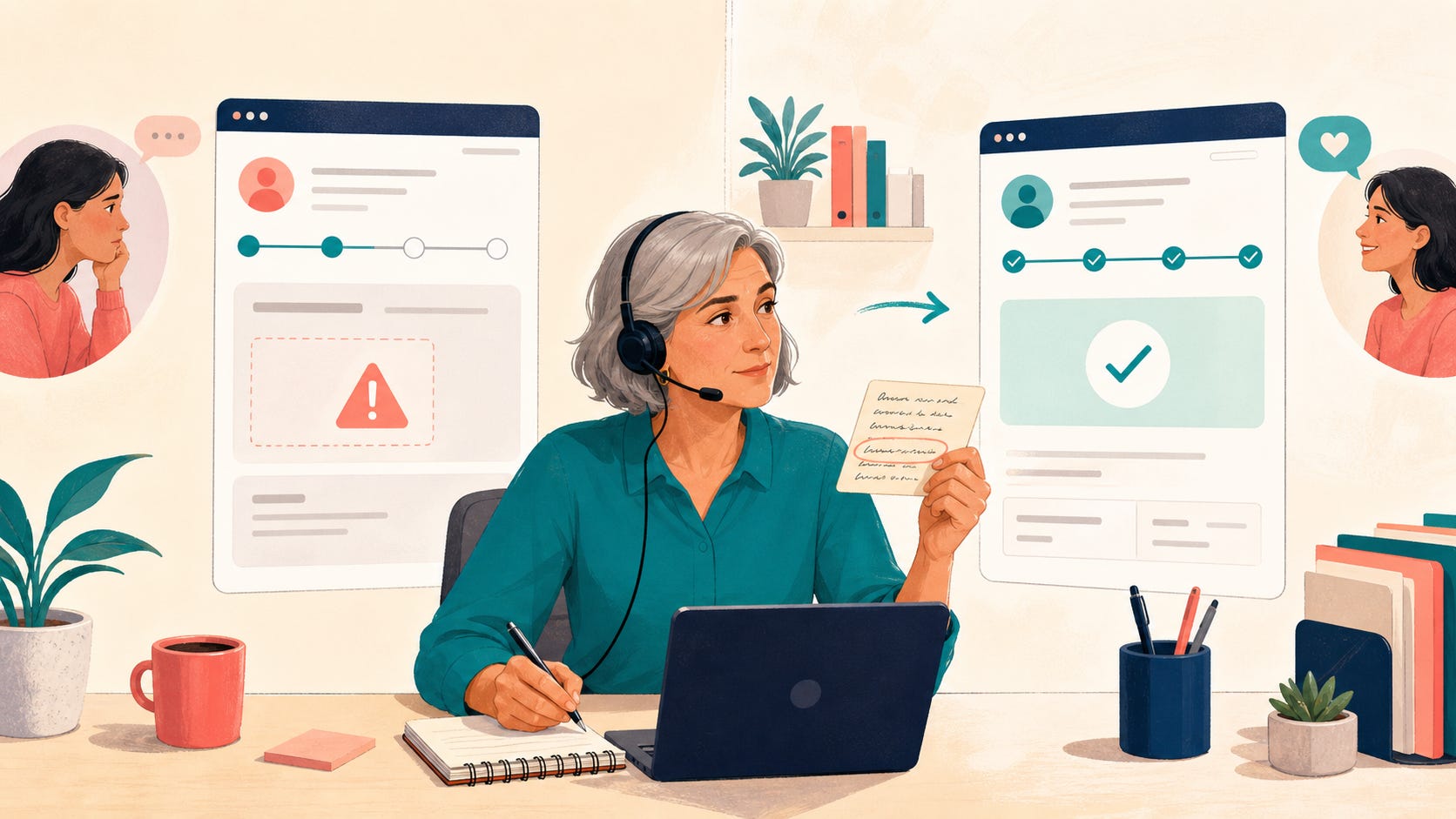
Experienced employees carry an unofficial version of the company in their heads. They know which policy leadership actually expects them to follow, when an error message can be ignored, and who will answer the phone when an order gets stuck between departments.
We usually call that expertise. Much of it is, but some is reliability the organization has been borrowing from its employees.
The business never documented the exception, fixed the dependency, clarified the decision, or created a reliable recovery path. A capable employee absorbed the inconsistency and kept the customer moving. Because the rescue happened quietly, the broken process looked healthier than it was.
AI calls in that loan. The business case rewards visible productivity: shorter contacts, higher containment, fewer people handling routine demand. Those incentives pull attention toward the part that can be demonstrated quickly. A fluent conversation signals progress. Exceptions fall into a backlog under reassuring labels such as edge cases and future enhancements.
But one customer’s edge case is another customer’s bill. If an automated agent changes an account incorrectly, the cost moves into repeat contacts, credits, escalations, rework, complaints, and cancellations. A program can hit its containment target while creating expensive demand somewhere else in the journey.
That risk grows when AI can act. The consequences move beyond confusion when the agent removes a discount, cancels an appointment, places the wrong order, or creates a promise the operation can’t keep. By the time the pattern appears in a dashboard, employees may already be inventing a new workaround to protect customers from it.
The company can mistake that rescue for proof the system is working.
Recovery reveals what leadership owns
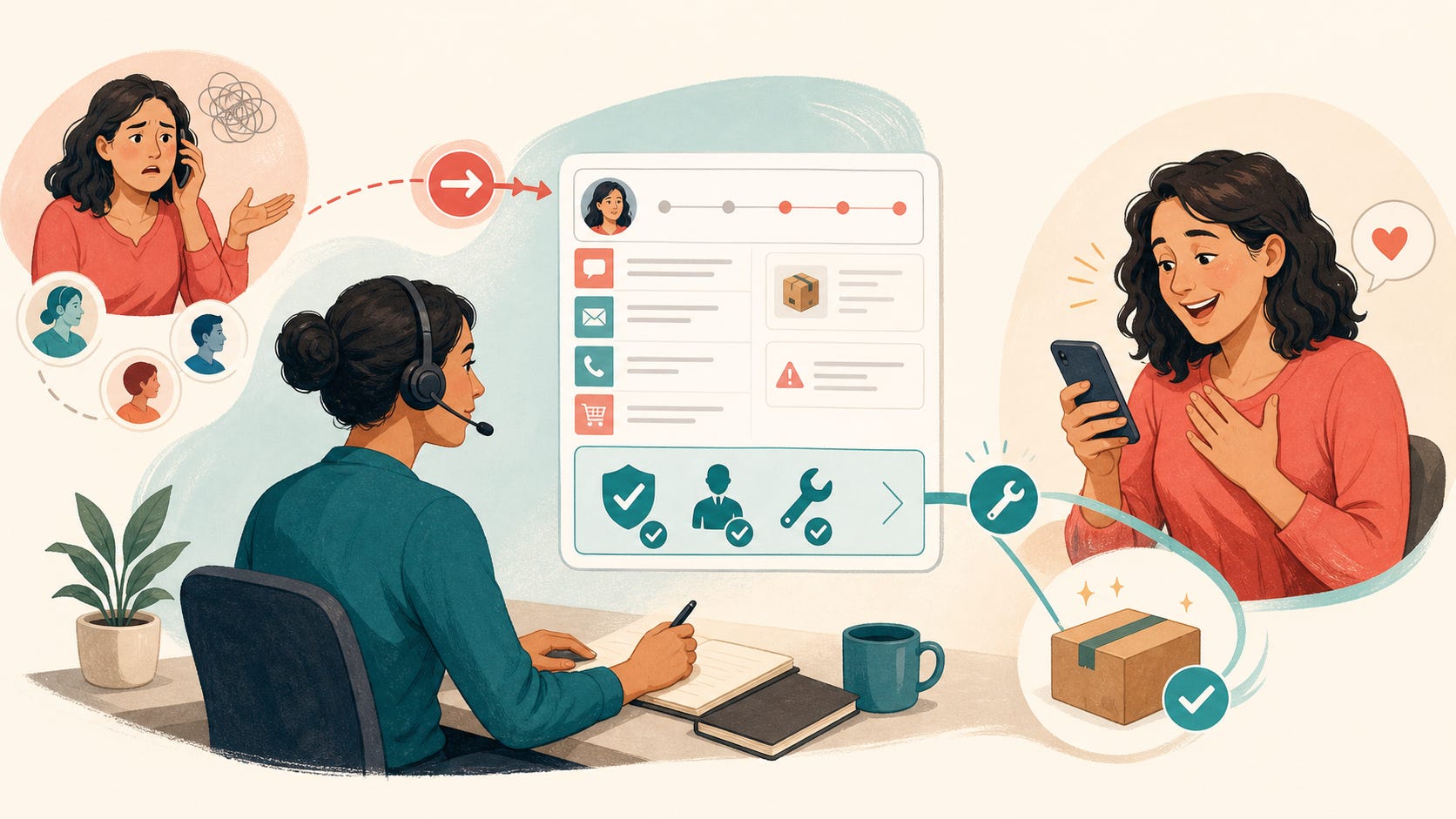
A dependable AI implementation needs more than rules for what the agent may do. It needs an honest design for what happens after the wrong thing has been done.
Can the action be reversed? Will the next employee see enough context to help without making the customer repeat the story? Does that employee have the authority to repair the damage? Will the failure change the underlying process, or will each customer need a private rescue?
“Transfer to an agent” answers none of those questions. If the employee inherits the frustration but not the context or authority, automation has delivered a damaged journey back to the same operation that produced it.
This is where AI becomes a leadership test. Making the surrounding system dependable forces decisions that have been easy to postpone. Someone has to own the exception. Someone has to reconcile the policies, fund the system fix, and decide where human judgment remains necessary. Those choices are slower and less impressive than a demo. They determine whether the economics survive contact with customers.
Put one ugly case through the journey
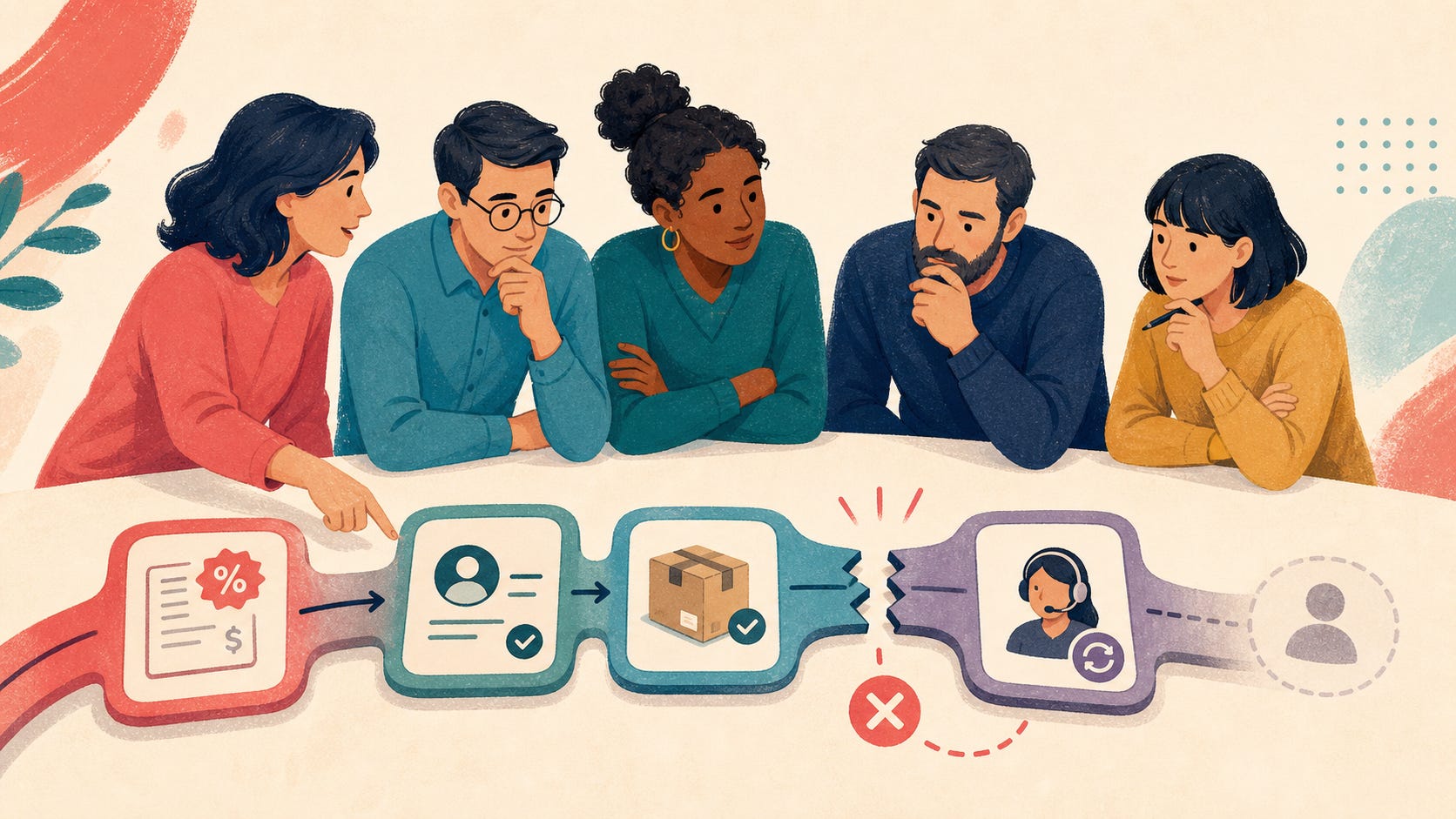
Leaders don’t need another clean demonstration. They need one difficult case their best employee dreads: an expired offer, a disputed charge after an account change, or an order that crosses systems and requires an exception.
Follow it from the customer’s first sentence to the final account outcome. Look for contradictory information. Ask who owns the decision. Confirm that the promised action can be completed. Then make it fail and watch the recovery. If success depends on personal memory, unofficial access, or a favor from another department, the AI isn’t ready to carry that journey.
More important, neither is the company.
The last 20% is where leaders finally see the experience employees have been producing on their behalf. It was never contained in the process map, the policy library, or the model. It lived in dozens of small human interventions that kept organizational gaps from reaching the customer.
Once AI makes those interventions visible, they become leadership decisions. The company has now seen what dependable service has actually required. Leaving that work unofficial is a decision, too.

www.marklevy.co
Follow me on Linkedin

What Successful CX Leaders Do on Sundays
DCX Links: Six must-read picks to fuel your leadership journey delivered every Sunday morning. Dive into the latest edition now!
Customers Can Feel Who Owns the Choice

Welcome to the DCX weekly roundup of customer experience insights!
Thanks for being here. I’ll see you next Tuesday at 8:15 am ET.
👉 If you enjoyed this newsletter and value this work, please consider forwarding it to your friends and colleagues or sharing it on social media. New to DCX? Sign Up.
✉️ Join 1,700+ CX leaders who stay ahead of the next customer curve.
Human-centered insights. Plug-and-play frameworks. Smart tools that actually work. All designed for CX pros who want to build with purpose—and deliver with impact.
👉 Subscribe today and get the tools to elevate your strategy (and your sanity).