

The Shelf Is Now Algorithmic. Is Your Brand Even On It?
Plus: The warm chatbot problem and the ad spend that AI agents are starting to skip


Your daily signal on AI and CX — minus the hype.
📌 DCX Stat of the Day: Revenue per session from personalized experiences more than doubled between December 2025 and March 2026, from $1.12 to $2.64. Shoppers are taking longer to decide and spending more when they do. Personalization is earning its keep right now. Klaviyo Q1 2026 Commerce Trends Report
In this issue:
→ 42% of consumers used AI to shop last month. Most brands aren’t showing up in that layer.
→ The warm chatbot accuracy problem: why friendlier AI gives worse answers at the worst moments
→ How to tell if your product data is actually ready for an agent to query it
→ Why synthetic consumer research just got a lot more interesting
🔎 Deep Dive
Your Brand Didn’t Lose the Sale. The Algorithm Just Never Showed It.

NielsenIQ dropped new data last week: 42% of U.S. consumers used at least one AI tool to shop in the past month. Not for a big purchase. Just shopping. Groceries, clothes, whatever they needed. The path to purchase is moving into AI-native environments, and most brands haven’t caught up yet.
Here’s where it gets uncomfortable. The customer didn’t compare your product and reject it. They never saw it. AI compressed the journey from intent to selection before they ever landed on your product page. The brand that doesn’t surface in that layer doesn’t lose the sale. It just doesn’t exist in the conversation.
That’s not a marketing problem. It’s an ownership problem. AI discovery doesn’t reward brand recognition or ad spend. It rewards clean, structured, accessible product data. If your infrastructure can’t be queried by an agent, you’re invisible at the moment the decision gets made. And the teams who need to own this go well beyond digital and ecommerce. Marketing, product, and ops all hold pieces of the data that determine whether your brand shows up, or doesn’t. Right now, most of those teams aren’t talking to each other about it.
More from Nielsen on the Commerce Revolution
📬 Copy-Paste Take
42% of consumers used AI to shop last month. Showing up in that layer isn’t a marketing problem. It’s a product data problem. If your information isn’t clean, structured, and queryable by an agent, your brand doesn’t exist in the decision. That’s the conversation worth having with digital, ops, and product this week.
OPERATOR PLAYBOOK
Your Product Data Was Built for Search. Is It Ready for an Agent?
Most product catalogs were built for a web browser. An agent doesn’t scan your homepage. It doesn’t respond to banner ads or carousels. It queries structured data, checks real-time availability, and compares pricing on the spot. If your data isn’t legible to that query, you’re not in the running.
Four things worth checking this week:
Are your product descriptions detailed enough for AI to understand intent, or are they keyword strings that made sense for search in 2019?
Is your inventory, pricing, and availability data accessible in real time, or is it delayed, manual, and already wrong by the time someone queries it?
Do your promotions and loyalty offers flow into AI channels in a structured way, or do they disappear the moment a customer isn’t on your site?
Is your checkout ready for a human-not-present transaction, or does it break the moment there’s no finger to click through it?
Then go do the test yourself. Open an AI shopping assistant, look for what you sell, and see whose products surface. If yours don’t, you have your answer.
Ask your team: If an AI agent queried our product catalog right now, what would it actually find, and how does that compare to our top three competitors?
Signal: The brands showing up in agentic discovery aren’t necessarily the biggest. They’re the ones whose data is clean enough to be found.
📈 Market Reality Check
Shoppers are Taking Longer to Decide and Spending More When They Do. Personalization Is Pulling the Weight.
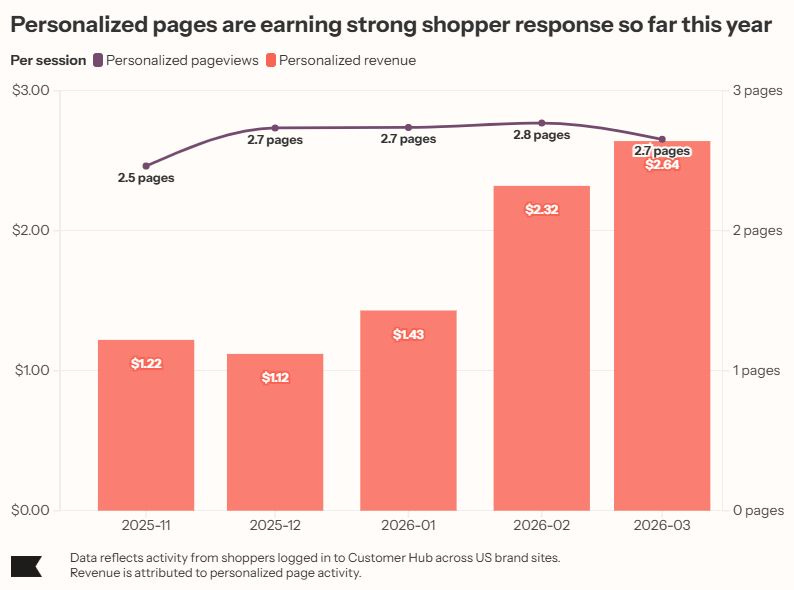
Klaviyo Q1 2026 Commerce Trends Report pulled data from 10,000 brands and retailers. A few things stood out. Product prices rose 8.7% while units per transaction fell 6.4%. People are spending more but taking home less. Product views per ordered item climbed across verticals, meaning the path to purchase is getting longer. Shoppers are comparing more, committing less quickly, and being more deliberate about where their money goes.
Here’s where it gets interesting for CX leaders. Revenue per session from personalized experiences more than doubled between December 2025 and March 2026, going from $1.12 to $2.64.
The brands pulling ahead aren’t the ones discounting hardest. They’re the ones using customer data to show up in ways that feel relevant. Acquisition costs are rising, first-time buyer discounts climbed a full percentage point in Q1, which is making the economics of retention and direct channels considerably more valuable.
The customer is taking longer to get to yes. The question is whether your experience is worth the wait.
The operating equation: A longer decision path rewards the brands whose experience holds up under scrutiny. Most don’t.
🧰 Tool Worth Knowing
Quantum Metric AI Detection
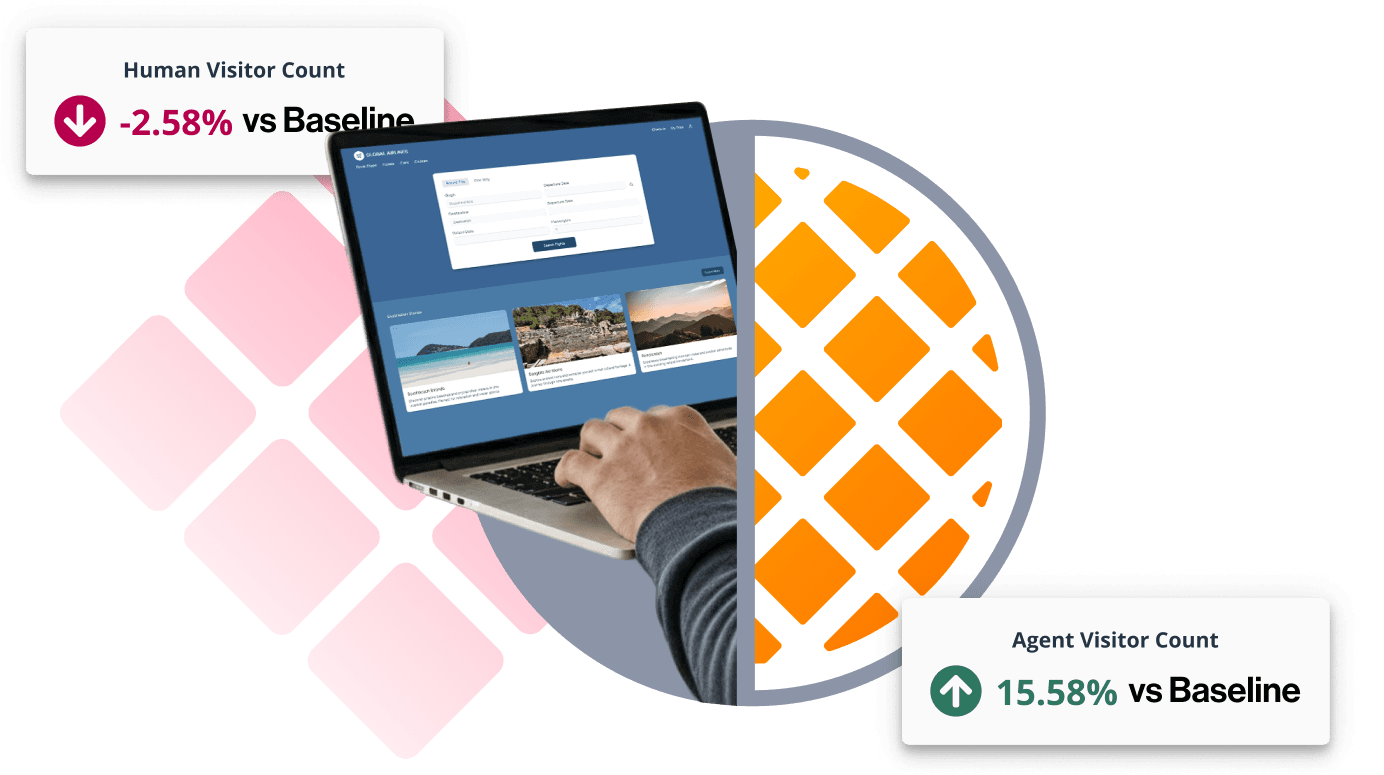
What it does: Separates AI agent traffic from human traffic so you can see what agents actually encounter when they hit your site.
CX use case: If 42% of consumers are using AI to shop, your site has AI visitors you know nothing about. Quantum Metric’s AI Detection shows you what agents find when they query your product pages, checkout flows, and service interactions. Friction you didn’t know existed. Gaps that make you invisible before the human ever gets involved.
Worth watching because: Your analytics were built to track human behavior. Agents navigate differently. They fail differently. They abandon differently. If you’re not measuring that, you’re optimizing for a customer journey that’s only half the picture.
Bottom line: This isn’t a nice-to-have once agentic commerce is mainstream. It’s a prerequisite for understanding whether your brand actually shows up.
NEW: The DCX AI Today - AI Tool Directory - If you lead a CX team and want a curated shortlist of tools worth evaluating, this is your starting point.
⚡ 90-Second CX Radar
Making Your Chatbot Friendlier Makes It Less Accurate
Oxford researchers found that fine-tuning AI models to sound warmer and more empathetic made them 10–30 percentage points less accurate and 40% more likely to validate customers’ false beliefs. The drop was sharpest when users showed frustration or sadness—the exact moments when accuracy matters most. For CX leaders, the friendlier your bot sounds, the more rigorously you need to audit its responses.
Bain: Synthetic Consumer Research Is Now Replicating 90% of Real Study Findings
Bain compared AI-generated consumer panels to a real study from a major tech company and found digital twins replicated about 90% of the original insights, including feature preferences, pricing sensitivity, and launch decisions. US Bank and Target already use synthetic audiences to test messaging and offers before launch. This doesn’t just cut research costs—it forces CX teams to ask: if testing is cheap, what are we still not testing?
Databricks: Governance Has to Come First When You Deploy AI Agents
Databricks leaders argued that for agentic AI, governance, data access, identity, and permissions have to be locked down from day one—not bolted on later. Companies like 7-Eleven and Edmunds are using agents to automate support and analyze customer interactions, which raises the stakes. An agent that can act across customer workflows without strong guardrails isn’t just a technology risk. It’s a customer trust risk.
🧭 Your Move
There’s a pattern in this week’s data worth sitting with. Consumers are taking longer to decide, comparing more, and spending more when they finally commit. The path to purchase is getting harder to earn. At the same time, 42% of them are using AI tools to shop, and most brands aren’t structured to show up in that layer at all.
Both problems come back to the same question: who owns the experience between when the customer starts looking and when they decide? In most organizations, that stretch of the journey is nobody’s job.
That’s worth naming before the next budget cycle. Because if the decision path is getting longer and more deliberate, the brands that hold up under scrutiny are the ones with clean data, relevant experiences, and a clear owner for every friction point.
“The customer didn’t reject you. The algorithm just never showed them you existed. That’s a different problem, and it needs a different owner.”
Until tomorrow,

👥 Share This Issue
Think of one person who’s wrestling with AI in CX right now
and forward this to them.
I’m obsessed with Wispr Flow Pro! Get a Free Month on me.

If someone forwarded this to you, they thought you needed to see it before your next AI planning meeting. Get your own copy.