

The Shortcut Needs an Owner
Plus: AI is moving from menus into customer jobs. Nice shortcut. New liability.


Your daily signal on AI and CX — minus the hype.
Only a few spots left!
Join CX, support, and operations practitioners to compare how AI is changing the way teams understand service demand, improve workflows, and reduce friction at the next DCX AI Roundtable on June 23

DCX Stat of the day: Cooklist says the average message to its AI shopping assistant is about 50 characters, compared with about 10 characters in a normal search query. Customer Experience Dive
In this issue:
→ Banking apps start accepting customer jobs
→ Grocery carts get built from intent, not keywords
→ Recovery work gets harder after AI takes the easy stuff
→ Marketing and ad tools move closer to publishing rights
🔍 DEEP DIVE
The Customer Isn’t Browsing Anymore
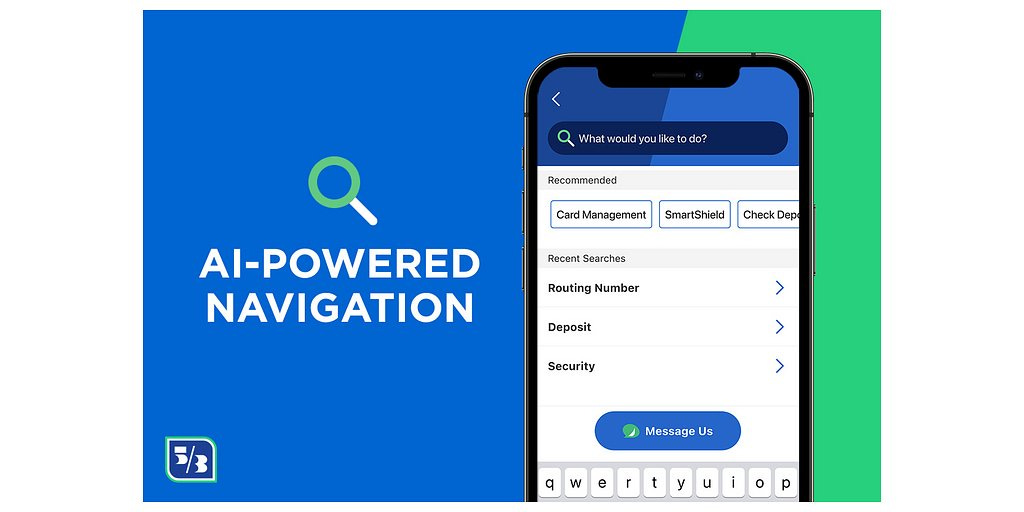
Fifth Third is launching an AI interface inside its mobile banking app so customers can type requests like “replace my card” or “find the nearest ATM” instead of digging through tabs, menus, and screens.
That sounds like a cleaner interface. It is also a shift in responsibility.
When a customer types “replace my card,” they are not exploring the app. They are handing the bank a job. That changes the psychology of the interaction. A menu says, “choose where you want to go.” A conversational front door says, “tell us what you need and we’ll handle it.”
Here is the part worth designing carefully. The AI may understand the request before the business has defined the right proof step, handoff rule, or action limit. That matters in moments involving account access, fraud concerns, eligibility, disclosures, or requests that should move to a human before anything changes.
Bottom Line: When AI becomes the front door, the company is no longer just designing navigation. It is accepting delegated customer intent. That works best when authority, proof, and recovery rules are designed as part of the experience.
📬 Copy-Paste Take
Before we put AI in front of the app, we need to define the job boundaries: what the customer can ask, what the AI is allowed to do, what proof is required, and how the customer gets back to a human with context intact when the shortcut goes sideways.
🧭 OPERATOR PLAYBOOK
Give the Shortcut a Job Description
The easy mistake is to treat this as a UX upgrade. It isn’t. It is a responsibility upgrade wearing a nicer input box.
If AI is about to sit on top of your app, account portal, store experience, chatbot, booking flow, or support journey, write its job description before you tune its tone.
Audit every AI-assisted entry point for four decisions:
Authority: What can the AI actually do, versus explain, suggest, or route?
Proof: What evidence does it need before acting on money, identity, access, eligibility, pricing, or commitments?
Escalation: Which requests are too emotional, risky, regulated, ambiguous, or expensive to automate?
Reversal: How does the customer undo a wrong action without starting over?
Then test the ugly cases. The angry customer. The partial account match. The allergic shopper. The declined refund. The customer who uses the wrong words but has the right problem.
Ask your team: Where are we letting the AI understand more than it is allowed to own?
Signal: The best AI front door doesn’t just reduce clicks. It makes the next responsible decision clearer.
📊 MARKET REALITY CHECK
The Human Layer Gets the Weird Stuff

The recovery layer is about to get less routine and more judgment-heavy. That is the part most AI business cases politely walk around.
A fresh analysis in The Guardian points to the service-side problem hiding inside AI adoption: routine work gets automated first. What comes back to people is the messier work. The exception. The complaint. The edge case. The moment where the customer needs judgment, not another answer.
Upwork research cited there says about 60 million Americans, or 39% of the workforce, already perform freelance or gig work full or part time, with that number expected to reach 86 million by 2027.
Why it matters: If AI handles the easy work and the human layer becomes more fragmented, the business may save money exactly where the work was simple and lose trust exactly where the work required experience.
Automation removes the easy queue. It does not remove the customer’s need for judgment.
🧰 TOOL WORTH KNOWING
Cooklist
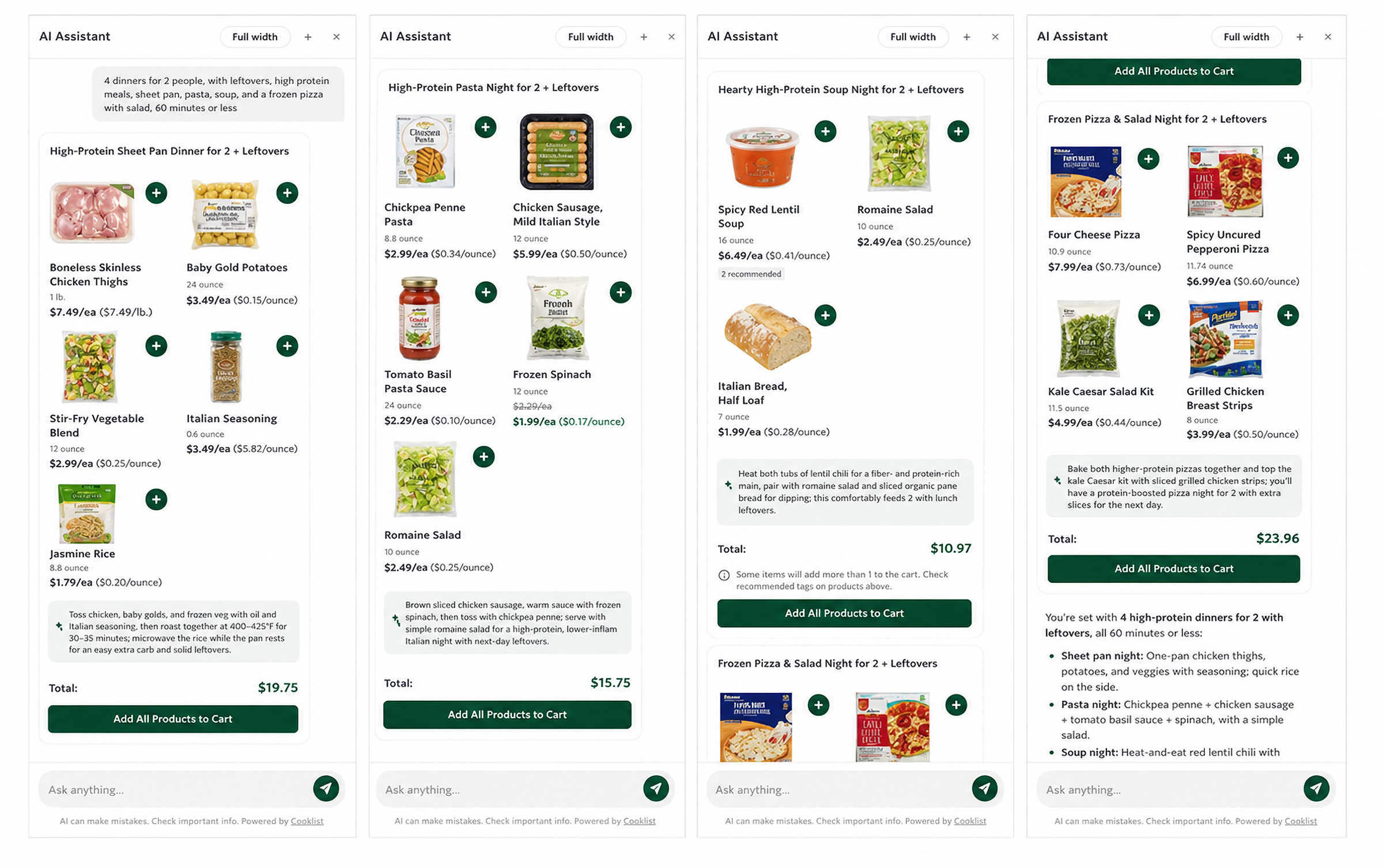
CX use case: Use it as a model for high-intent journeys where the customer knows the outcome but does not want to assemble every step manually: groceries, travel bundles, service plans, home projects, healthcare prep, financial tasks.
Worth watching because: It is live with Kroger and Wegmans banners, available across more than 700 stores, and expected to expand to about 700 more. The interesting part is the responsibility hiding inside the convenience. A cart built from “healthy lunches for two kids” is a set of assumptions about budget, substitutions, allergens, taste, availability, and trust.
Bottom line: Agentic shopping will reward brands that make the cart editable, explainable, and easy to correct. The magic is not the auto-built basket. The magic is letting the customer stay in control after the system takes the first swing.
The DCX AI Today - AI Tool Directory - If you lead a CX team and want a curated shortlist of tools worth evaluating, this is your starting point.
📡 90-SECOND CX RADAR
Marketing Agents Get Closer to the Promise
Gradial raised $65 million for AI agents that work across enterprise marketing systems and can route updates through approvals. The useful part is not faster copy. It is the movement from draft to live customer-facing change.
Why it matters: Once AI can touch a customer-facing promise, approval is no longer a workflow nicety. It is a trust control.
Disney Tests AI-Generated TV Ads
Disney is preparing a July beta for an AI ad tool that can generate scripts, video, and music, especially for smaller advertisers without existing video assets.
Why it matters: Ad production is getting cheaper. Promise discipline is not. A beautiful ad can still create an ugly service problem.
✅ YOUR MOVE
Pick one customer entry point this week: the app home screen, account page, help center, shopping search, chatbot, IVR, booking flow, or campaign landing page.
Now imagine the menu disappears and the customer just asks for the outcome.
Don’t ask whether the AI can answer.
Ask whether the business can own what the answer sets in motion.
Can the system prove the customer’s identity? Can it check eligibility? Can it explain the recommendation? Can it stop before creating risk? Can a human recover the moment without making the customer start over?
That is the real AI front-door test.
A shortcut without an owner is just a faster way to lose the customer.
Until Monday,

👥 Share This Issue
Think of one person who’s wrestling with AI in CX right now
and forward this to them.
I’m obsessed with Wispr Flow Pro! Get a Free Month on me.

If someone forwarded this to you, they thought you needed to see it before your next AI planning meeting. Get your own copy.