

AI is Slipping Behind the Counter
Plus: The customer may not see the AI anymore. They’ll still feel every missed fry, bad upsell, and clumsy handoff.


Your daily signal on AI and CX — minus the hype.
📌 DCX Stat of the day: Only 4% of Americans say they would prefer ordering from an AI chatbot at a drive-thru. 55% prefer a human order-taker. YouGov
In this issue:
→ Drive-thru AI gets less obvious
→ Emotional escalations still break automation
→ Agentic storefronts enter buying decisions
→ Travel apps start acting in the background
→ Payments move closer to AI agents
🔎 Deep dive
The next AI experience may be the one customers never see

Fast-food brands learned the obvious lesson from drive-thru chatbots: customers notice when the AI gets in their way. Some troll it. Some bypass it. Some just get annoyed because ordering lunch should not feel like debugging a voice assistant in a wind tunnel.
Now the AI is moving into quieter parts of the restaurant journey. McDonald’s is testing AI-powered scales that compare the target weight of an order with the actual bag. Burger King is testing Patty, an AI assistant inside employee headsets. Taco Bell is experimenting with AI-driven menu boards that can change layout, content, and visuals dynamically.
That changes the CX question. The visible chatbot is only one surface. The bigger shift is operational AI shaping what employees see, what customers are offered, what gets removed from the menu, and whether the bag is right before it reaches the window.
📬 Copy-Paste Take
The customer may not care whether AI took the order. They care whether the order is right, the wait feels fair, and the employee can fix the problem fast when something breaks. Hidden AI still creates visible CX consequences.
OPERATOR PLAYBOOK
Audit the invisible AI layer
The riskiest AI may not be the chatbot with a name. It may be the system quietly changing offers, timing, routing, inventory, or employee prompts while everyone assumes the customer journey is still “the same.”
Cute assumption. Dangerous one.
Audit every AI-assisted frontline flow for four things:
Customer visibility: Does the customer know AI shaped the moment?
Employee control: Can the employee override the AI without friction?
Error detection: How do you catch a bad recommendation, missing item, or wrong prompt?
Recovery speed: Can the team fix the issue before the customer leaves?
Then test whether the frontline employee can explain, correct, and recover from an AI-driven mistake in real time.
Ask your team: Where is AI already shaping the customer experience without being obvious to the customer?
Signal: The next CX risk is not always bad automation. Sometimes it is invisible automation with no human override.
📈 Market Reality Check
Faster chats can still leave customers colder
A field experiment from Alibaba’s Taobao service operation should make CX leaders slow down before celebrating speed. The study covered 647 workers and 680,676 service chats. Agentic AI reduced average chat duration by 3.2% overall and 16.8% for AI-eligible chats.
Nice.
Also, hold the parade.
Customer ratings for AI-eligible chats dropped by 0.412 points on a five-point scale. The sharpest damage showed up in emotional escalations, where ratings fell 0.928 points. That is the uncomfortable part. AI can shorten the interaction and still leave the customer feeling worse. Very efficient. Terrible outcome.
Speed gain minus emotional recovery equals hidden CX debt.
🧰 Tool Worth Knowing
Swap Agentic Storefront
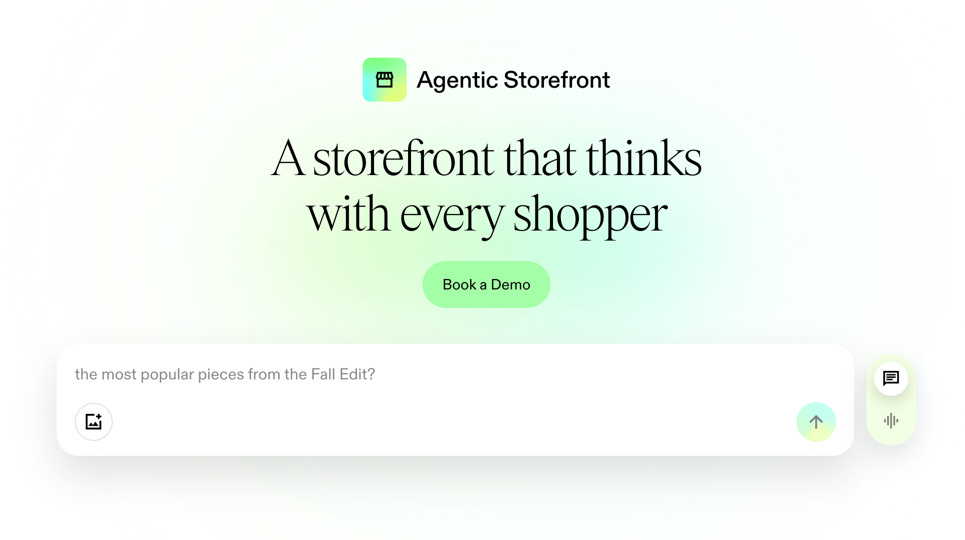
What it does: Swap Agentic Storefront turns a traditional ecommerce storefront into an AI-guided shopping layer. The agent helps customers discover products, share preferences, and get recommendations based on style, budget, context, fit, and availability.
CX use case: Useful for brands where shoppers need help choosing, not just checking out. Think apparel, beauty, home, wellness, consumer electronics, or any category where comparison, confidence, and return risk matter.
Worth watching because: This moves AI into selection, comparison, and purchase confidence. The storefront starts acting more like a sales associate, which means product data, inventory accuracy, shipping promises, return rules, and brand voice all become part of the customer conversation.
And yes, this is where all those “we’ll clean up the product data later” decisions come back wearing steel-toed boots.
Bottom line: Strong signal for ecommerce CX. If your data is clean, this can reduce uncertainty before the cart. If your data is messy, the agent will expose it fast.
NEW: The DCX AI Today - AI Tool Directory - If you lead a CX team and want a curated shortlist of tools worth evaluating, this is your starting point.
⚡ 90-Second CX Radar
Travel apps are turning into trip managers
Ixigo’s TARA is moving from chat support toward background travel work: boarding passes, flight monitoring, delay alerts, refund help, and hotel readiness checks. Travel is a brutal test for AI because the customer is usually time-sensitive, distracted, and one bad notification away from becoming a Reddit post.
Stripe and Google push agentic checkout closer to reality
Stripe is bringing purchases into Google’s Gemini AI search and app, and opening its Link wallet so agents can complete approved transactions. That moves the customer journey from “help me decide” to “help me buy,” which is where trust, permission, payment policy, and mistake recovery get very real.
Ace puts AI in the associate’s hand
Ace Hardware’s Hey ARMA assistant is being used across more than 2,300 stores to help associates with product comparisons, project advice, recommendations, and finding items customers bought elsewhere. That is a better frontline AI pattern: help the employee be more useful before replacing the interaction customers actually value.
🧭 Your Move
Do not limit your AI review to the obvious customer-facing bots.
This issue is about the quieter layer forming underneath the journey. AI may be checking the bag, coaching the employee, changing the menu, guiding the shopper, planning the trip, or preparing the transaction. Different surfaces. Same operating question.
Can your team see where AI shaped the moment, explain what happened, and recover when it gets the judgment wrong?
Because the customer does not care which system failed. They just know your brand made them do the work.
Audit the invisible AI before the customer finds it for you.
Until tomorrow,

👥 Share This Issue
Think of one person who’s wrestling with AI in CX right now
and forward this to them.
I’m obsessed with Wispr Flow Pro! Get a Free Month on me.

If someone forwarded this to you, they thought you needed to see it before your next AI planning meeting. Get your own copy.