

The Wait Tells Customers Who You Are
Customers can forgive delay. They have a much harder time forgiving silence.

The most honest moment in a customer journey is often the part where nothing appears to be happening

The customer is on hold. Refreshing the delivery screen. Watching a progress bar pretend to be progress. Waiting for a refund, a repair, an answer, a technician, a callback, an approval, a replacement, a human.
Inside the company, this moment sounds harmless. Queue time. Processing time. Dispatch window. Backlog. SLA. Pending status. Normal operating constraint.
Outside the company, it sounds very different.
What the hell is going on?
That is the part businesses keep sanitizing out of the conversation.
We talk about waiting as if customers have a simple relationship with time. Short wait good. Long wait bad. Reduce the average. Improve the metric. Staff better. Automate more. Deflect where possible.
But customers do not experience waiting with a stopwatch in their hand.
They experience it with a nervous system.
The Moment Nothing Happens

A five-minute wait can feel insulting. A thirty-minute wait can feel acceptable. That sounds irrational until you look at what the customer is actually measuring: uncertainty, control, fairness, confidence, and whether the company seems to have lost the plot.
This is why the old line that customers hate waiting is too blunt to be useful. Customers hate being abandoned inside someone else’s process.
Waiting is rarely neutral. A quiet wait invites the customer to create their own story. Maybe the order was lost. Maybe the agent forgot. Maybe the appointment was never booked. Maybe nobody cares.
Silence gives the customer too much room to think, and the customer’s imagination is usually harder on the business than the truth would have been.
Customers Wait With a Nervous System

Imagine two restaurant waits.
In the first, the host says, “We’re running about twenty minutes behind. You’re third on the list. I’ll text you as soon as the table is ready.” Not ideal, but you can live with it. You have a number. You have a sequence. You can step away. The business has acknowledged reality.
In the second, the host says, “It should just be a few minutes.” Ten minutes later, nothing. Fifteen minutes, still nothing. You are now doing unpaid operations work in your head. Did they forget? Did someone else get seated first? Should you ask? Should you leave?
The second wait may not be much longer. It feels worse because the business handed you the mental labor and acted like that was free.
It is not free.
Behavioral economics gives us the language for this, but people evaluate experiences against expectations. They care about fairness. They want agency. They tolerate inconvenience better when they believe the process is honest.
A wait becomes toxic when it violates one of those conditions.
The Company Owns the Process. The Customer Owns the Wondering.

That mental labor is the hidden tax of poor waiting experiences. Once you see it, you see it everywhere. The refund that says three to five business days, then quietly drifts into day eight. The technician window that eats half a workday because the customer has no idea whether they are next or forgotten. The chatbot that says it is transferring you, then leaves you staring at a blank pause long enough to reconsider your relationship with the brand.
None of these experiences are just about time. They are about being trapped inside a process that has gone silent.
If you tell me ten minutes and it takes twelve, I may forgive you. If you tell me “any minute now” for twelve minutes, I am annoyed before the same clock has finished running. The difference is not the two minutes. The difference is trust.
That is why vague reassurance is often worse than a clear delay.
Vague Reassurance Is Fog

Companies love vague reassurance because it protects flexibility. “Soon.” “Shortly.” “As quickly as possible.” “We’re working on it.” These phrases sound harmless in a script review. Nobody wants to sound cold or create a commitment the operation may miss. So the company reaches for soft language and calls it customer-friendly.
To the customer, vague reassurance is fog.
Fog forces the customer to make decisions with bad information. Should I stay home? Should I call again? Should I reorder? Should I escalate? Should I make a backup plan? The company thinks it is managing expectations. The customer is managing risk.
That is not a communication issue. That is an operating issue wearing a nicer shirt.
A better waiting experience does not require theatrical empathy. It requires useful orientation. Tell me what happened. Tell me what happens next. Tell me whether I need to do anything. Tell me when I should expect movement. Tell me when the estimate has changed.
This sounds embarrassingly basic because it is embarrassingly basic. And yet many companies still fail because their communication is designed around internal systems rather than customer anxiety.
The Dashboard Says Green. The Customer Feels Stranded.
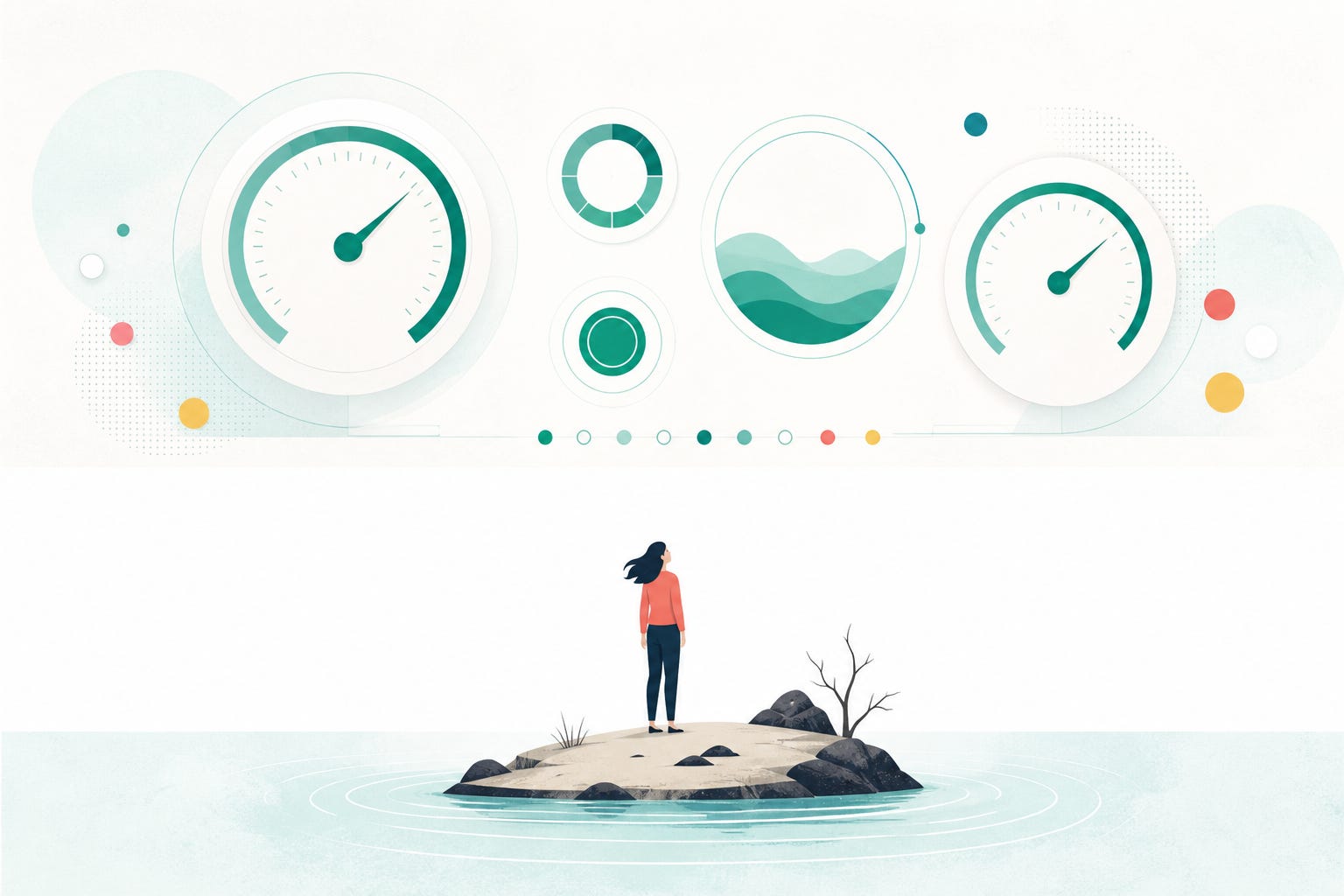
The system knows the ticket is pending. The customer wants to know whether anyone has looked at it.
The system knows the order is in transit. The customer wants to know whether it will arrive before they leave for work.
The system knows the outage has been assigned. The customer wants to know whether they need to move meetings or drive to a coffee shop for Wi-Fi.
The internal status and the human question are different.
This is where many CX dashboards become dangerous. They create the illusion of understanding. Average wait time is down. Service level is green. Callback utilization is up. The operation looks healthier. Meanwhile, customers are still annoyed because the moments that create anxiety are buried under operational averages.
You can hit the target and still miss the experience.
This is not an argument against measurement. It is an argument against confusing measurement with understanding. Time matters, but meaning travels with it. A long wait with clarity can preserve trust. A short wait with confusion can burn it.
Confidence Demand Is Still Demand
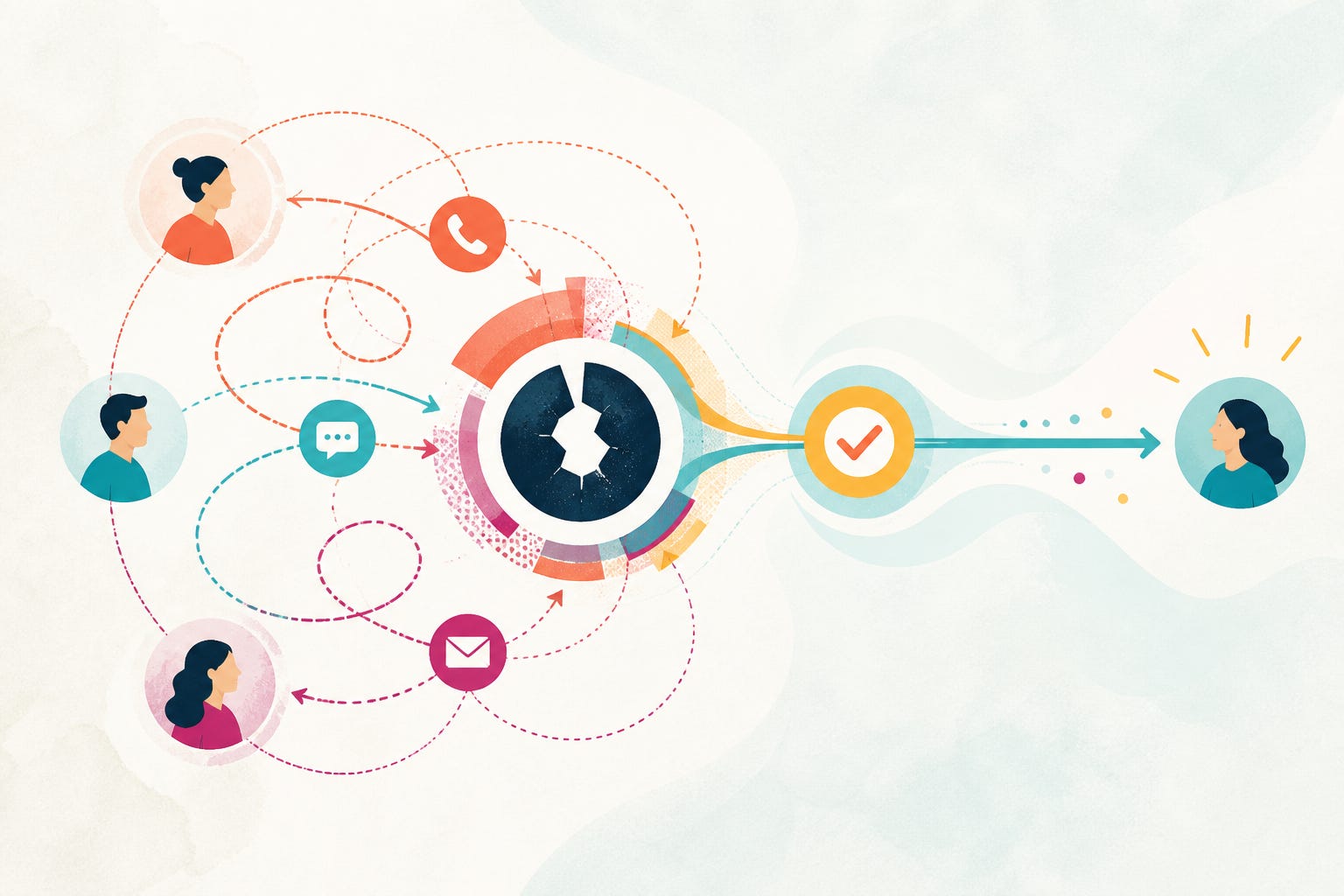
The better question for leaders is not only, “How long are customers waiting?”
It is, “What are customers forced to believe while they wait?”
That question changes the work. Where does silence appear? Where do estimates become unreliable? Where does the customer lose control? Where does a status message answer the system’s question but ignore the customer’s? Where do customers contact you not because they need help, but because they need confidence?
A lot of service demand is really confidence demand.
When companies fail to provide confidence, customers create their own evidence. They call again. They open a second chat. They email. Then the business acts surprised that contacts are high.
The irony is brutal. Silence creates the very volume companies are trying to avoid.
Waiting will never disappear from customer experience. Some waits are normal. Some are unavoidable. Some are the price of complexity. Customers can handle that.
What they struggle with is the feeling that the company has moved on while they are still stuck.
The sale tells customers what you promised.
The wait tells them whether you meant it.

www.marklevy.co
Follow me on Linkedin

What Successful CX Leaders Do on Sundays
DCX Links: Six must-read picks to fuel your leadership journey delivered every Sunday morning. Dive into the latest edition now!
Thanks for being here. I’ll see you next Tuesday at 8:15 am ET.
👉 If you enjoyed this newsletter and value this work, please consider forwarding it to your friends and colleagues or sharing it on social media. New to DCX? Sign Up.
✉️ Join 1,700+ CX leaders who stay ahead of the next customer curve.
Human-centered insights. Plug-and-play frameworks. Smart tools that actually work. All designed for CX pros who want to build with purpose—and deliver with impact.
👉 Subscribe today and get the tools to elevate your strategy (and your sanity).
What a fascinating read and spectacular way of putting this argument together: The better question for leaders is not only, “How long are customers waiting?” It is, “What are customers forced to believe while they wait?”
Thank you for sharing