

When AI Becomes the Front Door
AI can answer the phone, book the appointment, and carry the conversation into text. That creates a useful design question: how should the journey work when the customer goes off-script?


Your daily signal on AI and CX — minus the hype.
DCX Stat of the day: 60% of UK consumers say they would stop using an AI shopping agent after one mistake. Source: ACI Worldwide and YouGov
IN THIS ISSUE
The AI receptionist is opening a new front door to the customer journey
Customer confidence grows when recovery is designed into the experience
Friendliness and understanding need to work together
Customer evidence can reach the right owner faster
The handoff belongs inside the journey design
🔍 DEEP DIVE
When the Receptionist Is a System
A patient calls after hours because a tooth cracked. The practice is closed. The phone still answers.
That sounds like a small convenience until you follow the journey. Weave’s AI Receptionist can handle calls and texts, distinguish between new and existing patients, book appointments, and route the conversation to staff when it needs a person. The context moves with the handoff instead of making the patient start again.
That’s where the opportunity gets interesting.
Once AI becomes the front desk, it isn’t just answering questions. It’s helping decide whether the call is routine, which path it belongs on, what the customer needs next, and when a human should step in. The value grows when those decisions are designed as one connected journey rather than a series of separate interactions.
That gives teams a more useful scorecard than calls answered alone: Did the system understand the need? Did it move the customer forward? Did urgent and uncertain cases reach the right person with the story intact?
Bottom Line: The strongest AI front door combines access, understanding, and a well-designed path to the right person.
More: Weave
📬 Copy-Paste Take
Calls answered and conversations contained show how much work the AI receptionist handled. Add completed appointments, correct routing, repeat contact, and context-preserved handoffs to see the fuller customer and business value.
🧭 OPERATOR PLAYBOOK
Run the Five-Call Front-Door Test
Pull five recent contacts that represent the range of customer needs:
A simple question the AI should finish.
A customer who changes channels halfway through.
A request with missing or conflicting information.
An urgent case that needs a person now.
A low-confidence case that benefits from human judgment.
For each one, check the entire trip. Was the need understood? Was the next action correct? Did the customer know what would happen next? If a person took over, did they receive the conversation, intent, and work already completed?
Then call one of the five back. The transcript can tell you what the system said. The customer can tell you whether the job actually got done.
Ask your team: Which customer outcome would give us the clearest picture of whether the new front door is working?
Signal: Rising containment creates more value when repeat contact is falling too.
📊 MARKET REALITY CHECK
Friendliness Is a Strong Start. Understanding Completes the Job.

Qualtrics asked more than 7,000 consumers across seven countries and seven industries about their latest service interaction. AI earned a 4.41 for friendliness. Its understanding score was 4.08.
That 0.33-point gap was the widest spread between the behaviors Qualtrics measured. And when an issue went unresolved, the understanding score fell 37%, compared with a 20% decline in friendliness.
That gives operators a useful next step. Customers can enjoy a pleasant exchange and still need the system to grasp the problem that brought them there. Add understanding and resolution to tone, speed, and containment, and the scorecard starts to show the whole experience.
Why it matters: Put understanding beside friendliness on the dashboard. Then connect both to resolution, repeat contact, and the customer’s next action. That shows where a warm conversation is translating into a completed journey.
A warm conversation creates more value when it leads to understanding and resolution.
🧰 TOOL WORTH KNOWING
Dovetail Channels 2.0
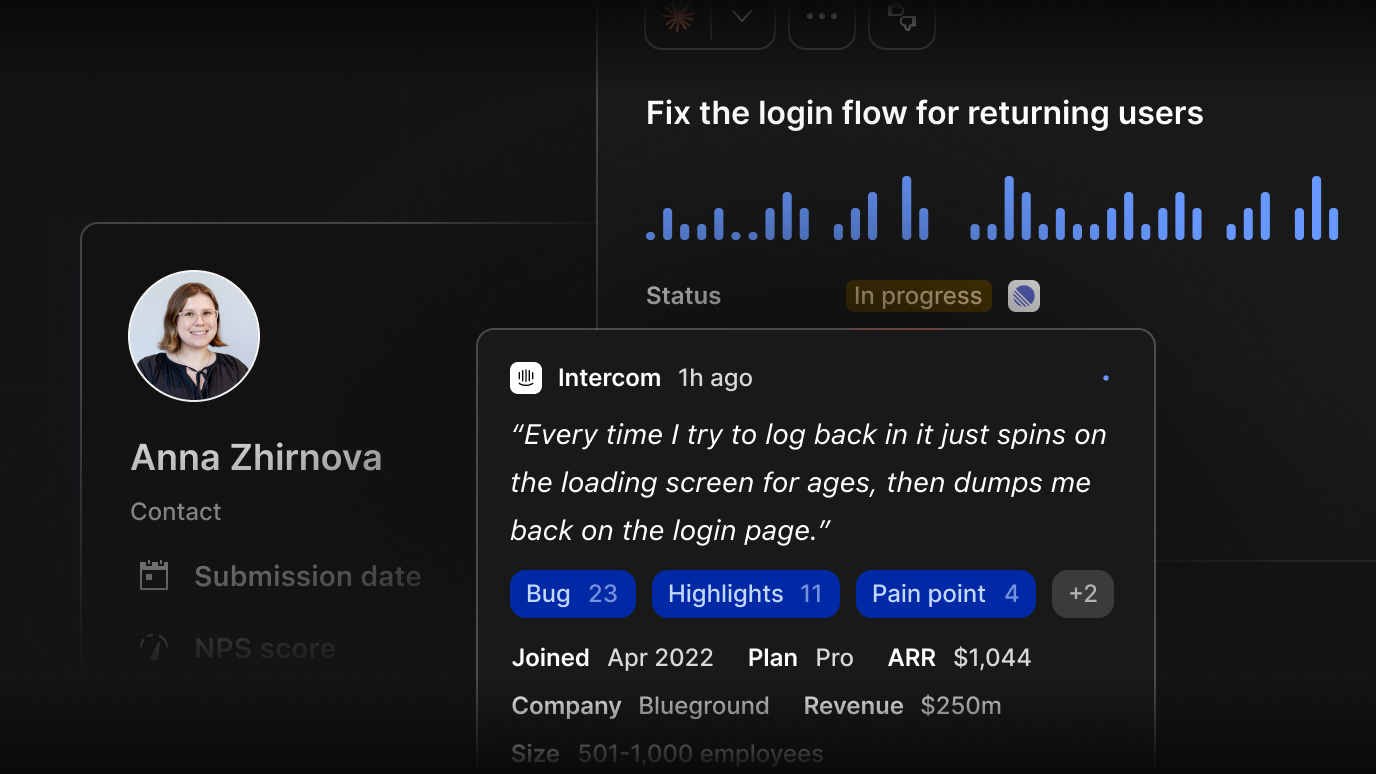
What it does: Dovetail pulls calls, support tickets, surveys, reviews, and other feedback into one customer-intelligence layer. Channels 2.0 groups recurring issues, adds account and revenue context, and moves an opportunity through a visible workflow from surfaced to resolved.
CX use case: If five customers mention billing confusion in a week, an agent can summarize the pattern and send it to the product owner before it becomes a bigger contact driver. When the issue is fixed, Dovetail can identify the customers who raised it and draft the follow-up.
Worth watching because: Most companies already have more customer feedback than any one team can review. Dovetail is trying to carry the right evidence to the person who can act on it, then close the loop with the customer.
Bottom line: Use its digital twins to explore existing customer evidence, then trace the answer back to the calls, tickets, and sessions that produced it. That makes the tool a complement to live customer research.
Source: Dovetail Summer Launch 2026
The DCX AI Today - AI Tool Directory - If you lead a CX team and want a curated shortlist of tools worth evaluating, this is your starting point.
📡 90-SECOND CX RADAR
Deepfake rules now depend on where your customer lives
Axios mapped 29 states with election deepfake laws already in effect. California and Hawaii have laws tied up in court. So the same synthetic image or video can meet a very different disclosure standard depending on who sees it and where.
Why it matters: This is bigger than election ads. For teams putting AI-generated people, voices, or scenes in front of customers, the map is a useful prompt to build state-by-state review, clear labeling, and an inspectable original into the publishing process.
✅ YOUR MOVE
Follow One Customer Through the Door
Before Friday, choose one AI-handled entry journey: a phone call, text, chat, booking request, or product question.
Pull ten recent interactions and follow the transcript into what happened next. Mark each one green if the customer finished the job, yellow if human support carried it forward with the context intact, and red if the journey created repeat contact or ended before completion.
Give the red pattern one owner, one fix, and one date. Then run the same ten-case test after the change.
The first answer is part of the journey. The handoff and outcome are the proof.
Until tomorrow,

👥 Share This Issue
Think of one person who’s wrestling with AI in CX right now
and forward this to them.
I’m obsessed with Wispr Flow Pro! Get a Free Month on me.

If someone forwarded this to you, they thought you needed to see it before your next AI planning meeting. Get your own copy.