

When the Bank Bot Goes Quiet
Plus: banks and merchants are giving AI more customer-facing responsibility. The recovery plan still looks like a group project.


Your daily signal on AI and CX — minus the hype.
DCX Stat of the day: Only 47% of UK bank executives in KPMG’s latest financial services sentiment survey had carried out a single test around AI disruption, while 26% had not conducted any. The Guardian
In this issue:
→ The bank bot needs a fire drill
→ Personalization reaches the account screen
→ Checkout can’t see the agent yet
→ Banking tools chase shared context
→ Thin Radar beats fake breadth
🔍 DEEP DIVE
The Friendly Answer Still Needs an Escape Hatch
Lloyds is hiring 300 AI specialists by September as it pushes deeper into agentic AI. The customer promise is easy to like: more accessible online banking, personalized guidance, plain-language questions about spending, and better fraud detection.
That is the easy part to sell internally. The harder part is what happens once those answers move into moments where customers expect the bank to be right, available, and accountable. Especially when money is involved.
Once AI starts helping with spending, fraud warnings, scam prevention, product guidance, or account explanations, it is no longer a clever front door. It is standing inside a trust moment.
Here is the part that should make CX leaders sit up. The same coverage points to a KPMG finding that many banks feel ready for a major AI outage, even though fewer than half had run a single AI disruption test. That is not a technical footnote. That is the customer experience risk wearing an IT jacket.
The customer will not separate the model, the app, the fraud workflow, and the branch team. They will experience one thing: the bank either helped me, or the bank left me stuck.
Bottom Line: AI can make banking feel more personal. But if the recovery path is vague, the personalization is just a nicer way to fail.
📬 Copy-Paste Take
Before we put AI closer to financial guidance, fraud review, or account decisions, we need the outage drill on paper. What stops? Who owns the customer? What gets reversed? And how do we explain it without hiding behind “the system”?
🧭 OPERATOR PLAYBOOK
Test the Moment the Answer Goes Dark
Start with the journey where AI has the most customer authority. Not the one with the prettiest demo. The one where a bad answer actually costs someone time, money, trust, or access.
Audit every AI-assisted customer decision flow for four things:
The answer a customer can act on.
The business rule behind that answer.
The human who can override it.
The recovery step when the model, data, or workflow fails.
Then test whether a front-line employee can explain the decision, reverse the harm, and keep the customer from starting over like it is their first day on Earth.
Ask your team: If this AI feature went down for two hours, which customers would be stranded first?
Signal: The maturity test is not whether the agent can answer. It is whether the business can clean up after it.
📊 MARKET REALITY CHECK
The Sale You Can’t See Is Still Your Problem
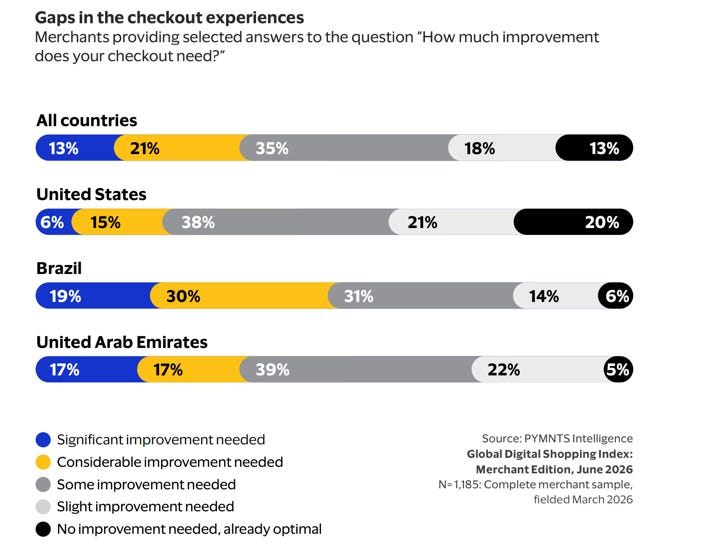
PYMNTS Intelligence and Visa Acceptance Solutions surveyed 1,185 retail merchants across the U.S., Brazil, and the UAE for the June 2026 merchant edition of the Global Digital Shopping Index. The blunt number: 87% of merchants say checkout still falls short.
The AI wrinkle is the part to watch. Merchants expect agents to affect shopping, payments, and loyalty, but many still cannot clearly identify agent-driven traffic and purchases. So the customer journey may start changing before the business can even tell who, or what, showed up at checkout.
That is how a shiny commerce idea becomes a support mess. A customer arrives through an assistant. The cart is weird. The offer is misunderstood. The payment fails. The return policy gets argued. Now the business has to recover a journey it cannot fully see.
Why it matters: If AI agents influence purchases before merchants can identify, support, and recover those transactions, checkout becomes a measurement problem and a service problem at the same time.
No visibility = no ownership.
🧰 TOOL WORTH KNOWING
Backbase Banking OS
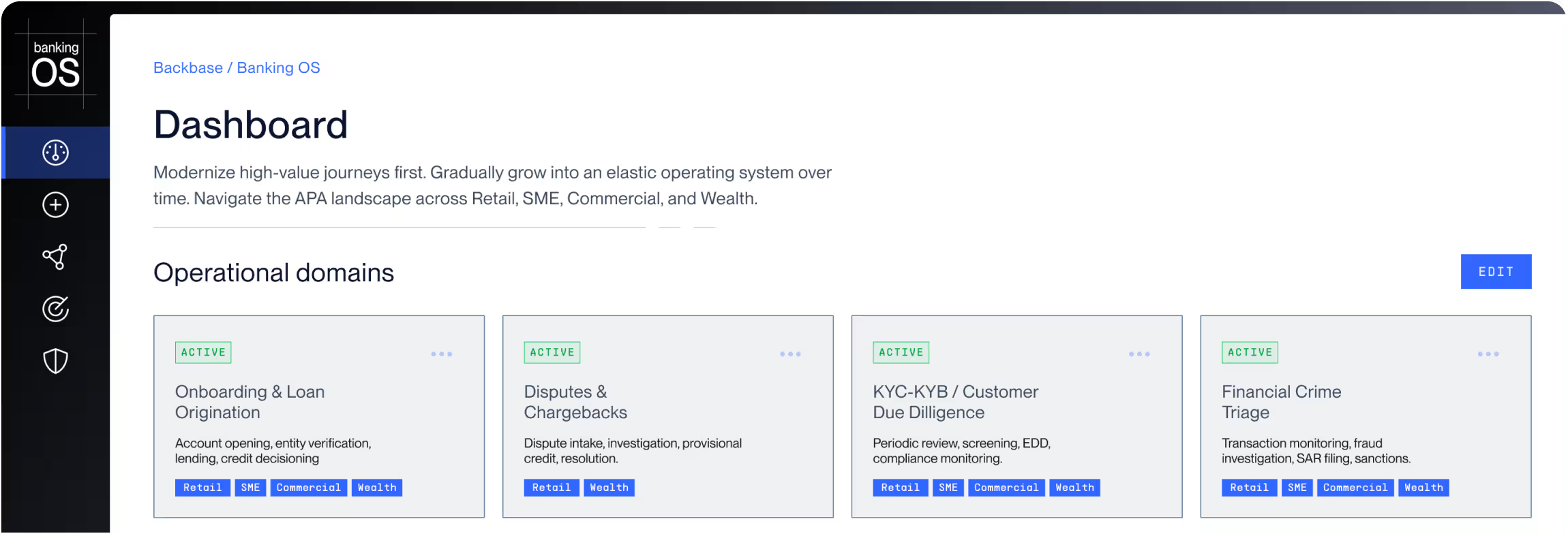
What it does: Backbase positions its Banking OS as a shared operating layer for digital channels, front office, operations, customers, employees, and AI agents. The useful phrase is “explicit authorization for every action.”
CX use case: For banks, credit unions, and financial-services teams trying to move AI beyond chat, the CX use case is coordinated servicing. Onboarding, disputes, payments, fraud, documents, CRM, and case management all need shared context before an agent should touch them.
Worth watching because: Backbase is pointing at the unglamorous part of AI customer experience: the plumbing under the conversation. If the agent can suggest, route, or execute, the operating layer has to know what happened, who approved it, and where the customer goes when it breaks.
Bottom line: This is the kind of tool to inspect when the customer problem is not the answer. It is the handoff hiding behind the answer.
The DCX AI Today - AI Tool Directory - If you lead a CX team and want a curated shortlist of tools worth evaluating, this is your starting point.
✅ YOUR MOVE
The pattern today is simple: AI is getting closer to customer decisions, and the recovery layer is still showing up late with a clipboard.
That is true in banking. It is true in checkout. It is true anywhere an assistant starts shaping what the customer sees, chooses, pays, or believes.
Pick one AI-assisted journey this week and run the boring drill. What happens when the answer is wrong, the model is unavailable, the data is stale, or the customer challenges the decision?
If the answer is “we would figure it out,” that is the work.
The agent can be smart. The business still has to own the mess.
Until tomorrow,

👥 Share This Issue
Think of one person who’s wrestling with AI in CX right now
and forward this to them.
I’m obsessed with Wispr Flow Pro! Get a Free Month on me.

If someone forwarded this to you, they thought you needed to see it before your next AI planning meeting. Get your own copy.