

Your Personalized Price Needs a Receipt
AI can recommend, flag, and optimize. Customers still need to see the rule and correct the result.


Your daily signal on AI and CX — minus the hype.
DCX Stat of the day: 46% of U.S. travelers say they’ve abandoned a booking because it became too complicated or time-consuming. Travelport
IN THIS ISSUE
When personalization quietly changes the deal
A recourse test for every automated decision
Why opaque pricing destroys perceived fairness
Checkout vision that lets shoppers self-correct
Fresh proof that review gates are spreading
🔍 DEEP DIVE
Show the Customer What Changed the Price
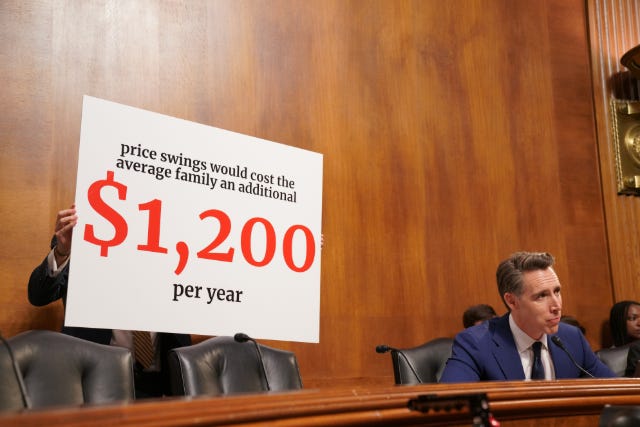
Two customers can ask for the same thing and get different prices. One of them may never know what changed the deal.
That’s the customer problem behind this week’s Senate hearing on AI-supported surveillance pricing. Companies can combine purchase history, location, loyalty activity, and inferred willingness to pay, then use the result to shape the price or offer someone sees.
Dynamic pricing has been around for years. The line gets crossed when the customer can’t see which data moved the price or ask anyone to review it. Personalization starts to feel like the system sized up your wallet.
Lawmakers are asking about grocery, airline, payment, and data-broker practices. Companies dispute some of the claims and methods cited in the hearing. Fair enough. That makes transparency more important. A brand should be able to name the inputs it allows, the ones it prohibits, what the customer is told, and who investigates a disputed result.
Bottom Line: If AI can change the deal, the customer needs a visible rule, a useful explanation, and a correction path.
Source: Office of Senator Josh Hawley
📬 Copy-Paste Take
If two customers can get different prices for the same thing, “the model decided” isn’t an explanation. Before AI touches pricing, discounts, eligibility, or priority, define the allowed inputs, what the customer sees, the audit trail, and the person who can correct the decision.
🧭 OPERATOR PLAYBOOK
Build the Challenge Path Before the Model Ships
Take one live automated decision, such as a price, discount, fraud hold, checkout alert, recommendation, or service priority. Audit it for four things:
Decision: What can the system change for the customer?
Inputs: Which personal or behavioral data may influence the result?
Explanation: What can the customer see and understand?
Recovery: Who can inspect, override, and correct the outcome?
Run the same request with different customer profiles. Write down every difference the system produces. Then ask your team to explain each one using an approved rule, not a guess about what the model probably did.
Ask your team: Would we be comfortable showing this decision logic to the customer it affected?
Signal: Your frontline can see the outcome, but they can’t explain it or change it.
📊 MARKET REALITY CHECK
Customers Want the Rules in Daylight
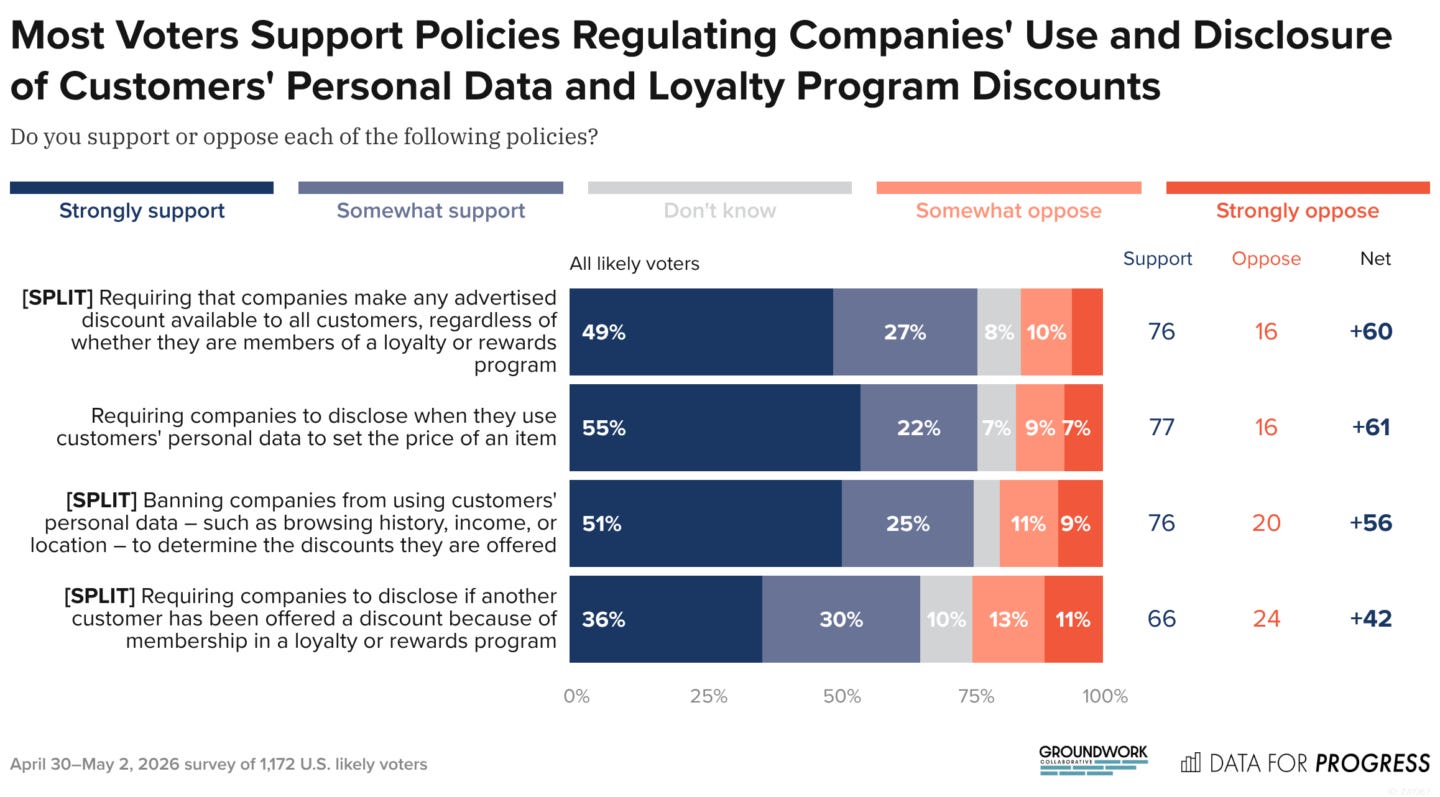
Customers are giving companies a pretty clear warning. In a survey of 1,172 likely U.S. voters, 77% supported requiring companies to disclose when personal data helps set an item’s price. 76% supported banning personal data such as browsing history, income, or location from determining discounts.
Yes, this is advocacy-backed polling rather than observed shopping behavior. The finding still matters. Customers don’t experience an unexplained price difference as clever personalization. They experience it as a hidden rule applied to them.
Why it matters: A pricing model can lift yield while quietly taxing trust. Explainability and appeal belong in the commercial design, not in the cleanup plan after customers complain.
More personalization + less visibility = a fairness problem.
🧰 TOOL WORTH KNOWING
Everseen Evercheck
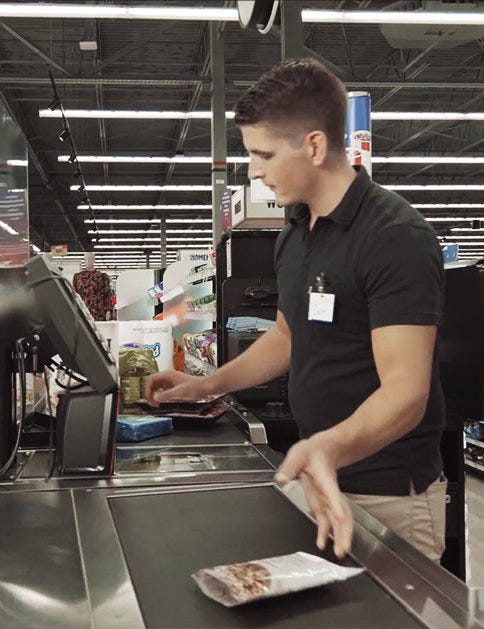
What it does: Evercheck uses computer vision to identify more than 30 checkout loss patterns, including missed scans, items left in a basket, product switching, and abandoned transactions.
CX use case: When the system spots a possible missed item, it can ask the shopper to correct it before alerting an associate. That small pause can recover the transaction without immediately turning a mistake into an accusation.
Worth watching because: Morrisons is rolling the platform into 200 U.K. stores after a trial. The camera matters. The self-correction step matters more. Now watch the false alerts, override time, accessibility, complaints, queue impact, shrink, and whether the prompt preserves dignity when the line is backing up.
Bottom line: Catch the missed scan without making an honest customer feel like a suspect.
The DCX AI Today - AI Tool Directory - If you lead a CX team and want a curated shortlist of tools worth evaluating, this is your starting point.
📡 90-SECOND CX RADAR
A Health System Let an Outside Reviewer Check Its AI Rules
Hackensack Meridian Health became the first system to earn the Joint Commission’s Responsible Use of AI in Healthcare certification. The review covers governance, data management, risk and bias, ongoing monitoring, and role-specific training.
Why it matters: The certification doesn’t prove every tool improves patient care. It does make the health system show its work before clinical use and keep watching after launch.
Safeway Lets the Shopper Review the AI-Built Cart
A new Safeway plugin in ChatGPT can turn a recipe, photo, or list into a grocery cart. The customer can review and modify the basket before moving to Safeway’s platform for checkout.
Why it matters: The useful part is the pause before purchase. Price, availability, promotions, dietary needs, substitutions, and loyalty benefits still have to survive the handoff into Safeway’s checkout.
✅ YOUR MOVE
Find the Decision Nobody Can Explain
Pick one AI-assisted decision in a live journey. Pull five recent cases, including one complaint, one override, and one result that surprised the frontline team.
For each case, write down the input, the rule, what the customer was told, and how the decision could be corrected. If one field is blank, there’s your next meeting.
Keep the fix small and owned. It might be a prohibited-data rule, a clearer disclosure, an employee override, a comparison view, or a simple way for the customer to ask for review.
If the customer can’t see the rule or challenge the result, the decision isn’t ready to scale.
Until Monday,

👥 Share This Issue
Think of one person who’s wrestling with AI in CX right now
and forward this to them.
I’m obsessed with Wispr Flow Pro! Get a Free Month on me.

If someone forwarded this to you, they thought you needed to see it before your next AI planning meeting. Get your own copy.