

Your Skin Scan Has a Sales Target
A 4,000-store rollout shows why personal context needs a customer contract.


Your daily signal on AI and CX — minus the hype.
DCX Stat of the day: 85% of surveyed Community Health Center patients were concerned about AI accessing their personal health information. Community Health Center
IN THIS ISSUE
→ The skin scan joining the sales conversation
→ Four controls for personal-context recommendations
→ One member history across seven financial agents
→ An AI agent that can make the customer research call
→ Restaurant demand and transit risk move upstream
🔍 DEEP DIVE
The Mirror Just Joined the Sales Team

A beauty advisor asks to scan your face. About 80 seconds later, there is a skincare routine waiting for you.
Grupo Boticário and Haut.AI are expanding their Meu Botik skin-analysis experience from a 24-store pilot to nearly 4,000 O Boticário stores across Brazil. The companies say the pilot increased average skincare order value by about 80%. The system evaluates more than 150 facial biomarkers on the mobile device advisors already use at checkout.
On paper, that sounds like smarter service. In the store, it puts a personal assessment, a product recommendation, and a sales target inside the same 80 seconds. That is a lot of trust to ask for while someone is standing at checkout.
The advisor can explain what the scan found and keep the conversation human. But the customer still needs to know what was captured, why each product appeared, whether the image is retained, and how to say no or correct the assessment without turning the purchase into an argument.
Bottom Line: If the customer cannot see how the scan became a recommendation, personalization starts to feel like a sales script wearing a lab coat.
📬 Copy-Paste Take
When AI turns a face, voice, history, or behavior into a recommendation, give the customer four things: clear consent, an explanation they can understand, a way to correct the premise, and a person who can override the result.
🧭 OPERATOR PLAYBOOK
Test the Recommendation Before the Customer Does
If you own a journey like this, start with one awkward customer before the policy deck gets polished.
Pick a moment where AI uses personal context to recommend a product, next step, price, treatment, or service response. Then check four things:
Permission: The customer knows what data is being used before the analysis starts.
Explanation: The employee and customer can see why the recommendation appeared.
Correction: The customer can change a bad input without restarting the journey.
Accountability: A named person can override the recommendation and resolve harm.
Now run the test with someone who says no to the scan, disputes the result, or asks for their data to be deleted. Give them permission to be difficult. That is how you find out whether the journey respects a choice or merely tolerates agreement.
Ask your team: Can that customer keep shopping, get help, and leave with confidence?
Signal: If refusal breaks the journey, consent is functioning like an entrance fee.
📊 MARKET REALITY CHECK
Shared Context Needs Shared Accountability
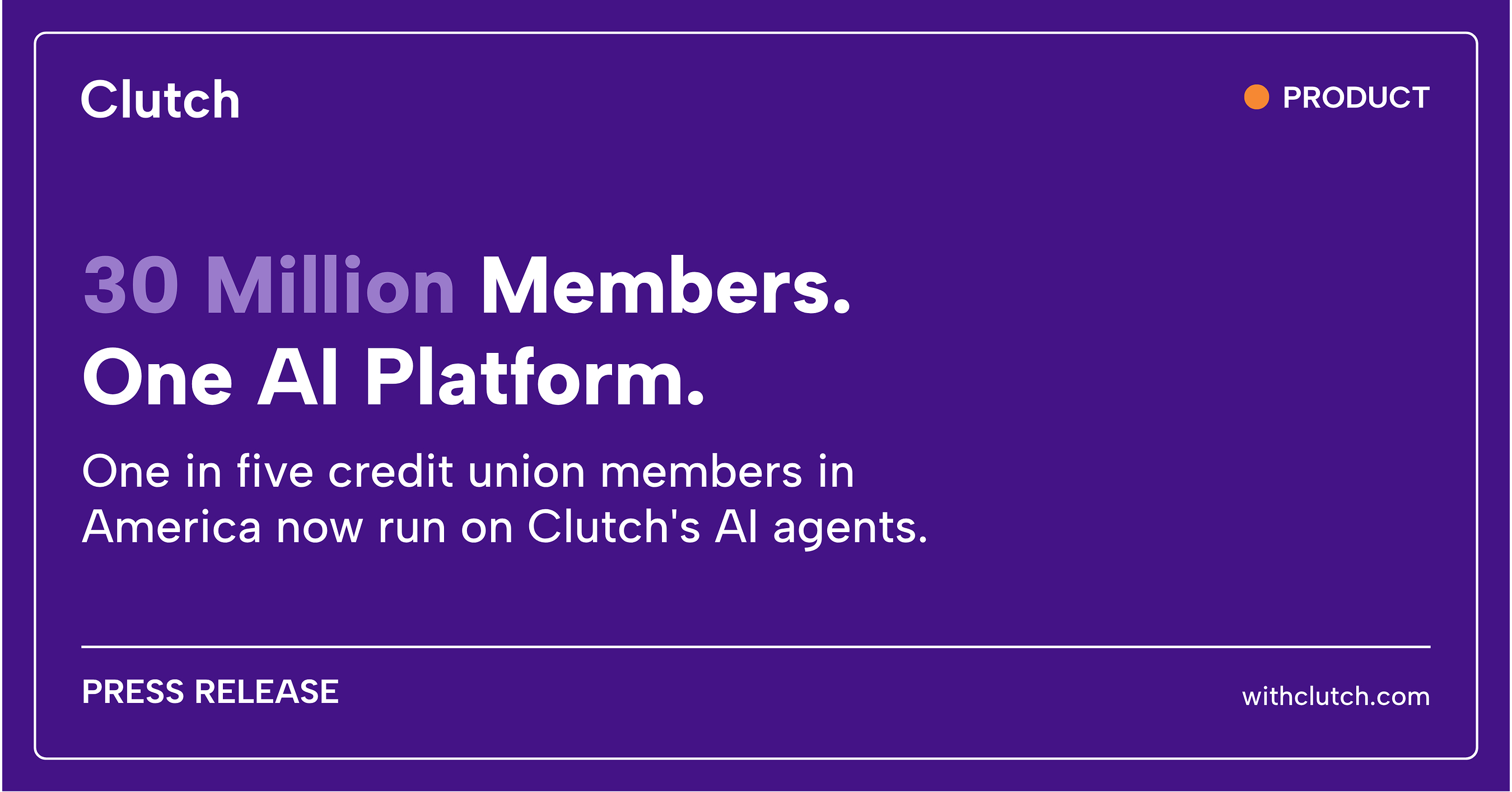
Credit unions using Clutch collectively represent 30 million members, roughly one in five U.S. credit-union members. It is an impressive number, and an easy one to misread. The figure describes the membership footprint of Clutch partners, not 30 million verified active AI users.
The platform connects seven agents across the member lifecycle. That shared history could spare someone in financial trouble from explaining the same painful situation again and again.
Clutch says every agent uses bot disclosure, human escalation, interaction logs, and a board-approved policy. Good controls. It also reports 80% automated document collection and a 34% reduction in forward roll for one partner. Active-user counts, measurement periods, complaint outcomes, and independent validation are missing.
Why it matters: Shared context can feel like thoughtful service to the member. Inside the business, it creates a much bigger accountability job. Disclosure, logs, escalation, and board ownership need to follow the data wherever it goes.
More context + more authority = more evidence required.
🧰 TOOL WORTH KNOWING
AgenticCalling
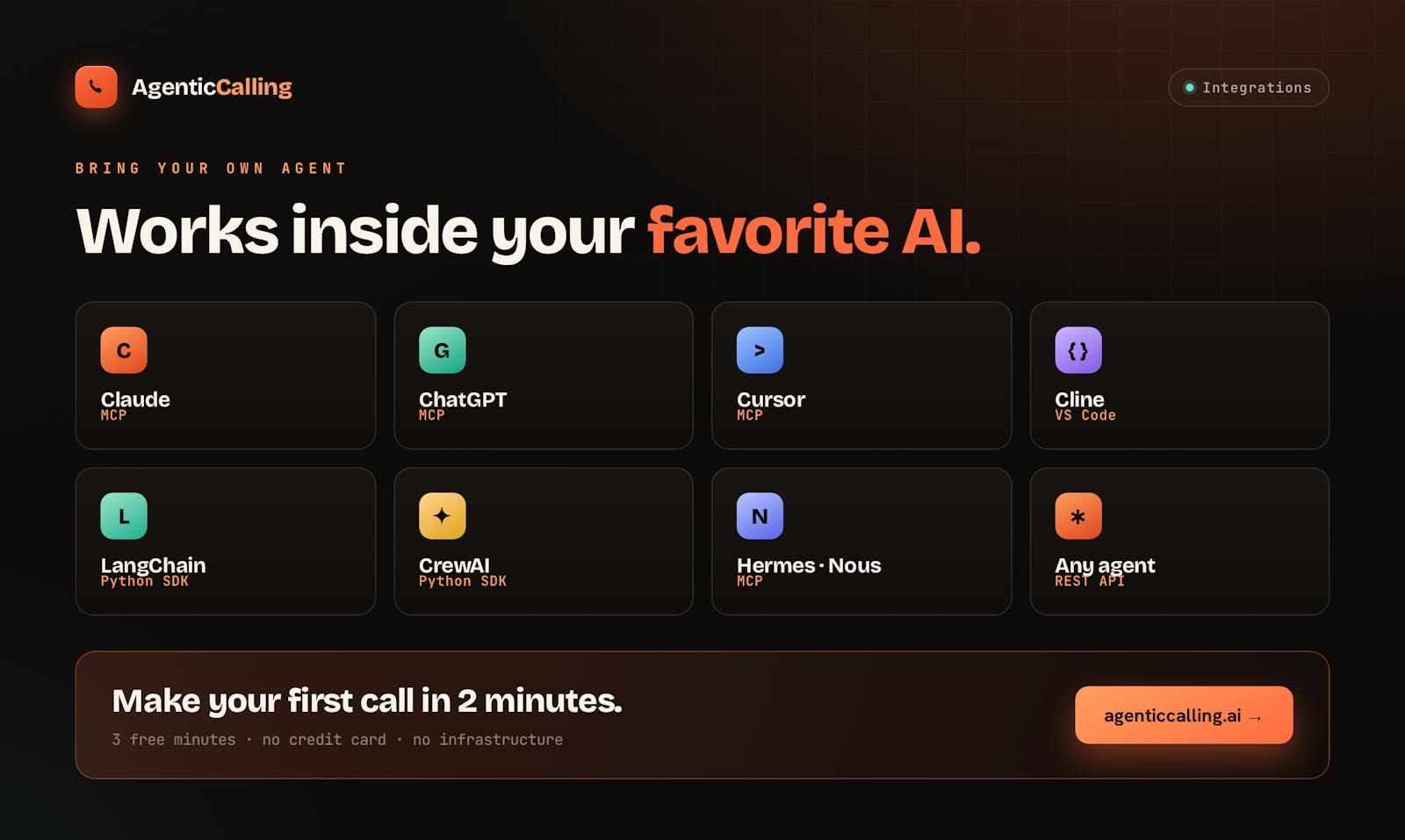
What it does: AgenticCalling gives Claude, ChatGPT, or a custom AI agent a phone. You provide the objective. It can dial, deal with menus and voicemail, retry, and return a summary, transcript, recording, and structured results through MCP or an API.
CX use case: Run opt-in customer interviews or appointment outreach without building a separate voice workflow. A CX team could ask the same core questions across a small group, review the transcripts, and route the follow-up to a person when the conversation needs judgment.
Worth watching because: Phone research is usually slow, expensive, and easy to postpone. This makes the mechanics much easier. The vendor also claims automatic DNC compliance, although it does not publish customer results, call-quality measures, disclosure performance, or independent validation.
Bottom line: I would keep the first run deliberately boring: 20 customers who agreed to be called, one clear objective, full AI disclosure, and a named employee ready to follow up. Boring is good when an AI is dialing people.
The DCX AI Today - AI Tool Directory - If you lead a CX team and want a curated shortlist of tools worth evaluating, this is your starting point.
📡 90-SECOND CX RADAR
Restaurant AI Is Following the Missed Order
Palona says a production study across three restaurant brands recorded 481 orders over 194 location-days and identified 305 large-order and catering inquiries across seven restaurants. It is trying to connect calls, catering, private events, follow-up, and restaurant operations. That handoff is where promising catering leads tend to disappear.
Why it matters: Count completed, accurate orders and clean handoffs. Father’s Day revenue growth and higher average order value don’t isolate what the AI caused.
Transit AI Is Looking for the Missed Ride Earlier
TransitTechOS brings route, trip, vehicle, driver, maintenance, dispatch, and safety data into one operating view. Its early-access agents are designed to flag risks before they become late or missed rides. For the rider, six systems collapse into two questions: Did the bus arrive? Did anyone help when it did not?
Why it matters: The customer experiences one broken trip even when the cause crosses six systems. Early-access customers still need to show better on-time performance, recovery, rider communication, and accessibility outcomes.
✅ YOUR MOVE
Personal context can make service feel thoughtful. It can also make a customer feel watched, judged, or steered. If you are responsible for one of these journeys, run one deliberately awkward test this week.
Ask a customer or colleague to refuse the analysis, challenge the recommendation, correct the data, and request a human review. Sit beside them. Notice where the language gets vague, the employee gets stuck, or the system defaults to yes.
Then give one person 30 days to fix the weakest step and bring back evidence that the customer can recover without giving up control.
Personalization earns trust when the customer can understand it, challenge it, and keep moving.
Until tomorrow,

👥 Share This Issue
Think of one person who’s wrestling with AI in CX right now
and forward this to them.
I’m obsessed with Wispr Flow Pro! Get a Free Month on me.

If someone forwarded this to you, they thought you needed to see it before your next AI planning meeting. Get your own copy.